About 161 minutes
The loss of the Swansea — Key Ideas to Explore
Wandering Heroes Classic Adventures
36,804 recorded words. 26 minutes difference from this book's estimate.
View Gutenberg source #76536
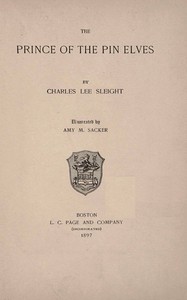
The source record for The Prince of the Pin Elves — A Reader’s Guide measures this digital text at 30,976 words, 2 hr 15 min estimated reading time, and 19 detected text sections.
The text analysis averages about 17.1 words per sentence, while the detected sections provide another way to judge how the source is divided.
Project Gutenberg metadata also associates the work with “Conduct of life -- Juvenile fiction,” connecting these edition facts with the source record’s subject description.
Explore this collection
These alternatives are selected using recorded categories and estimated reading time.
About 161 minutes
Wandering Heroes Classic Adventures
36,804 recorded words. 26 minutes difference from this book's estimate.
View Gutenberg source #76536About 102 minutes
Wandering Heroes Classic Adventures
23,266 recorded words. 33 minutes difference from this book's estimate.
View Gutenberg source #76281About 95 minutes
Wandering Heroes Classic Adventures
21,680 recorded words. 40 minutes difference from this book's estimate.
View Gutenberg source #71879Search stored excerpts and compare books → Choose by your preferences →
Choices use stored catalog measurements. Estimates vary with reading speed. A shared category is a catalog label, not a claim that two books have the same argument or literary quality.
Search reads excerpt text stored with this catalog and links to its associated Gutenberg record. The connection is stored in the site database; this tool does not recheck that every excerpt is word-for-word identical to that external record. Excerpt search does not cover every chapter and does not verify historical publication dates.
Catalog snapshot checked: 2026-09-25. Coverage: 97 public books, 97 available source excerpts.
Read the complete public-domain text at its original source.
Read on Project GutenbergThe story begins with a boy named Harry wondering where all the pins go, a question that leads him to discover an elf's hat and gain control over its owner. The opening chapter establishes a playful, inquisitive tone and introduces the central conceit: pins are taken by elves, and wearing an elf's hat makes the elf serve the wearer. This premise immediately frames the narrative as a domestic fantasy where ordinary objects conceal a hidden world.
The first chapter efficiently sets up the rules of the fantasy world. Harry's discovery of the elf's hat is presented as a logical outcome of his reading about fairies and elves, giving the story a self-aware, metafictional quality. The elf's plea, "Please give me back my hat," and Harry's refusal establish a power dynamic that drives the early plot. The excerpt shows Harry's curiosity and resourcefulness, as he immediately uses the hat to demand answers about the missing pins. The author, Charles Lee Sleight, uses concrete details—the lapel of a coat, a mother's pin cushion—to ground the fantasy in everyday domestic life. This opening invites readers to consider what other ordinary objects might hide similar secrets.
A middle excerpt reveals a shift from discovery to problem-solving. Harry and the elf Kitey find themselves beside an underground river, and Harry improvises a raft from a table he finds in the "Reception Hall." The passage emphasizes Harry's practical ingenuity: he breaks a table for steering boards and launches the table upside down, declaring it "tight as a drum, and floats like a cork!" The dialogue is brisk and playful, with Harry's exclamation "I bet he'll say something worse than 'hummyslash!'" adding humor. This section shows the narrative moving from initial wonder to active adventure, with the setting expanding from a path to a subterranean waterway. The river's origin is unknown even to the elves, hinting at a larger, unexplored world.
Throughout the excerpts, a toad appears as a recurring obstacle. In the middle section, Harry ties the toad in a piece of cloth, apologizing, "I'm sorry to do it, hoppy; but if you'll only be quiet a little while, I'll take you out of this hole when I go." This moment shows Harry's empathy even toward a creature that causes trouble. The toad is not merely a threat but a character with its own agency, and Harry's promise to release it later suggests a moral dimension to the adventure. The toad's presence adds tension to the river journey and creates a subplot about captivity and release. Readers may wonder whether the toad will become an ally or remain an antagonist, and how Harry's promise will be fulfilled.
The excerpts reveal a consistent narrative voice that blends direct dialogue with descriptive passages. The prose is straightforward, with sentences like "Harry knew a thing or two" establishing a colloquial, accessible tone. The story is structured as a series of episodic challenges: finding the hat, escaping the toad, building the raft. Each excerpt ends with a question or a decision that propels the plot forward. The illustrations by Amy M. Sacker, mentioned in the front matter, likely complement the text's visual imagination. The chapter titles—"Where the pins go," "Taken prisoner," "A trip to the Gnomes"—suggest a journey format with clear milestones. For a first-time reader, these excerpts indicate that the book rewards attention to small details and promises a mix of humor, danger, and clever problem-solving.
These excerpts from The Prince of the Pin Elves show a story that balances whimsy with practical challenges. The opening question about pins leads to a world where everyday objects have hidden lives, and the protagonist's resourcefulness is tested at every turn. Readers should pay attention to how Harry's interactions with the elf, the toad, and the environment reveal his character. The excerpts suggest that the full book will continue to blend domestic familiarity with fantastical adventure, rewarding those who enjoy seeing ordinary problems solved through imagination and persistence.
There’s a particular kindness in how Harry’s raft ride slows time, letting the dark river carry him toward the toad’s quiet wisdom—the sort of unhurried friendship that stays with you. I felt that same gentle patience turning the pages of The rival bicyclists — Reading Companion, as if both books shared a secret about companionship growing best in the in-between places. A small comfort, really, for returning readers.
A brief reflection can help important ideas stay with you longer.