About 55 minutes
The Elixir of Life — Edition Insights
Wandering Heroes Classic Adventures
12,560 recorded words. 27 minutes difference from this book's estimate.
View Gutenberg source #1215
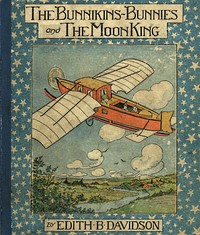
This digital edition of The Bunnikins-Bunnies and the Moon King — Context and Discussion is described by source-level measurements including 6,337 words, 28 min estimated reading time, and 11 detected text sections.
The text analysis averages about 21.4 words per sentence, while the detected sections provide another way to judge how the source is divided.
Project Gutenberg metadata also associates the work with “Fantasy fiction,” connecting these edition facts with the source record’s subject description.
Explore this collection
These alternatives are selected using recorded categories and estimated reading time.
About 55 minutes
Wandering Heroes Classic Adventures
12,560 recorded words. 27 minutes difference from this book's estimate.
View Gutenberg source #1215About 95 minutes
Wandering Heroes Classic Adventures
21,680 recorded words. 67 minutes difference from this book's estimate.
View Gutenberg source #71879About 102 minutes
Wandering Heroes Classic Adventures
23,266 recorded words. 74 minutes difference from this book's estimate.
View Gutenberg source #76281Search stored excerpts and compare books → Choose by your preferences →
Choices use stored catalog measurements. Estimates vary with reading speed. A shared category is a catalog label, not a claim that two books have the same argument or literary quality.
Search reads excerpt text stored with this catalog and links to its associated Gutenberg record. The connection is stored in the site database; this tool does not recheck that every excerpt is word-for-word identical to that external record. Excerpt search does not cover every chapter and does not verify historical publication dates.
Catalog snapshot checked: 2026-09-25. Coverage: 97 public books, 97 available source excerpts.
Read the complete public-domain text at its original source.
Read on Project GutenbergMr. Bunnikins-Bunny comes home with a headache, a toothache, and 'the shivery-shivers all over.' His wife doses him with cayenne pepper tea and tucks him into bed, his long ears poking out of a blue-and-white nightcap. This opening scene establishes a tone of gentle domestic comedy that persists throughout the journey to the Moon.
The catalog subjects list 'Fantasy fiction' and 'Voyages and travels,' but the excerpts emphasize the comforts of home and the absurdity of adventure. Mr. Bunnikins is reluctant to leave his familiar world, and his family insists on accompanying him so they can 'all fall out of the airship together.' The story is less about exploration than about the humorous mishaps of a reluctant traveler.
The journey is organized by Mr. Gray-Squirrel, who provides a well-equipped airship with 'nice little cabins' for eating and sleeping. The crew includes Captain Hawk for daytime steering and Admiral Owl for night lookout—a pairing that plays on natural animal behaviors. The children are 'rather afraid of Captain Hawk with his bright eyes and sharp beak,' but they enjoy talking to the sleepy Admiral Owl. These details ground the fantasy in recognizable animal traits, making the world feel consistent.
The voyage itself is described in brief: they sail past 'beautiful stars and planets,' and encounter a 'big gray one, with long feathery ears and a huge beak' that frightens little Rosamund. The narrative focuses on the characters' reactions rather than the wonders of space, keeping the story centered on the bunnies' domestic sensibilities.
On the Moon, the Bunnikins family encounters a village where houses are 'upside-down.' Mr. Bunnikins finds he cannot sleep because he dreams 'the furniture is falling off the ceiling' or that he is 'walking on my head.' This inversion of normal domestic order is the story's central joke: the Moon is not a place of wonder but of discomfort.
The family's escape is marked by Mr. Bunnikins's anxiety: 'at each street corner, Mr. Bunnikins-Bunny had a fresh scare.' They creep away before dawn, and Mr. Bunnikins insists on returning home without stopping at any more islands. His relief at setting foot 'once more on familiar ground' is palpable. The adventure ends not with a grand discovery but with a reaffirmation of home as the safest place.
Mr. Bunnikins thanks Mr. Gray-Squirrel for 'a most wonderful trip,' but his private words to his wife reveal the story's true moral: 'I have always thought that I should like to be a bird and fly in the air; but now, I am quite contented to be myself, and stay on the good old solid Earth!' This conclusion aligns with the catalog subject 'Rabbits -- Juvenile fiction' more than 'Voyages and travels,' as the rabbit's contentment with home is the central theme.
The narrative voice consistently uses playful language—'toe-toes,' 'shivery-shivers'—and the illustrations by Clara E. Atwood likely reinforce the cozy, humorous tone. The story is a gentle satire of adventure tales, where the hero's greatest desire is to return to his own bed.
Readers approaching this book should expect a light, episodic fantasy that prioritizes character comedy over plot. The excerpts suggest that the story's charm lies in its domestic details—nightcaps, cayenne pepper tea, and the fear of falling out of an airship. The Moon itself is less a destination than a backdrop for Mr. Bunnikins's discomfort. Those interested in early 20th-century children's literature will find a tidy example of how animal stories blended adventure with reassurance.
Sometimes I still think about Mr. Bunnikins-Bunny and his shivery-shivers, how the grandest moon trip only made him long for his own hearth. That quiet ache for home after wandering found an echo in The loss of the Swansea — Key Ideas to Explore, a story that left me similarly pensive about what we carry when we can’t return.
Answer a few questions and save a private reflection on this device.