About 135 minutes
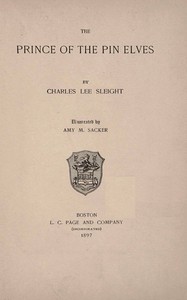
The Prince of the Pin Elves — A Reader’s Guide
Wandering Heroes Classic Adventures
30,976 recorded words. 26 minutes difference from this book's estimate.
View Gutenberg source #71742
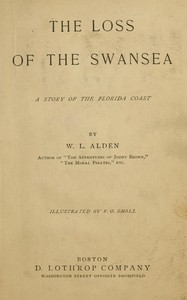
The catalog record for The loss of the Swansea — Key Ideas to Explore provides practical reading context through 36,804 words, 2 hr 41 min estimated reading time, and 15 detected text sections.
The text analysis averages about 22.5 words per sentence, while the detected sections provide another way to judge how the source is divided.
Project Gutenberg metadata also associates the work with “Orphans -- Juvenile fiction,” connecting these edition facts with the source record’s subject description.
Explore this collection
These alternatives are selected using recorded categories and estimated reading time.
About 135 minutes
Wandering Heroes Classic Adventures
30,976 recorded words. 26 minutes difference from this book's estimate.
View Gutenberg source #71742About 217 minutes
Wandering Heroes Classic Adventures
49,818 recorded words. 56 minutes difference from this book's estimate.
View Gutenberg source #75952About 219 minutes
Wandering Heroes Classic Adventures
50,305 recorded words. 58 minutes difference from this book's estimate.
View Gutenberg source #76807Search stored excerpts and compare books → Choose by your preferences →
Choices use stored catalog measurements. Estimates vary with reading speed. A shared category is a catalog label, not a claim that two books have the same argument or literary quality.
Search reads excerpt text stored with this catalog and links to its associated Gutenberg record. The connection is stored in the site database; this tool does not recheck that every excerpt is word-for-word identical to that external record. Excerpt search does not cover every chapter and does not verify historical publication dates.
Catalog snapshot checked: 2026-09-25. Coverage: 97 public books, 97 available source excerpts.
Read the complete public-domain text at its original source.
Read on Project GutenbergThe narrator introduces himself as nearly fifteen, his brother Tom a little over sixteen, when their father dies. The voice is matter-of-fact: "There were no more of us, for our mother had died when I was so little that I could scarcely remember her." This plain, unembellished tone persists throughout the excerpts, grounding extraordinary events—mutiny, shipwreck, pirates—in a boy's practical observations. Alden avoids heightened emotion, letting the narrator's calm reportage create a distinct contrast with the dangers described.
The first-person narration is consistently understated. When the orphaned brothers are sent to America, the narrator states their finances with precision: the partners "bought the share themselves for thirty pounds" and after passage "gave us two pounds ten and threepence, which was all the money that was left." This exactness extends to descriptions of action. During the treasure dig, the narrator notes they had "absolutely nothing to dig with except a hatchet" and must "cut some sharp sticks to use as spades." The voice never inflates; it reports. Even moments of tension, like discovering a deserted Indian village, are delivered in the same steady cadence: "Naturally we were greatly relieved, and ventured to talk in our natural voices." This restraint is a deliberate authorial choice, keeping the focus on events rather than the narrator's inner turmoil.
Dialogue in the excerpts does more than advance plot—it distinguishes personalities through word choice and rhythm. Old Bill, the seasoned sailor, speaks in a colloquial, contracted idiom: "Right under us lies our fortin’. We’ll share and share alike, young masters, won’t we?" His speech is peppered with dialect markers like "fortin’" and "don’t let’s waste any more time." The narrator, by contrast, uses more formal, complete sentences: "Certainly we will," he replies. Tom's interjection—"Better give Bill a good half of the lot"—shows a generous, practical nature. When Bill warns about Indians, he whispers urgently: "Don’t touch ’em. They belong to the Injuns, and there must be a village close to us." The shift from his usual tone to hushed alarm is effective because it is rare. Alden uses dialogue sparingly, making each exchange carry weight.
The Florida coast is rendered through specific, functional descriptions. The island cove is "so completely surrounded with bushes that a savage might have stood within a yard of the boat without seeing it." This simile is practical, not decorative. Landmarks are precise: a big tree with a cross cut in the bark, "now hardly visible because of the growth of the bark," and three trees standing close together. The narrator measures "twenty-one paces" between them. When the characters follow a path, the detail that "the new grass is growing in it" signals disuse. Alden builds setting through such concrete observations rather than atmospheric prose. The Everglades, caves, and labyrinth of waterways are presented as obstacles to be navigated, not romanticized landscapes. This functional approach keeps the reader oriented in the boys' physical world.
Alden repeatedly emphasizes the practical challenges of survival. The brothers are "better sailors than either of the two apprentices" because they worked the pilot boat. When they need to dig for treasure, the lack of a spade becomes a central problem: they must improvise with sharpened sticks. The narrator notes the difficulty: "It was slow work, for while we could break up the earth with the sticks, we had to stop every little while and scoop the loose dirt." This attention to manual labor recurs throughout. Even the mutiny is described in terms of work: the captain had agreed the boys would not have to work their passage. The authorial choice to dwell on tools, effort, and ingenuity grounds the adventure in credible struggle. It also subtly reinforces the boys' competence—they are not passive passengers but active problem-solvers.
Readers attentive to Alden's craft will notice how the narrator's unadorned voice shapes every scene. The story never tells you how to feel; it trusts the events to speak. Pay particular attention to what the narrator omits—moments where another writer might insert fear or wonder are passed over in favor of the next practical step. This restraint is the book's defining stylistic feature, and it rewards a careful reading.
That rainy afternoon, the Swansea’s cave refuge felt less like adventure and more like quiet shelter, the boy’s flat voice somehow warm in its honesty. Later, setting it aside, I found myself lingering on how small creatures make homes in unseen places, which led me to The Prince of the Pin Elves — A Reader’s Guide. A gentler sort of hiding, perhaps, but the feeling of careful watchfulness stayed the same.
A brief reflection can help important ideas stay with you longer.