About 219 minutes
Another year with Denise and Ned Toodles — Themes and Context
Wandering Heroes Classic Adventures
50,305 recorded words. 2 minutes difference from this book's estimate.
View Gutenberg source #76807
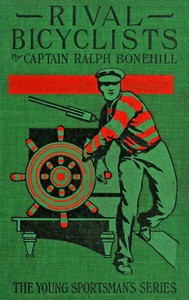
For The rival bicyclists — Reading Companion, the stored edition analysis reports 49,818 words, 3 hr 37 min estimated reading time, and 41 detected text sections.
The text analysis averages about 12.0 words per sentence, while the detected sections provide another way to judge how the source is divided.
Project Gutenberg metadata also associates the work with “Conduct of life -- Juvenile fiction,” connecting these edition facts with the source record’s subject description.
Explore this collection
These alternatives are selected using recorded categories and estimated reading time.
About 219 minutes
Wandering Heroes Classic Adventures
50,305 recorded words. 2 minutes difference from this book's estimate.
View Gutenberg source #76807About 223 minutes
Wandering Heroes Classic Adventures
51,212 recorded words. 6 minutes difference from this book's estimate.
View Gutenberg source #72237About 241 minutes
Wandering Heroes Classic Adventures
55,334 recorded words. 24 minutes difference from this book's estimate.
View Gutenberg source #69609Search stored excerpts and compare books → Choose by your preferences →
Choices use stored catalog measurements. Estimates vary with reading speed. A shared category is a catalog label, not a claim that two books have the same argument or literary quality.
Search reads excerpt text stored with this catalog and links to its associated Gutenberg record. The connection is stored in the site database; this tool does not recheck that every excerpt is word-for-word identical to that external record. Excerpt search does not cover every chapter and does not verify historical publication dates.
Catalog snapshot checked: 2026-09-25. Coverage: 97 public books, 97 available source excerpts.
Read the complete public-domain text at its original source.
Read on Project GutenbergThe story begins with a simple exchange between two boys planning a moonlight ride, but the narrative quickly signals that this is a world where character is tested through small actions. Joe Johnson, introduced as a boy who earns his bicycle through odd jobs and is trusted by his schoolmates, is contrasted with Lemuel Akers, who scowls from behind a pile of boxes. The opening chapter establishes a moral framework through concrete details: Joe's chore of putting wood in the box, his neat suit made by his mother, and his honest reputation.
Stratemeyer uses the bicycle as both a literal vehicle and a symbol of independence. The ride to Greenpoint is promised to be elegant under the full moon, but the real journey is toward conflict. The early pages set up a clear opposition between straightforwardness and malice, with the narrator's direct style leaving no doubt about who deserves sympathy.
The antagonism between Joe and Lemuel is established with remarkable economy. In the first chapter, Lemuel's scowl from behind a pile of boxes at the corner grocery is the only detail needed to mark him as the enemy. The narrator then provides a brief backstory: Lemuel had given Joe the lie in school, was knocked down, and now watches for chances to get even. This is not a complex feud but a straightforward grudge, rooted in public humiliation.
The excerpts do not reveal the full extent of Lemuel's schemes, but his behavior in the fire scene confirms his character. When Mr. Johnson rescues him from a burning building, Lemuel denies needing help and insults Joe by calling him a jailbird. The crowd's reaction—calling him ungrateful and suggesting he be kicked out of town—shows that the narrative aligns with community judgment. Readers are given no reason to sympathize with Lemuel; his role is to embody false accusation and ingratitude.
The fire sequence in the later excerpts is the most dramatic set piece. A section of row dwellings collapses, and burning timbers hurl in all directions, striking down Dick Burns and Lemuel Akers. The rescue is swift: men drag the boys to safety, and cold water revives Dick. Lemuel is hurt in the chest and taken to a drug store, where a doctor cuts open his shirt.
It is at this moment that the theft plot unravels. Simon Pepper, the watchmaker, sees his chains and pins fall from Lemuel's clothing. The discovery is presented as a sudden revelation—Pepper howls and tears open a package. The lawyer quietly confirms that the rest of the stolen goods can be found at a pawnbroker. The scene is efficient: the fire that nearly kills Lemuel also exposes his guilt, clearing Joe of the false accusation. The narrative does not dwell on the irony; it moves quickly to the next action.
Stratemeyer uses dialogue to define characters without lengthy description. Joe's first words are a question about a ride; his second line is a reply from the woodshed, followed by a practical statement about finishing chores. This establishes him as active and responsible. Dick Burns speaks in short, direct sentences: "That suits me, Joe" and "Keep on, Joe, and you'll become an expert." His role is supportive and loyal.
Lemuel's speech is marked by denial and defiance. When rescued, he says, "I was going to jump into the tree, anyway." Later, he calls Joe a jailbird and claims he isn't thankful. The crowd's dialogue reinforces the moral order: "He ought to be kicked out of the town" and "Saved my life! Not much!" The exchanges are blunt and serve to advance the plot while telegraphing each character's stance.
The bicycle is more than a prop; it is a measure of Joe's worth. He earns every dollar for his wheel through odd jobs, and his pride in it is tied to his honesty. The narrator notes that he soon learns to ride exceedingly well, and Dick praises him as an expert. The wheel is also a social tool: it allows Joe to ride with Dick, meet Carrie Burns, and be seen by Lemuel.
In the opening chapter, the bicycle is associated with freedom and moonlight. But the catalog subjects—cycling, friendship, honesty, malicious accusation—suggest that the wheel will also be a source of conflict. The excerpts do not show a race or a cycling competition, but the title promises rivalry on wheels. The bicycle likely becomes a site of competition and perhaps sabotage, though the provided text does not confirm this. Readers should watch for how the wheel is used in later chapters as a symbol of the contest between Joe and Lemuel.
The excerpts offer a clear view of the story's moral architecture: a trustworthy hero, a scheming rival, and a community that eventually sees the truth. The fire scene provides a turning point, but the narrative leaves many questions open—how Lemuel's conspiracy unfolded, what role the pawnbroker plays, and whether the bicycle rivalry extends beyond the opening ride. Readers approaching the full text should pay attention to how Stratemeyer balances action with moral lessons, and how the bicycle serves as both a literal vehicle and a symbol of the contest between honesty and deceit.
Stratemeyer's Joe Johnson, so doggedly honest amidst the rubble and accusations, kept lingering with me. I found myself thinking about how we cling to certainties when the walls come tumbling down. That quiet, persistent search for a core of truth is what I recalled while revisiting The Elixir of Life — Edition Insights. A different pursuit, yet the same steady pulse of hope.
Use these questions to collect your thoughts before moving on.