About 288 minutes
Bob, the photographer — A Closer Reading
Wandering Heroes Classic Adventures
66,077 recorded words. 9 minutes difference from this book's estimate.
View Gutenberg source #75034
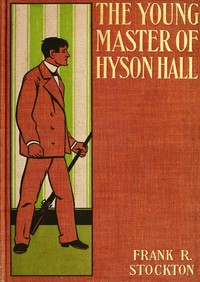
The catalog record for The young master of Hyson Hall — Themes and Context provides practical reading context through 63,953 words, 4 hr 39 min estimated reading time, and 37 detected text sections.
The text analysis averages about 17.0 words per sentence, while the detected sections provide another way to judge how the source is divided.
Project Gutenberg metadata also associates the work with “Conduct of life -- Juvenile fiction,” connecting these edition facts with the source record’s subject description.
Explore this collection
These alternatives are selected using recorded categories and estimated reading time.
About 288 minutes
Wandering Heroes Classic Adventures
66,077 recorded words. 9 minutes difference from this book's estimate.
View Gutenberg source #75034About 251 minutes
Wandering Heroes Classic Adventures
57,642 recorded words. 28 minutes difference from this book's estimate.
View Gutenberg source #73274About 314 minutes
Wandering Heroes Classic Adventures
72,076 recorded words. 35 minutes difference from this book's estimate.
View Gutenberg source #71642Search stored excerpts and compare books → Choose by your preferences →
Choices use stored catalog measurements. Estimates vary with reading speed. A shared category is a catalog label, not a claim that two books have the same argument or literary quality.
Search reads excerpt text stored with this catalog and links to its associated Gutenberg record. The connection is stored in the site database; this tool does not recheck that every excerpt is word-for-word identical to that external record. Excerpt search does not cover every chapter and does not verify historical publication dates.
Catalog snapshot checked: 2026-09-25. Coverage: 97 public books, 97 available source excerpts.
Read the complete public-domain text at its original source.
Read on Project GutenbergFrank R. Stockton opens The Young Master of Hyson Hall with a prefatory note explaining that the story first appeared serially as “Philip Berkeley; or, the Master’s Gun.” The revised title shifts emphasis from the firearm to the boy himself, yet the gun remains a “subtle influence” on events. The novel’s diction is notably direct: characters speak in clipped, colloquial exchanges that reveal tensions without lengthy exposition. For instance, when Helen Webster advises Phil not to answer a letter while angry, her practical tone—“Don’t one of you boys do a single thing till I have seen mother”—grounds the moral conflict in everyday speech. Stockton also uses physical details—a high old-fashioned carriage “swung on straps like a stage-coach,” a horse allowed to “jog along at a very easy gait”—to evoke a specific rural Pennsylvania setting.
Stockton’s dialogue does more than advance plot; it defines personalities through rhythm and word choice. Helen Webster’s speech is peppered with practical reassurances (“Chap isn’t particular, and mother will send some pies”), showing her as a steadying influence. Chap’s exclamation—“Good!… this garrison is greatly in need of pies”—uses military metaphor playfully, hinting at his adventurous spirit. Phil’s outbursts, such as “I think he has treated me outrageously,” reveal a hot-tempered pride. The author avoids long soliloquies; instead, characters interrupt and overlap, creating a naturalistic flow. Even minor figures like the elderly driver “old William” are given silent presence through description of his slow gait, reinforcing the social hierarchy of the Webster household.
Stockton invests ordinary objects with narrative significance. The master’s gun, though not described in the excerpts, is flagged in the preface as a persistent influence. Similarly, the Webster family carriage is rendered with precise detail: “a high, old-fashioned carriage, swung on straps like a stage-coach, and with a little seat near the roof for the driver.” Its single horse and “very easy gait” mirror Helen’s reluctance to confront Mr. Welford. The carriage becomes a psychological container—its jolting and slow pace externalize her anxiety. Stockton’s descriptive choices (the “queer old vehicle,” the “little seat near the roof”) ground the story in a tangible world where objects carry emotional weight.
The Pennsylvania river country is not just backdrop but a moral arena. Stockton’s setting includes “the straight path across the fields,” “Spatterdock Point,” and “the Lonely Sumach,” names that evoke both geography and isolation. The river itself appears in chapter titles (“The Fire on the Thomas Wistar,” “A column of water rose from the river”) as a site of action and consequence. The Webster home is implied to be a place of plenty—“There’s always lots of things on a place like this”—contrasting with the uncertainty of Phil’s position at Hyson Hall. By situating key conversations in transit (Helen in the carriage, Phil at home with Chap), Stockton links physical movement to emotional states, making the landscape a participant in the moral drama.
The thirty-chapter structure, with titles like “Old Bruden makes a Move” and “Touron in the Field,” suggests an episodic rhythm typical of serial fiction. Each chapter functions as a discrete scene, often ending on a note of suspense or decision. Stockton uses chapter breaks to shift perspective: one chapter may follow Phil, the next Helen or Old Bruden. This technique allows multiple viewpoints on the same conflict—for instance, Helen’s mission to Mr. Welford is prepared in one chapter and executed in another. The author also employs chapter titles that hint at action (“Chap shoots a Little and plans a Great Deal”) while the text itself lingers on conversation and interior doubt, creating a tension between promised adventure and actual deliberation.
Readers attentive to Stockton’s craft will notice how he balances the demands of serial adventure with a quiet interest in moral psychology. The novel rewards those who listen to what characters say—and what they leave unsaid—as much as to what they do. The master’s gun, though central to the plot, is ultimately a catalyst for choices about loyalty, honesty, and responsibility. Stockton’s Pennsylvania is a place where a boy’s reputation can be unmade by a French boy’s words, and where a sister’s errand in a jolting carriage may matter as much as any chase or fire.
There’s something about Philip’s restless river days in The Young Master of Hyson Hall that lingers—the way moral choices arrive quietly, like weather. I felt that same unhurried ache reading The rival bicyclists — Reading Companion, where a simpler road carries its own gentle weight. Some stories just stay, don’t they? Like old friends, barely spoken to.
Answer a few questions and save a private reflection on this device.