About 279 minutes
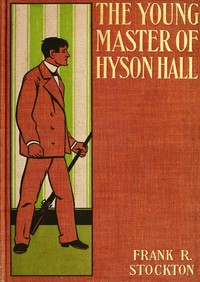
The young master of Hyson Hall — Themes and Context
Wandering Heroes Classic Adventures
63,953 recorded words. 9 minutes difference from this book's estimate.
View Gutenberg source #71952
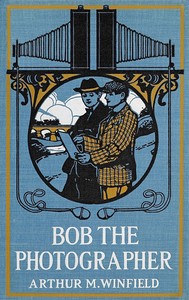
The catalog record for Bob, the photographer — A Closer Reading provides practical reading context through 66,077 words, 4 hr 48 min estimated reading time, and 39 detected text sections.
The text analysis averages about 11.4 words per sentence, while the detected sections provide another way to judge how the source is divided.
Project Gutenberg metadata also associates the work with “Adventure stories,” connecting these edition facts with the source record’s subject description.
Explore this collection
These alternatives are selected using recorded categories and estimated reading time.
About 279 minutes
Wandering Heroes Classic Adventures
63,953 recorded words. 9 minutes difference from this book's estimate.
View Gutenberg source #71952About 314 minutes
Wandering Heroes Classic Adventures
72,076 recorded words. 26 minutes difference from this book's estimate.
View Gutenberg source #71642About 251 minutes
Wandering Heroes Classic Adventures
57,642 recorded words. 37 minutes difference from this book's estimate.
View Gutenberg source #73274Search stored excerpts and compare books → Choose by your preferences →
Choices use stored catalog measurements. Estimates vary with reading speed. A shared category is a catalog label, not a claim that two books have the same argument or literary quality.
Search reads excerpt text stored with this catalog and links to its associated Gutenberg record. The connection is stored in the site database; this tool does not recheck that every excerpt is word-for-word identical to that external record. Excerpt search does not cover every chapter and does not verify historical publication dates.
Catalog snapshot checked: 2026-09-25. Coverage: 97 public books, 97 available source excerpts.
Read the complete public-domain text at its original source.
Read on Project GutenbergBob, the photographer, opens with its protagonist already in trouble, as the first chapter title "Bob and His Troubles" suggests. The table of contents reveals a pattern: nearly every chapter begins with "Bob" followed by an action—"Bob at the Cliff," "Bob Makes His Escape," "Bob Takes a Dive Overboard." This structure signals a picaresque series of episodes rather than a single plot arc. The author, writing under the pseudonym Arthur M. Winfield, was also known for the Rover Boys series, and the brisk chapter titles echo that formula.
The excerpts show Bob as a young photographer who must think on his feet. In one scene, a man claiming to be the President of the Sandwich Islands demands a tintype of his skeleton; Bob tries to placate him, then uses the tripod as a weapon. The episode ends with the man breaking his leg fleeing down stairs. The narrative voice is direct, with short sentences and frequent exclamation points, matching the adventure-story tone.
The subtitle "A Hero in Spite of Himself" is not just a tagline; it reflects how Bob's bravery emerges reactively. In the excerpt, he does not seek out the lunatic—the man enters his studio. Bob first tries reason, then firmness, and only resorts to physical force when choked. His rescue comes from others (Mr. Starleigh and Mr. Martin), not his own planning. This pattern suggests Bob's heroism is situational, born of necessity rather than ambition.
The author's introduction states the book's moral: success comes from doing "whatever their hands find to do" to the best of one's ability. Bob's photography work is the vehicle for this lesson. He obtains a job with a railroad company making pictures for guidebooks, which leads to adventures. The excerpts do not show him as a master photographer but as a quick learner who uses his camera as a tool for survival.
Bob's camera equipment doubles as defensive gear. In the lunatic scene, he picks up a "folded tripod" to advance on the man. Earlier, the man had used the tripod as a weapon, swinging it at Bob. The tripod is described as a metal or wooden stand, heavy enough to cause injury. This detail ties the profession to the action: Bob's trade gives him both his livelihood and his means of protection.
Other chapters hint at similar resourcefulness: "Bob Takes a Dive Overboard" and "Bob on the Freight Train" suggest he uses his environment—water, trains—to escape or pursue. The railroad setting is not just background; it provides the mobility and danger that drive the plot. The excerpts do not reveal how Bob uses his camera in these moments, but the chapter titles imply photography is often secondary to survival.
The dialogue in the excerpt is functional and reveals character through speech patterns. The lunatic speaks in short, urgent phrases: "Will you take the picture?" "I must catch the next ocean steamer for the Sandwich Islands." His delusion is conveyed through specific, absurd details—being president of a faraway place, demanding a skeleton photo. Bob's replies are practical: "Put down the tripod, and sit in the chair if you want the picture of your skeleton taken." He uses sarcasm to manage the situation.
Mr. Starleigh and Mr. Martin speak in exclamations: "Hullo! what's this?" "He is choking the boy to death." Their intervention is swift and decisive. The author does not linger on internal thoughts; action and dialogue carry the scene. This brisk style suits the adventure genre, prioritizing pace over psychology.
The book's 33 chapters are short, averaging about 2,000 words each. The table of contents shows a rhythm: Bob faces a problem, acts, and moves to a new location. Chapter titles like "Bob Is Left to His Fate" and "Bob Makes His Escape" create cliffhangers. The excerpt from Chapter XXIV ("Bob Sticks up for a Friend") suggests loyalty as a theme, but the excerpts do not develop it fully.
The pacing in the lunatic scene is rapid: the attack, rescue, and aftermath occur in a few paragraphs. The author uses short sentences to heighten tension: "The attack was so unexpected that Bob was borne over backward." Then, relief comes abruptly with the door opening. This technique keeps the reader engaged but can feel rushed. The book likely maintains this tempo throughout, with little downtime between incidents.
Readers should approach Bob, the photographer as a series of linked adventures rather than a novel with a single arc. The excerpts suggest that Bob's character develops through repeated tests of nerve, not through introspection. Pay attention to how he uses his camera and equipment in each chapter—they are not just props but tools for problem-solving. The railroad setting provides a moving backdrop, and the episodic structure rewards reading in short bursts. The book's moral is explicit from the start, but the fun lies in seeing how Bob stumbles into heroism.
I keep thinking about Bob, cornered in that studio with nothing but a tripod, and how sheer grit carried him through. It reminds me, quietly, of that other story about youthful pluck, A millionaire at sixteen — Themes and Context. There’s something tender in watching very young people discover they’re tougher than they ever guessed. I still recall that odd, proud ache.
Create a short personal record of your experience with this book.