About 397 minutes
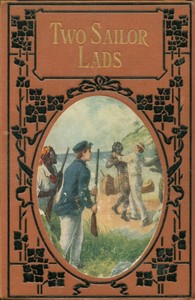
Two sailor lads — Context and Discussion
Wandering Heroes Classic Adventures
91,206 recorded words. 29 minutes difference from this book's estimate.
View Gutenberg source #71992
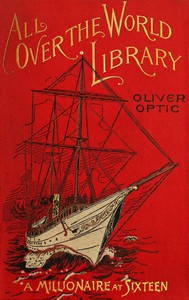
This digital edition of A millionaire at sixteen — Themes and Context is described by source-level measurements including 84,593 words, 6 hr 8 min estimated reading time, and 43 detected text sections.
The text analysis averages about 19.1 words per sentence, while the detected sections provide another way to judge how the source is divided.
Project Gutenberg metadata also associates the work with “Conduct of life -- Juvenile fiction,” connecting these edition facts with the source record’s subject description.
Explore this collection
These alternatives are selected using recorded categories and estimated reading time.
About 397 minutes
Wandering Heroes Classic Adventures
91,206 recorded words. 29 minutes difference from this book's estimate.
View Gutenberg source #71992About 314 minutes
Wandering Heroes Classic Adventures
72,076 recorded words. 54 minutes difference from this book's estimate.
View Gutenberg source #71642About 288 minutes
Wandering Heroes Classic Adventures
66,077 recorded words. 80 minutes difference from this book's estimate.
View Gutenberg source #75034Search stored excerpts and compare books → Choose by your preferences →
Choices use stored catalog measurements. Estimates vary with reading speed. A shared category is a catalog label, not a claim that two books have the same argument or literary quality.
Search reads excerpt text stored with this catalog and links to its associated Gutenberg record. The connection is stored in the site database; this tool does not recheck that every excerpt is word-for-word identical to that external record. Excerpt search does not cover every chapter and does not verify historical publication dates.
Catalog snapshot checked: 2026-09-25. Coverage: 97 public books, 97 available source excerpts.
Read the complete public-domain text at its original source.
Read on Project GutenbergOliver Optic's A Millionaire at Sixteen (1892) opens with a preface that immediately addresses the hero's fortune: Louis Belgrave, already a millionaire from the previous volume, has his wealth augmented to "a millionaire and a half." The preface insists this sum is necessary for the story's purpose, and that the hero is "well guarded by his 'guardian-mother'" and a prudent trustee. The magnificent steam-yacht, the Guardian-Mother, is not for sport but for a specific exigency. This framing primes the reader to expect a plot where money enables action, not idleness.
The preface does more than introduce; it sets terms. Optic defends the hero's wealth against potential criticism, asserting that the large sum is needed for the story's purpose. He also clarifies that Louis has "no taste for racing" and is "utterly opposed to betting." This moral framing is typical of Optic's juvenile fiction, but here it also signals that the yacht will be used for serious, perhaps rescue-oriented, missions. The preface names the trustee and the "guardian-mother" as safeguards, hinting at a tension between youthful wealth and adult supervision. A first reader should note these assurances: they establish the ethical boundaries within which the adventure will unfold.
In the excerpt from the middle of the book, the narrative shifts to a tense, nocturnal search. Louis, Captain Ringgold, and a cook have just learned of a plot: the steamer Maud has been taken, and the conspirators plan to sail to Bermuda. The trio walks "at a tolerably rapid pace" toward the town, crossing a footbridge over a creek. It is midnight, and most lights are out. They search the wharves but find no steamer, only a few vessels tied up against a gale. Captain Ringgold observes the wind hauling westward, a "dry storm" that will soon clear. Louis wishes he owned the steam-yacht mentioned earlier, and Ringgold agrees: "If you did, there would be music very soon at the heels of the Maud!" This passage shows the story's reliance on immediate, practical obstacles—lack of a tugboat, a storm, a missing vessel—rather than abstract dilemmas.
The excerpt reveals character through speech and small actions. The cook, described as "one of those men of no force of character," reports the plot with repeated "sir" and mangled h's, yet his information is crucial. Captain Ringgold is decisive: "We must do something, and not stand here all night." He recalls an old acquaintance, Captain Drench Boulong, and leads the way to his cottage, knocking "loud enough to wake all the sleepers within a mile." Louis, though wealthy, is not passive; he identifies Boulong as the mate of a yacht he knows. The dialogue is brisk, with each line advancing the search. Optic uses specific names (Boulong, Woolridge) and nautical terms ("weatherly vessel," "pounding against the seas") to create a credible maritime setting. A first reader should watch how these details accumulate to build a world where every character has a function and every object a potential use.
Although the excerpts do not show the Guardian-Mother in action, the preface and the midnight scene establish its symbolic and practical importance. The yacht is both a possession and a tool, representing Louis's wealth but also his responsibility. The preface emphasizes that the hero is "well guarded" by his mother and trustee, suggesting that his adventures will be supervised. In the excerpt, Louis's wish for the steam-yacht is immediately seconded by Captain Ringgold, who imagines pursuing the Maud. This sets up a dynamic where the yacht is the solution to a problem, not a luxury. A first reader should anticipate that the vessel will enable a chase or rescue, and that Louis's moral safety—as promised—will be tested through its use.
These excerpts suggest that A Millionaire at Sixteen balances adventure with moral instruction, using wealth as a plot engine rather than a theme. The reader is guided by clear character roles—the decisive captain, the informant cook, the wealthy but supervised hero—and by a setting that demands practical problem-solving. Pay attention to how Optic deploys nautical details and dialogue to advance the story; they are not decoration but the means by which the plot moves forward.
That line in A Millionaire at Sixteen about the midnight search—how the yacht becomes this quiet, purposeful companion—stayed with me long after closing it. It reminded me of another story where adventure feels less like plot and more like a private way of seeing things. The Tarzan twins — Story, Setting & Ideas holds that same gentle, lingering pull, like a familiar scent near saltwater.
Capture what you thought, learned, and would like to remember.