About 288 minutes
Bob, the photographer — A Closer Reading
Wandering Heroes Classic Adventures
66,077 recorded words. 26 minutes difference from this book's estimate.
View Gutenberg source #75034
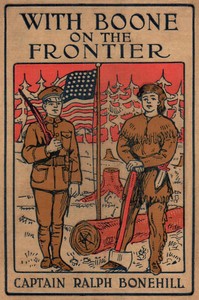
The catalog record for With Boone on the frontier — Key Ideas to Explore provides practical reading context through 72,076 words, 5 hr 14 min estimated reading time, and 46 detected text sections.
The text analysis averages about 15.8 words per sentence, while the detected sections provide another way to judge how the source is divided.
Project Gutenberg metadata also associates the work with “Adventure stories,” connecting these edition facts with the source record’s subject description.
Explore this collection
These alternatives are selected using recorded categories and estimated reading time.
About 288 minutes
Wandering Heroes Classic Adventures
66,077 recorded words. 26 minutes difference from this book's estimate.
View Gutenberg source #75034About 279 minutes
Wandering Heroes Classic Adventures
63,953 recorded words. 35 minutes difference from this book's estimate.
View Gutenberg source #71952About 368 minutes
Wandering Heroes Classic Adventures
84,593 recorded words. 54 minutes difference from this book's estimate.
View Gutenberg source #77036Search stored excerpts and compare books → Choose by your preferences →
Choices use stored catalog measurements. Estimates vary with reading speed. A shared category is a catalog label, not a claim that two books have the same argument or literary quality.
Search reads excerpt text stored with this catalog and links to its associated Gutenberg record. The connection is stored in the site database; this tool does not recheck that every excerpt is word-for-word identical to that external record. Excerpt search does not cover every chapter and does not verify historical publication dates.
Catalog snapshot checked: 2026-09-25. Coverage: 97 public books, 97 available source excerpts.
Read the complete public-domain text at its original source.
Read on Project GutenbergThe hunting episode in Chapter XVIII of With Boone on the Frontier reveals a narrative voice that oscillates between brisk action and patient observation. The boys, Harry and Joe, track deer through snow-covered timber, their dialogue alternating between worry and reassurance. The prose shifts from tense, silent stalking—"each with his gun in his hand and eyes on the alert"—to a sudden burst of action when they fire. This rhythm, common in Stratemeyer's adventure fiction, keeps the reader engaged while grounding the scene in sensory details like hoofprints and stripped bark.
The boys' exchanges serve not only to convey information but also to modulate the story's tempo. When Joe worries about the lack of game, Harry responds with measured optimism: "Oh, don't worry, Joe. A half a day isn't three days, you know." This call-and-response pattern creates a natural ebb and flow, slowing the narrative during moments of reflection and quickening it during action. The dialogue also reveals character: Harry is the more confident, Joe the more cautious. Their banter about hunting knives versus guns—"We could almost kill them with our hunting knives"—adds a layer of youthful bravado that fits the juvenile adventure genre.
Stratemeyer's prose is lean but evocative. He describes the setting with precise, functional details: "the snow must be at least ten feet deep," "a clump of walnut trees," "bushes that had been stripped of the tenderest of their bark." These observations ground the scene without excessive embellishment. The author avoids florid language, instead relying on concrete nouns and active verbs. The deer trail is "by no means a straight one," which the boys interpret as a sign that the deer "took their time." Such details reward attentive reading and build a credible wilderness atmosphere.
The chapter alternates between movement and stillness. The boys tramp through snow, then rest to eat; they stalk game, then build a shelter. This pattern mirrors the physical demands of frontier life and gives the narrative a natural rhythm. The transition from the excitement of the hunt to the quiet of camp is marked by a shift in tone: after firing their guns, the boys are "dog tired" and focus on practical tasks like cutting boughs and building a fire. The final paragraph slows to a domestic pace, describing the preparation of venison steaks. This structural contrast between peril and comfort is a hallmark of Stratemeyer's adventure style.
Readers attentive to pacing will notice how Stratemeyer uses dialogue and descriptive brevity to control tension. The hunting scene exemplifies his method: short, declarative sentences during action, longer passages during reflection. This technique, while simple, effectively sustains momentum across a long narrative. The excerpt offers a clear window into the author's craft, showing how he balances excitement with the mundane realities of survival.
There’s a particular stillness in how Stratemeyer’s boys read the wilderness, each rustle weighed before they speak. That same careful attention hums through The rival bicyclists — Reading Companion, though the terrain shifts from forest to open road. I’ve often thought both books share a quiet patience, a willingness to let small decisions gather weight. A familiar comfort, like finding an old friend on an unexpected path.
Create a short personal record of your experience with this book.