About 102 minutes
The wanderer in Africa — Inside the Classic
Wandering Heroes Classic Adventures
23,266 recorded words. 7 minutes difference from this book's estimate.
View Gutenberg source #76281
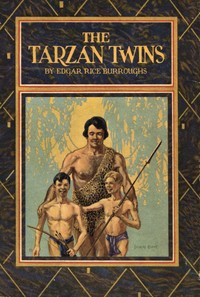
The Tarzan twins — Story, Setting & Ideas can be approached with a clearer sense of reading commitment from its source measurements: 21,680 words, 1 hr 35 min estimated reading time, and 13 detected text sections.
The text analysis averages about 16.6 words per sentence, while the detected sections provide another way to judge how the source is divided.
Project Gutenberg metadata also associates the work with “Adventure stories,” connecting these edition facts with the source record’s subject description.
Explore this collection
These alternatives are selected using recorded categories and estimated reading time.
About 102 minutes
Wandering Heroes Classic Adventures
23,266 recorded words. 7 minutes difference from this book's estimate.
View Gutenberg source #76281About 55 minutes
Wandering Heroes Classic Adventures
12,560 recorded words. 40 minutes difference from this book's estimate.
View Gutenberg source #1215About 135 minutes
Wandering Heroes Classic Adventures
30,976 recorded words. 40 minutes difference from this book's estimate.
View Gutenberg source #71742Search stored excerpts and compare books → Choose by your preferences →
Choices use stored catalog measurements. Estimates vary with reading speed. A shared category is a catalog label, not a claim that two books have the same argument or literary quality.
Search reads excerpt text stored with this catalog and links to its associated Gutenberg record. The connection is stored in the site database; this tool does not recheck that every excerpt is word-for-word identical to that external record. Excerpt search does not cover every chapter and does not verify historical publication dates.
Catalog snapshot checked: 2026-09-25. Coverage: 97 public books, 97 available source excerpts.
Read the complete public-domain text at its original source.
Read on Project GutenbergThe Tarzan Twins opens with a narrator who delights in undercutting expectations. The boys, Dick and Doc, are introduced as twins who are not twins—their mothers were twin sisters, and each boy resembles his own mother. The narrator leans into the paradox: “they shattered every rule that has been laid down for twins from the very beginning of time.” This wry, self-aware voice sets the tone for a story that constantly plays with categories: English and American, civilized and wild, real and performed.
The excerpt from Chapter Two shows the boys captured by the cannibal chief Galla Galla. Here, the narrator’s humor turns practical. Doc invents a “big medicine” routine—palming his knife, shouting “Abacadabra! Allo, presto, change cars and begone!”—to avoid surrendering their only useful tools. The scene balances genuine danger with the boys’ resourceful, almost theatrical defiance.
Doc’s sleight-of-hand is the excerpt’s most vivid set piece. He covers the knife, blows on his hands, and recites a jumble of stage magic and nonsense: “Now you see it, now you don’t.” The chief, Galla Galla, is first puzzled, then frightened—he stumbles backward when Doc “extracted the missing article from Galla Galla’s left ear.” The trick works not because the chief is gullible, but because Doc frames it as “big medicine,” a term Bulala supplies. The boys are learning to translate their own culture into terms the villagers respect.
The scene also reveals a pattern: the boys’ survival depends on improvisation. They have no plan, only a knife and a willingness to bluff. Doc’s inspiration is described as “little short of inspiration,” and his eyes “snapped and sparkled.” The narrator treats the trick as both clever and precarious—the chief’s dignity is wounded, and his temper is “none too good at best.” The comedy never fully masks the threat.
When Galla Galla demands the boys strip and wear rags, the exchange becomes a negotiation over identity. Doc asks, “How do you put this stuff on, anyway?”—a line that underscores their unfamiliarity with the local dress. Yet the boys cling to their knives, the one object that still connects them to their former selves. The narrator notes that the knives are “the only useful things we have.”
The demand to change clothes is also a demand to surrender status. The boys resist not out of modesty but because the rags mark them as captives. Doc’s trick allows them to keep the knives hidden, preserving a small measure of agency. The scene echoes the opening’s theme of dual identity: the boys are both English/American schoolboys and jungle prisoners, and their clothing becomes a visible marker of that split.
Throughout the excerpt, the narrator maintains a tone of amused detachment. The opening chapter’s mock-serious explanation of why the boys are called twins—“One could almost start a guessing contest with a conundrum like this”—establishes a voice that enjoys paradox. In the knife scene, the narrator reports Doc’s shouted “Abacadabra!” without comment, letting the absurdity speak for itself.
This distance also allows the narrator to hint at danger without melodrama. When Galla Galla “came to his feet fairly bubbling with rage,” the phrase is vivid but controlled. The narrator never tells the reader how to feel; instead, the humor and tension arise from the boys’ own reactions. Doc’s “By Jimminy crickets!” and Dick’s fearful “Tell him it won’t hurt him” keep the focus on their perspective. The result is a story that trusts its readers to see both the comedy and the risk.
Readers coming to The Tarzan Twins should expect a narrative that treats its young heroes with affection but not sentimentality. The boys are resourceful, but their successes are improvised and fragile. Pay attention to the narrator’s asides—they often reveal more about the story’s attitude than the action does. The knife trick is a good test case: it works, but it also makes an enemy. That balance between triumph and consequence is the book’s real engine.
I've often thought that boyhood’s truest magic lies in improvising with what’s at hand, and I see that same quiet ingenuity in the twins’ jungle play and the Bunnikins’ moonlit capers. The Bunnikins-Bunnies and the Moon King — Context and Discussion shares that tenderly stubborn belief that imagination outwits any rulebook. Both books remind me of homemade swords from sticks—simple, earnest, and entirely alive.
Capture what you thought, learned, and would like to remember.