About 95 minutes
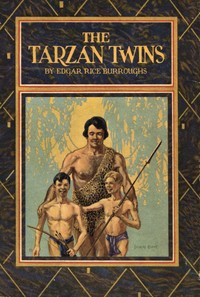
The Tarzan twins — Story, Setting & Ideas
Wandering Heroes Classic Adventures
21,680 recorded words. 7 minutes difference from this book's estimate.
View Gutenberg source #71879
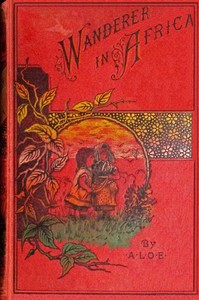
For The wanderer in Africa — Inside the Classic, the stored edition analysis reports 23,266 words, 1 hr 42 min estimated reading time, and 3 detected text sections.
The text analysis averages about 22.3 words per sentence, while the detected sections provide another way to judge how the source is divided.
Project Gutenberg metadata also associates the work with “Christian life -- Juvenile fiction,” connecting these edition facts with the source record’s subject description.
Explore this collection
These alternatives are selected using recorded categories and estimated reading time.
About 95 minutes
Wandering Heroes Classic Adventures
21,680 recorded words. 7 minutes difference from this book's estimate.
View Gutenberg source #71879About 135 minutes
Wandering Heroes Classic Adventures
30,976 recorded words. 33 minutes difference from this book's estimate.
View Gutenberg source #71742About 55 minutes
Wandering Heroes Classic Adventures
12,560 recorded words. 47 minutes difference from this book's estimate.
View Gutenberg source #1215Search stored excerpts and compare books → Choose by your preferences →
Choices use stored catalog measurements. Estimates vary with reading speed. A shared category is a catalog label, not a claim that two books have the same argument or literary quality.
Search reads excerpt text stored with this catalog and links to its associated Gutenberg record. The connection is stored in the site database; this tool does not recheck that every excerpt is word-for-word identical to that external record. Excerpt search does not cover every chapter and does not verify historical publication dates.
Catalog snapshot checked: 2026-09-25. Coverage: 97 public books, 97 available source excerpts.
Read the complete public-domain text at its original source.
Read on Project GutenbergThe story opens on a sandy African waste where eight oxen strain to drag a heavy waggon. Hans Kuhe, a Dutch Boer, curses his losses—four oxen dead, two stolen by Bushmen—while his Hottentot driver Pollux plies a whip that leaves weals on the panting beasts. David Aspinall, an English lad, limps from a kick and reflects that a year ago he was strong and light-hearted; now his clothes hang loose on wasted limbs. The scene establishes a pattern of physical extremity and moral contrast that runs through the tale.
The narrative repeatedly shifts between barren, threatening spaces and deceptive visions of relief. David spends a night alone on the waste, feeding a fire to scare off lions, while the full moon falls on a black poisonous snake. At dawn he sees a beautiful lake with soft isles—a mirage that offers no water. The text draws a direct parallel: the false lake is “as false as it was fair,” and David would exchange it for a single cup of cold water. This movement from night to deceptive daylight mirrors the spiritual journey from despair to false comfort, a structure that recurs as David encounters both real dangers and illusory hopes.
Fire appears as a practical necessity and a spiritual symbol. David keeps his fire burning to scare predators, and the narrator likens it to “the grace of God in the heart, which every Christian must carefully tend.” The full moon and starlight provide the only illumination during his vigil, while dim forms like shadows move in the distance. The low roar of a beast strikes terror, but David tries to keep his soul calm by trusting in divine protection. These images—fire, moonlight, shadowy forms—create a sensory pattern that reinforces the theme of vigilance against both physical and spiritual threats.
The Thirty-Second Psalm frames the entire work. The title declares it “a tale illustrative of the thirty-second Psalm,” and the first chapter opens with its verses: “Blessed is he whose transgression is forgiven, whose sin is covered.” David’s internal monologue echoes this language. He reflects on being “dead in sin” and unrepenting, then thanks God for mercy. The psalm’s themes of confession, forgiveness, and guidance shape David’s resolutions: he vows to labour cheerfully for his father and for God, not as a bondsman but as a son. The narrative thus moves through stages of repentance and hope, anchored by the psalm’s structure.
The narrator frequently breaks the story with direct appeals. When David tends his fire, the text shifts to second person: “Oh! Dear reader, when we find our hearts growing cold towards God … let us tremble and rouse ourselves.” These intrusions turn the tale into a sermon-like meditation, linking David’s physical ordeal to the reader’s spiritual state. The voice is urgent and moralizing, yet grounded in concrete details—the fire, the snake, the mirage. This technique creates a dual movement: the reader follows David’s journey while being repeatedly reminded to apply its lessons to their own life.
Readers attentive to the interplay of landscape and scripture will find the tale’s structure rewarding. The waste, the mirage, the fire, and the psalm verses are not decorative but functional: each scene advances both the plot and the moral argument. Because the excerpts cover only the opening chapters, the full arc of David’s wanderings and his eventual homecoming remains unknown, but the pattern of physical hardship matched with spiritual reflection is established from the first page.
I kept thinking about that servant walking through the sand, how the mirage felt so real until he got closer. It reminded me of reading The Tarzan twins years later, how both stories sit with that quiet ache of things not being what they seem under a hot, strange sky. Firelight and moonlight, but the loneliness stays with you. The Tarzan twins — Story, Setting & Ideas lingered in the same gentle way, like a half-remembered dream.
Use these questions to collect your thoughts before moving on.