About 368 minutes
A millionaire at sixteen — Themes and Context
Wandering Heroes Classic Adventures
84,593 recorded words. 29 minutes difference from this book's estimate.
View Gutenberg source #77036
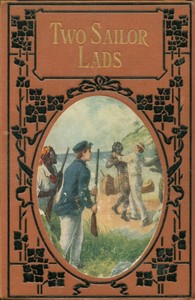
Before opening Two sailor lads — Context and Discussion, the edition data offers a quick orientation: 91,206 words, 6 hr 37 min estimated reading time, and 8 detected text sections.
The text analysis averages about 17.7 words per sentence, while the detected sections provide another way to judge how the source is divided.
Project Gutenberg metadata also associates the work with “Conduct of life -- Juvenile fiction,” connecting these edition facts with the source record’s subject description.
Explore this collection
These alternatives are selected using recorded categories and estimated reading time.
About 368 minutes
Wandering Heroes Classic Adventures
84,593 recorded words. 29 minutes difference from this book's estimate.
View Gutenberg source #77036About 314 minutes
Wandering Heroes Classic Adventures
72,076 recorded words. 83 minutes difference from this book's estimate.
View Gutenberg source #71642About 288 minutes
Wandering Heroes Classic Adventures
66,077 recorded words. 109 minutes difference from this book's estimate.
View Gutenberg source #75034Search stored excerpts and compare books → Choose by your preferences →
Choices use stored catalog measurements. Estimates vary with reading speed. A shared category is a catalog label, not a claim that two books have the same argument or literary quality.
Search reads excerpt text stored with this catalog and links to its associated Gutenberg record. The connection is stored in the site database; this tool does not recheck that every excerpt is word-for-word identical to that external record. Excerpt search does not cover every chapter and does not verify historical publication dates.
Catalog snapshot checked: 2026-09-25. Coverage: 97 public books, 97 available source excerpts.
Read the complete public-domain text at its original source.
Read on Project GutenbergThe catalog subjects for Gordon Stables' Two Sailor Lads list 'Conduct of life,' 'Friendship,' 'Pirates,' 'Shipwrecks,' and 'Caves' among others—a standard set for Victorian adventure fiction. But the excerpts reveal a work more preoccupied with psychological bonds and moral tests than with swashbuckling action. The opening chapter dwells not on a chase but on a quiet evening in a Scottish fishing village, with a sky of 'mad mixture of crimson, orange, purple, and grey.' The first line is a question: 'Hush! Do you hear that cry? What can it be?'—a hook that promises mystery rather than immediate peril.
The excerpts show that Stables gives dreams a structural role unusual in boys' adventure fiction. In Chapter XVIII, Fred Arundel experiences a 'thrice-dreamt dream' that leads him to recognize a frozen landscape and reunite with his lost friend Frank. Frank, too, has dreamed of Fred's arrival: 'I dreamt you would. That is all. And night after night I dreamt that dream again.' This shared premonition is presented as 'God's merciful providence,' not coincidence. The narrator even interrupts to address the reader directly: 'I have a strange fact to record; and mind you, reader, facts are stranger far than fiction, and I must leave the elucidation thereof to the psychologist.' Such metafictional commentary is rare in the genre and suggests Stables was deliberately testing the boundaries of rational explanation.
Despite the catalog subject 'Conduct of life,' the excerpts foreground a specific moral issue: abstinence from alcohol. When Captain Cawdor offers Frank a flask, Frank refuses, explaining that his dearest friend 'fell a victim to accursed rum' and later threw himself into the sea, where sharks tore him apart. This graphic backstory—delivered in a single breathless sentence—makes temperance a life-or-death matter, not a polite virtue. The scene is striking because it occurs during a joyful reunion, not a didactic lecture. Stables, a former Royal Navy surgeon, likely drew on firsthand observations of drink's effects, but the text presents the lesson through personal tragedy rather than sermonizing. The catalog does not list 'Temperance' as a subject, yet it is one of the most vivid themes in the available text.
The catalog includes 'Islands,' 'Pirates,' 'Caves,' and 'Seafaring life,' but the excerpts show a more varied geography. The story opens in a Scottish fishing village with 'wee little whitewashed cottages half hidden in the green of waving elders and drooping silver birch trees.' Later, it moves to an Antarctic ice-field where a ship lies 'on her beam ends' and characters shout across 'dark waters.' The pirates and cannibals promised by chapter titles like 'In Cannibal Islands' do not appear in the provided text, leaving their treatment unclear. The catalog's 'Caves' is barely hinted at (Chapter V is titled 'At the Fisherman's Cave'), while 'Shipwrecks' is represented only by the wreck of the Resolute. Readers expecting a steady diet of tropical island adventures may find the book's early Scottish setting and later polar sequences surprising.
The excerpts from Two Sailor Lads suggest a work that uses adventure conventions to explore memory, loyalty, and moral conviction. The catalog subjects, while accurate, do not capture the book's interest in dream logic or its stark temperance message. Readers approaching this text should be prepared for a narrative that shifts from domestic Scottish scenery to ice-bound mystery, and that treats emotional reunion as seriously as any physical danger. The full novel may reward attention to how Stables balances these elements across its 91,000 words.
Sometimes I think of Two Sailor Lads, how its dreams arrive before the storms, quiet warnings no one heeds until the reunion. It reminds me of another old friend, Martin of old London — Background and Themes, which holds that same patient sorrow—boys learning that fidelity costs something, yet remains the only true harbor. Both whisper their lessons slowly, like tide against stone.
Capture what you thought, learned, and would like to remember.