About 217 minutes
The rival bicyclists — Reading Companion
Wandering Heroes Classic Adventures
49,818 recorded words. 2 minutes difference from this book's estimate.
View Gutenberg source #75952
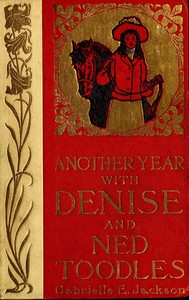
Another year with Denise and Ned Toodles — Themes and Context can be approached with a clearer sense of reading commitment from its source measurements: 50,305 words, 3 hr 39 min estimated reading time, and 26 detected text sections.
The text analysis averages about 22.0 words per sentence, while the detected sections provide another way to judge how the source is divided.
Project Gutenberg metadata also associates the work with “Children -- Conduct of life -- Juvenile fiction,” connecting these edition facts with the source record’s subject description.
Explore this collection
These alternatives are selected using recorded categories and estimated reading time.
About 217 minutes
Wandering Heroes Classic Adventures
49,818 recorded words. 2 minutes difference from this book's estimate.
View Gutenberg source #75952About 223 minutes
Wandering Heroes Classic Adventures
51,212 recorded words. 4 minutes difference from this book's estimate.
View Gutenberg source #72237About 241 minutes
Wandering Heroes Classic Adventures
55,334 recorded words. 22 minutes difference from this book's estimate.
View Gutenberg source #69609Search stored excerpts and compare books → Choose by your preferences →
Choices use stored catalog measurements. Estimates vary with reading speed. A shared category is a catalog label, not a claim that two books have the same argument or literary quality.
Search reads excerpt text stored with this catalog and links to its associated Gutenberg record. The connection is stored in the site database; this tool does not recheck that every excerpt is word-for-word identical to that external record. Excerpt search does not cover every chapter and does not verify historical publication dates.
Catalog snapshot checked: 2026-09-25. Coverage: 97 public books, 97 available source excerpts.
Read the complete public-domain text at its original source.
Read on Project GutenbergThe novel opens with Denise sitting alone in her phaeton, elbows on knees, chin propped on hands, in a posture of dreamy stillness. The narrator lingers on the soft brown curls, the glassy river, the balmy spring air, and the pony Ned Toodles standing motionless, one ear turned backward toward the girl. This unhurried, sensory description establishes a contemplative mood that contrasts sharply with later chapters full of abduction, rescue, and circus antics. The narrative voice shifts between intimate observation of the child's inner life and a more bustling, reportorial tone during action sequences, creating a rhythm that rewards attention to its changes in pace.
The first chapter, “What the Wood-Thrush Told,” devotes several paragraphs to Denise’s reverie, describing the pony’s half-closed eyes and the “fairy-like” quality of the scene. The narrator uses long, flowing sentences that mirror the child’s drifting thoughts. This slow opening is not sustained. By Chapter X, “Troubles Never Come Singly,” the pace accelerates into a series of mishaps, and the prose becomes more clipped and event-driven. The contrast is deliberate: the novel uses the quiet moments to establish character, then disrupts them with comic or perilous incidents. Readers may note how the narrator’s voice becomes more colloquial and exclamatory during these faster passages, as when Pokey “curled herself up in a little heap” and “cried and laughed by turns.”
The narrator frequently attributes thoughts and feelings to animals, but does so with careful qualification. Ned Toodles is described as sympathizing with Denise “so far as an animal can sympathize with a human being’s moods.” Beauty Buttons, the dog, is said to be “trying to tell him the good news.” These moments are not presented as literal mind-reading but as plausible interpretations of animal behavior, grounded in the characters’ observations. The narrative voice thus maintains a boundary between human and animal consciousness while still granting the pets a kind of emotional presence. This technique gives the animals distinct roles in the plot—Ned is abducted, Beauty fetches Mr. Lombard—without anthropomorphizing them completely. The result is a layered voice that shifts between omniscient commentary and close alignment with the children’s perceptions.
The chapter titles function as miniature promises of tone and tempo. Some are lyrical, like “What the Wood-Thrush Told” and “The Sunset Hour,” suggesting reflective interludes. Others are bluntly comic or alarming: “The Earth Opens and Pokey is Swallowed Up,” “Joy Turns Pokey Daft,” “Ned Disgraces Himself, but Makes Amends.” This alternation prepares the reader for shifts in narrative speed. A title like “Mischief” signals a chapter of escalating trouble, and the text delivers: the children are left alone, Pokey proposes reading a book on mesmerism, and the scene quickly devolves into chaos. The titles thus act as a pacing guide, helping the reader anticipate whether the coming pages will linger or rush. This structural clarity is one of the book’s most consistent features, even when the prose itself varies in density.
Readers who attend to the novel’s shifts in tempo will find a work that alternates between quiet character study and boisterous adventure. The narrator’s voice, at once affectionate and brisk, shapes these transitions without smoothing them over. Pay particular attention to the opening of each chapter: the first paragraph often sets the emotional weather for the pages that follow, whether still or stormy.
Reading again how Jackson slows time through Denise and Ned’s eyes, I remember the same hush falling over The Prince of the Pin Elves — that odd, gentle pause where small things matter most. There’s a particular chapter I return to each winter, and lately it feels less like revisiting a story and more like stepping into an old room. The Prince of the Pin Elves — A Reader’s Guide holds that feeling close, word for word.
Create a short personal record of your experience with this book.