About 300 minutes
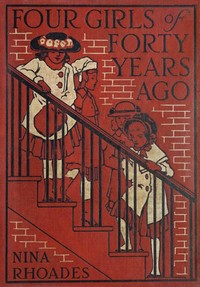
Four girls of forty years ago — Key Ideas to Explore
Historical Psychological Social Fiction
68,827 recorded words. 21 minutes difference from this book's estimate.
View Gutenberg source #73301
This digital edition of A little Irish girl — Reading Notes is described by source-level measurements including 64,030 words, 4 hr 39 min estimated reading time, and 6 detected text sections.
The text analysis averages about 24.1 words per sentence, while the detected sections provide another way to judge how the source is divided.
Project Gutenberg metadata also associates the work with “Orphans -- Juvenile fiction,” connecting these edition facts with the source record’s subject description.
Explore this collection
These alternatives are selected using recorded categories and estimated reading time.
About 300 minutes
Historical Psychological Social Fiction
68,827 recorded words. 21 minutes difference from this book's estimate.
View Gutenberg source #73301About 301 minutes
Historical Psychological Social Fiction
69,091 recorded words. 22 minutes difference from this book's estimate.
View Gutenberg source #73169About 254 minutes
Historical Psychological Social Fiction
58,363 recorded words. 25 minutes difference from this book's estimate.
View Gutenberg source #76530Search stored excerpts and compare books → Choose by your preferences →
Choices use stored catalog measurements. Estimates vary with reading speed. A shared category is a catalog label, not a claim that two books have the same argument or literary quality.
Search reads excerpt text stored with this catalog and links to its associated Gutenberg record. The connection is stored in the site database; this tool does not recheck that every excerpt is word-for-word identical to that external record. Excerpt search does not cover every chapter and does not verify historical publication dates.
Catalog snapshot checked: 2026-09-25. Coverage: 97 public books, 97 available source excerpts.
Read the complete public-domain text at its original source.
Read on Project GutenbergThe novel opens not in Ireland but in a London suburb, at the Miss Clarksons' Educational Establishment for Young Ladies, housed in a former mansion with stone steps and torch-extinguishers still fixed in the railings. Callwell devotes the first chapter to establishing the school's rigid routines and the pressure of approaching examinations, before introducing Norah as an orphan whose circumstances are about to change. The author's descriptive eye lingers on architectural details—carved mantelpieces, a stone-flagged hall—that signal a world of faded gentility. This careful scene-setting, with its measured pace and third-person omniscience, prepares the reader for a story that will balance domestic realism with the wilder Irish setting to come.
The transition from Treherne House to Kilshane is marked by a shift in sensory detail. In London, the narrative attends to the hum of class-rooms and the racing of fingers over piano keys; in Ireland, the prose opens out to sea-sounds, rocky paths, and the darkness of a glen. Callwell uses the journey as a pivot: Norah leaves behind the ordered world of brass plates and examination timetables for a landscape where the Black Monk is said to walk. The author does not hurry this change. Instead, she lets the reader feel the strangeness through Norah's reluctance and Manus's bravado, grounding the supernatural threat in physical details—the narrow path, the overhanging trees, the gun over Manus's shoulder.
Callwell differentiates her characters through speech patterns. Manus speaks in a loud, cheerful voice, his words direct and colloquial: "I've my gun with me, and it's loaded". Norah, by contrast, hesitates and qualifies, reporting what Bride has said about the monk. The author also uses dialect sparingly but pointedly: Bride is described as "the little handmaiden who had been imported into Kilshane to take Biddy's place", and the chapter title "Thim that'll not forgit" (rendered in the frontispiece) signals a vernacular that appears in reported speech. These choices create a texture of voices that distinguishes the English schoolroom from the Irish household without resorting to caricature.
The encounter with the white figure is the most sustained passage of suspense in the excerpts. Callwell builds it methodically: the children's slow ascent, Manus's forced confidence, Norah's grip on his jacket, the breeze "sobbing through the tree-tops". The author withholds the figure's identity, describing only its "tall white" outline and "uplifted" arm. When Manus fires, the narrative refuses to confirm whether he intended to shoot or his hand trembled. The figure does not fall; it "seemed to lean forward as though about to rush upon them". This ambiguity—is it a ghost, a prank, or something else?—is left unresolved in the excerpt, a deliberate gap that keeps the reader oriented toward the children's fear rather than the phenomenon's explanation.
Callwell uses the Irish landscape not as picturesque backdrop but as an active element in the story's tension. The path up the glen is "narrow", "uneven", and the darkness under the trees is "thick". The abbey ruins appear "clearly discernible against the pale sky", a visual contrast that makes the white figure stand out. The sea-shore below offers no retreat; the path only leads down to it. The author also notes the "rocky steps" and the need to edge "carefully, foot by foot", physical details that make the setting feel precarious. This is a place where the ground itself resists easy movement, and the characters' vulnerability is heightened by the terrain.
Readers should attend to how Callwell balances the supernatural with the domestic. The ghost scene is the most dramatic moment in the excerpts, but it is embedded in a story that also concerns orphanhood, inheritance, and the clash between English and Irish ways of life. The author's descriptive habits—her eye for architecture, her ear for speech, her patience with suspense—suggest a novel that rewards attention to small details. The excerpts leave open whether the white figure is a ghost, a trick, or a misunderstanding; the answer likely matters less than how the characters respond to uncertainty.
There is a moment when Norah, alone by the lough, feels the weight of all the stories she cannot quite name — and I think of Eloisa — Reading Companion, whose heroine likewise listens to what the old walls murmur. They are different girls, different centuries, yet both learn that courage is often just the quiet act of paying attention. Each page reminds me of the other. Eloisa — Reading Companion waits patiently on my shelf, and when I return to one, I inevitably revisit the other, like meeting a shy acquaintance twice on the same winding path.
Capture what you thought, learned, and would like to remember.