About 300 minutes
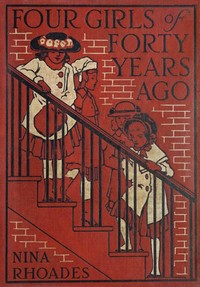
Four girls of forty years ago — Key Ideas to Explore
Historical Psychological Social Fiction
68,827 recorded words. 1 minutes difference from this book's estimate.
View Gutenberg source #73301
For Betty Wales decides — Themes and Context, the stored edition analysis reports 69,091 words, 5 hr 1 min estimated reading time, and 27 detected text sections.
The text analysis averages about 16.0 words per sentence, while the detected sections provide another way to judge how the source is divided.
Project Gutenberg metadata also associates the work with “Schools -- Juvenile fiction,” connecting these edition facts with the source record’s subject description.
Explore this collection
These alternatives are selected using recorded categories and estimated reading time.
About 300 minutes
Historical Psychological Social Fiction
68,827 recorded words. 1 minutes difference from this book's estimate.
View Gutenberg source #73301About 317 minutes
Historical Psychological Social Fiction
72,870 recorded words. 16 minutes difference from this book's estimate.
View Gutenberg source #69791About 320 minutes
Historical Psychological Social Fiction
73,470 recorded words. 19 minutes difference from this book's estimate.
View Gutenberg source #76074Search stored excerpts and compare books → Choose by your preferences →
Choices use stored catalog measurements. Estimates vary with reading speed. A shared category is a catalog label, not a claim that two books have the same argument or literary quality.
Search reads excerpt text stored with this catalog and links to its associated Gutenberg record. The connection is stored in the site database; this tool does not recheck that every excerpt is word-for-word identical to that external record. Excerpt search does not cover every chapter and does not verify historical publication dates.
Catalog snapshot checked: 2026-09-25. Coverage: 97 public books, 97 available source excerpts.
Read the complete public-domain text at its original source.
Read on Project GutenbergThe tenth Betty Wales novel opens not with a classroom scene but with a commercial crisis: a slump in ploshkins, the fanciful mascot that Madeline Ayres and Jasper J. Morton helped bring to market. This detail, drawn from the introduction, signals that the story will weave entrepreneurial ventures with campus life. Dunton’s prose in the excerpts is brisk and dialogue-driven, favoring colloquial exchanges over narration. The voice of Montana Marie O’Toole, a newcomer, is immediately distinct—she speaks in long, self-deprecating bursts, while the established characters use shorter, more measured sentences. The author’s choice to introduce conflict through a material object (ploshkins) and a social misstep (the cream puff incident) grounds the moral questions in tangible, everyday choices.
Montana Marie O’Toole’s speech patterns set her apart from the Harding circle. She uses phrases like “the whole fun of boarding-school” and “getting in and out of scrapes,” which carry a breezy, experiential tone. In contrast, the Smallest Sister, Dorothy, speaks with careful earnestness: “we explained all that to Miss Dick, and she said it was an unusual ’sperience.” The dropped ‘r’ in “’sperience” is a deliberate marker of childhood, while Marie’s diction retains a worldly, slightly reckless edge. Dunton reinforces this contrast through Marie’s self-assessment: “I never do for myself, and so I didn’t for them.” The author uses vocabulary to signal social roles—Marie calls herself a “friend of your sister’s” to gain trust, while Janet’s blunt “we’re both honor girls” reveals the institutional language the younger students have internalized.
The cream puff episode is rendered almost entirely through dialogue, with minimal narrative intervention. Marie’s offer—“Want a soda while we wait?”—is met with Janet’s solemn refusal: “No, thank you. It might make us later.” The exchange is economical, each line advancing the conflict. Later, Dorothy recounts the aftermath in a single, breathless paragraph that mixes justification (“it wasn’t your fault a bit”) with confession (“I didn’t tell her about the ring because—because I couldn’t stand it”). Dunton uses dashes and repetition to convey hesitation and guilt. The author avoids authorial judgment; instead, the characters’ words carry the moral weight. Marie’s laughter at the “honor girls” label—a “wild peal”—contrasts with the younger girls’ gravity, underscoring the gap between their value systems.
Dunton’s descriptive passages are sparse but precise. The opening scene places Betty “very crisp and cool in white linen” on a “broad piazza,” establishing a summer setting of comfort and leisure. The town of Harding is described as “such a safe little place,” a phrase that carries ironic weight after the honor code violation. The author uses physical details to imply character: Marie’s “grin” is “sheepish” when she meets Dorothy, and her laughter is a “wild peal.” These small gestures—a wiggle, a shake of the head—are the primary tools for characterization. The Tally-ho Tea-Shop appears as a setting for confession, where Marie “told the story of her afternoon adventure” over dessert. Dunton trusts the reader to infer emotional states from action and setting, rather than explaining them.
The novel’s structure, signaled by chapter titles like “A Slump in Ploshkins” and “The Initiation of Montana Marie,” suggests a pattern of problem-and-resolution familiar to series readers. The introduction recaps previous volumes, naming characters and plot threads (the Tally-ho Tea-Shop, Morton Hall) without assuming full recall. Dunton uses the ploshkin slump as a framing device—a commercial problem that may parallel the social challenges of integrating a disruptive new student. The excerpts show a rhythm of action (the downtown trip) followed by reflection (Marie’s anxiety, the Smallest Sister’s waiting). This alternating tempo gives the moral dilemmas room to breathe. The author’s choice to delay resolution—Marie waits “two days” before confiding in Betty—builds suspense through inaction, a subtle structural choice that rewards patient readers.
Readers familiar with the series will notice how Dunton balances continuity with novelty: returning characters like Betty and the Smallest Sister are present, but the narrative focus shifts to Montana Marie’s integration. The excerpts suggest that the author uses material objects—ploshkins, cream puffs, a ring—as catalysts for ethical questions. Pay attention to how Dunton distributes dialogue: who speaks longest, who interrupts, who remains silent. These choices reveal power dynamics and emotional states more directly than any summary. The novel rewards attention to the small, concrete decisions its characters make.
There's something about Betty's quiet reckoning with the honor system that reminds me of another girl, one whose choices are gentler but no less weighty. I think of the way both books pause to let a small moral mess sit, unsolved, like a warm loaf cooling on a sill. And that’s where A little Irish girl — Reading Notes caught me—same unhurried ache, different weather.
Build a private reading journal entry for this title.