About 301 minutes
Betty Wales decides — Themes and Context
Historical Psychological Social Fiction
69,091 recorded words. 1 minutes difference from this book's estimate.
View Gutenberg source #73169
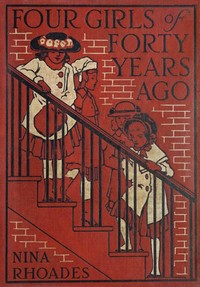
Before opening Four girls of forty years ago — Key Ideas to Explore, the edition data offers a quick orientation: 68,827 words, 5 hr estimated reading time, and 29 detected text sections.
The text analysis averages about 15.8 words per sentence, while the detected sections provide another way to judge how the source is divided.
Project Gutenberg metadata also associates the work with “Historical fiction,” connecting these edition facts with the source record’s subject description.
Explore this collection
These alternatives are selected using recorded categories and estimated reading time.
About 301 minutes
Historical Psychological Social Fiction
69,091 recorded words. 1 minutes difference from this book's estimate.
View Gutenberg source #73169About 317 minutes
Historical Psychological Social Fiction
72,870 recorded words. 17 minutes difference from this book's estimate.
View Gutenberg source #69791About 320 minutes
Historical Psychological Social Fiction
73,470 recorded words. 20 minutes difference from this book's estimate.
View Gutenberg source #76074Search stored excerpts and compare books → Choose by your preferences →
Choices use stored catalog measurements. Estimates vary with reading speed. A shared category is a catalog label, not a claim that two books have the same argument or literary quality.
Search reads excerpt text stored with this catalog and links to its associated Gutenberg record. The connection is stored in the site database; this tool does not recheck that every excerpt is word-for-word identical to that external record. Excerpt search does not cover every chapter and does not verify historical publication dates.
Catalog snapshot checked: 2026-09-25. Coverage: 97 public books, 97 available source excerpts.
Read the complete public-domain text at its original source.
Read on Project GutenbergThe four Winslow sisters—Dulcie, Daisy, Molly, and Maud—live in a single top-floor room of their grandfather's house near Washington Square, a setting that immediately signals both their closeness and their confinement. The opening chapter establishes that only the two eldest retain dim memories of a happier home before their mother's death and the move to their grandparents' stern household. The catalog subjects list this as juvenile historical and domestic fiction, and the excerpts bear that out: the girls' world is tightly bounded by Grandma Winslow's rules and the absence of their father, who is mentioned but not present in the opening pages.
The most vivid scene in the excerpt is Dulcie's make-believe birthday party, an elaborate game the girls devise because Grandma will not allow a real one. Molly announces imaginary guests in a parody of their grandmother's formal voice; Maud shuts her eyes to pretend; Dulcie shakes hands with air. The game is fragile—Paul, a boy neighbor, nearly laughs—and the girls extract a promise that he will never tell the adults. This moment reveals how the sisters use shared fantasy to create joy within strict limits, a pattern that likely recurs throughout the novel. The catalog's subject heading 'Families—Juvenile fiction' is accurate, but the excerpt emphasizes the sisters' bond as their primary family unit, with grandparents as obstacles rather than nurturers.
Paul's gift of Louisa May Alcott's Little Men punctures the make-believe: Dulcie cries out in surprise at a real present. The book is not random—Dulcie had wanted it, and Molly told Paul. The inscription Paul writes, 'From Paul Chester to his affectionate friend Dulcie Winslow,' is a small but concrete detail that grounds the story in a specific material culture of 1920s childhood. The excerpt does not reveal whether this friendship develops further, but the moment shows how real objects (a book, a parcel, a written inscription) carry emotional weight in a world where imaginary parties are the norm. The catalog does not list friendship as a subject, yet the scene hinges on a peer relationship that crosses the boundary between the sisters' closed circle and the outside world.
The narrator uses a direct, slightly formal style—'They all lived in the big front room on the top floor'—and occasionally addresses the reader with phrases like 'dim memories of a very different home.' The chapter title 'The Four Little Winslows' and the illustration captions (e.g., 'She's got the big fellow down. She's sittin' on his head') suggest a tone that balances sentiment with mild humor. The excerpts do not show the later chapters listed in the contents—'The Stolen Child,' 'Stepmothers'—so the plot's direction is unclear. However, the opening's emphasis on the girls' isolation and their resourceful play indicates that the narrative will likely follow their efforts to maintain agency within a restrictive household. The catalog's 'Historical fiction' tag is supported by period details (Washington Square, 'Little Men,' formal speech), but the excerpts focus more on domestic dynamics than on historical events.
The excerpts offer a narrow but vivid window into the Winslow sisters' lives: their imaginative play, their constrained circumstances, and the small, real pleasures that break through. Readers should note that the contents list hints at dramatic turns—a stolen child, a telegram, a homecoming—that the opening chapters do not foreshadow. The sisters' voices and relationships, rather than plot, are the strength of these early pages. Approach the novel as a character-driven domestic story set in a specific time and place, where the girls' inner lives matter as much as the events that befall them.
Reading about the Winslow sisters’ make-believe birthday party, I remembered that quiet ache of wanting something grander than the room you're in. Their joy felt so carefully built. It drifted me back to another girls’ story, where decisions carry a similar weight of longing and practicality. Betty Wales decides — Themes and Context came to mind, like an old photograph found in a drawer. Both worlds seem to whisper that growing up is often just learning which small comforts to hold onto.
Save your reaction, strongest insight, and memorable passage.