About 209 minutes
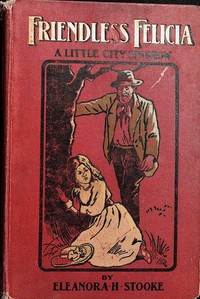
Friendless Felicia — Key Ideas to Explore
Historical Psychological Social Fiction
47,866 recorded words. 9 minutes difference from this book's estimate.
View Gutenberg source #71028
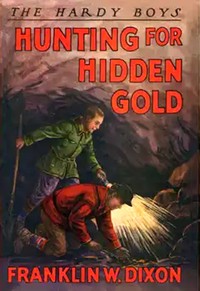
For Hunting for hidden gold — Reading Notes, the stored edition analysis reports 45,865 words, 3 hr 20 min estimated reading time, and 5 detected text sections.
The text analysis averages about 13.1 words per sentence, while the detected sections provide another way to judge how the source is divided.
Project Gutenberg metadata also associates the work with “Brothers -- Juvenile fiction,” connecting these edition facts with the source record’s subject description.
Explore this collection
These alternatives are selected using recorded categories and estimated reading time.
About 209 minutes
Historical Psychological Social Fiction
47,866 recorded words. 9 minutes difference from this book's estimate.
View Gutenberg source #71028About 166 minutes
Historical Psychological Social Fiction
38,149 recorded words. 34 minutes difference from this book's estimate.
View Gutenberg source #72970About 254 minutes
Historical Psychological Social Fiction
58,363 recorded words. 54 minutes difference from this book's estimate.
View Gutenberg source #76530Search stored excerpts and compare books → Choose by your preferences →
Choices use stored catalog measurements. Estimates vary with reading speed. A shared category is a catalog label, not a claim that two books have the same argument or literary quality.
Search reads excerpt text stored with this catalog and links to its associated Gutenberg record. The connection is stored in the site database; this tool does not recheck that every excerpt is word-for-word identical to that external record. Excerpt search does not cover every chapter and does not verify historical publication dates.
Catalog snapshot checked: 2026-09-25. Coverage: 97 public books, 97 available source excerpts.
Read the complete public-domain text at its original source.
Read on Project GutenbergFrank Hardy reads a letter aloud, and the brothers' dialogue immediately establishes their eager, collaborative dynamic. Frank's measured optimism—'A fortune in hidden gold! That certainly sounds mighty interesting'—contrasts with Joe's more impatient longing: 'I'd give anything to be working with him on a case like that.' Their exchange, peppered with exclamations and rhetorical questions, reveals a shared desire for adventure and a clear division of roles: Frank the thoughtful summarizer, Joe the impulsive dreamer. This opening not only introduces the central mystery but also sets the tone for a narrative driven by verbal interplay and mutual reliance.
The brothers' speech patterns are distinct yet complementary. Frank tends to repeat key phrases for emphasis—'A fortune in hidden gold,' he says twice—and uses measured, analytical language: 'This case is a bit out of the ordinary.' Joe, by contrast, speaks in shorter, more emotional bursts: 'Montana! Gee, but I wish he could have taken us with him.' Their dialogue often overlaps, with Joe finishing Frank's thoughts or echoing his sentiments, as when Frank says 'I hope he finds it all right' and Joe immediately clarifies the stakes: 'It was stolen from one of the big companies, wasn't it?' This back-and-forth creates a sense of partnership and shared understanding, while also subtly differentiating their personalities. The author uses these verbal cues to build character without relying on lengthy description.
The cave-in sequence is rendered with precise, almost mechanical attention to physical action. Joe's efforts are described step by step: 'He pried away a huge boulder at the top of the heap and stood to one side as he exerted all the leverage of the iron bar.' The narrative focuses on the how—the crowbar's placement, the shifting of weight, the gradual movement of rock—rather than on emotional reaction. Even Frank's relief is understated: 'That's that!' The scene's tension derives from the physical obstacles themselves: the 'great rock wavered, then rolled,' the 'aperture of sufficient extent to admit the passage of his body.' This concrete, tactile description grounds the adventure in a believable, gritty reality, emphasizing problem-solving over melodrama.
The abandoned mine is more than a backdrop; it actively shapes the plot. The boys note that 'the mine was abandoned a long time ago, by the looks of things,' and that snow may cover their footprints. The setting's isolation and decay amplify the danger: there is no one to hear the crash, no easy escape. The author uses the environment to create a closed, claustrophobic space—'the whole shaft went,' 'a couple of tons of rock in the shaft now'—that forces the characters to rely on their own resources. The cold, the darkness, and the weight of the fallen rock are felt through the characters' observations and actions, making the setting an active participant in the narrative rather than mere scenery.
During the cave-in, the brothers' dialogue takes on a rhythmic, almost ritualistic quality. Joe calls out 'Frank! can you hear me?' and Frank replies 'I hear you. What's happened?' The exchange is structured as a series of short, urgent questions and answers: 'The shaft caved in.' 'The main shaft?' 'Yes.' This staccato pattern mirrors the rapid, tense situation and reinforces the characters' focus on practical steps. Later, when Frank is trapped, the dialogue becomes a call-and-response: 'How's the foot?' 'All right.' 'See what you can do with that crowbar.' The repetition of key phrases—'a little more—a little more'—builds suspense and emphasizes the incremental nature of their progress. This stylistic choice keeps the reader anchored in the immediate physical struggle.
The author avoids lengthy exposition during action scenes, instead relying on short, declarative sentences and active verbs. When Joe removes the boulder, the text reads: 'He shifted his grasp, bore down on the bar again, and the great boulder rose higher.' Each action is a discrete, clear step. The narrative also uses dialogue to convey information efficiently: 'We're up against a worse dilemma now,' Joe says, and Frank replies 'I know it. Still, there may be a way out.' This economy keeps the pace brisk and the focus on the characters' immediate choices. The result is a prose style that prioritizes clarity and momentum over introspection, fitting for a story centered on action and problem-solving.
The author's choices in diction, dialogue, and description create a narrative that is both accessible and engaging. The brothers' distinct voices, the tactile realism of physical challenges, and the active use of setting all contribute to a story that rewards close attention to craft. Readers may find it useful to note how the text balances exposition with action, and how the characters' words reveal their personalities as much as their deeds.
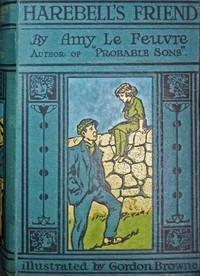
Reading Hunting for Hidden Gold, I kept noticing how the cave-in’s heavy silence lingered between the brothers, their words scraping like stones. That quiet weight reminded me of Harebell's Friend’s gentler pauses, where what’s unspoken shapes the air. It’s strange, isn’t it, how tension and tenderness can feel so alike in their hush? Harebell's friend — Background and Themes stays with me as much as that dark tunnel did.
Save your reaction, strongest insight, and memorable passage.