About 320 minutes
A loyal lass — Reading Notes
Historical Psychological Social Fiction
73,470 recorded words. 3 minutes difference from this book's estimate.
View Gutenberg source #76074
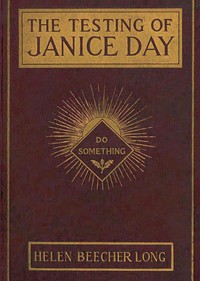
The testing of Janice Day — Themes and Context can be approached with a clearer sense of reading commitment from its source measurements: 72,870 words, 5 hr 17 min estimated reading time, and 36 detected text sections.
The text analysis averages about 14.4 words per sentence, while the detected sections provide another way to judge how the source is divided.
Project Gutenberg metadata also associates the work with “Bildungsromans,” connecting these edition facts with the source record’s subject description.
Explore this collection
These alternatives are selected using recorded categories and estimated reading time.
About 320 minutes
Historical Psychological Social Fiction
73,470 recorded words. 3 minutes difference from this book's estimate.
View Gutenberg source #76074About 301 minutes
Historical Psychological Social Fiction
69,091 recorded words. 16 minutes difference from this book's estimate.
View Gutenberg source #73169About 300 minutes
Historical Psychological Social Fiction
68,827 recorded words. 17 minutes difference from this book's estimate.
View Gutenberg source #73301Search stored excerpts and compare books → Choose by your preferences →
Choices use stored catalog measurements. Estimates vary with reading speed. A shared category is a catalog label, not a claim that two books have the same argument or literary quality.
Search reads excerpt text stored with this catalog and links to its associated Gutenberg record. The connection is stored in the site database; this tool does not recheck that every excerpt is word-for-word identical to that external record. Excerpt search does not cover every chapter and does not verify historical publication dates.
Catalog snapshot checked: 2026-09-25. Coverage: 97 public books, 97 available source excerpts.
Read the complete public-domain text at its original source.
Read on Project GutenbergThe novel opens not with a description of Janice Day but with three loud bangs on her door and a boyish voice calling, “Janice! I say, Janice, ain’t you ever going to wake up?” The dialogue immediately establishes a colloquial, informal register—the contraction “ain’t” and the phrase “great surprise” signal a rural, domestic setting. The author, Helen Beecher Long, uses this direct speech to characterize both Janice and her cousin Marty without narrative exposition. Janice’s reply—“How stupid of me to lie abed when the sun is up!”—reveals her self-deprecating energy and eagerness, while Marty’s dry retort (“Thought maybe you didn’t care fer that surprise”) shows a teasing, affectionate dynamic. The scene’s pacing, with its quick back-and-forth, sets a brisk, action-oriented tone that recurs throughout the excerpts.
Long relies heavily on dialect and informal speech to distinguish her characters. Marty says “ain’t,” “don’t you know,” and “fer” instead of “for”; Virginia, the black-haired girl, speaks in clipped, defensive phrases: “He ain’t got no money, Pappy hain’t.” Janice herself uses contractions and exclamations (“Oh, don’t wait!”) that convey urgency. The author does not italicize or mark dialect as unusual—it is the natural idiom of the world. This choice grounds the story in a specific social milieu, where formal speech would seem out of place. Even the doctor, a professional, uses colloquialisms: “Who’ve you run over, Janice Day?” and “I’ve been expecting it.” The consistency of this register across characters suggests that Long values immediacy and authenticity over literary polish.
The excerpts show a preference for short, punchy sentences and rapid scene transitions. In the car chase sequence, Long writes: “It was a trick. Janice knew instantly that the Elder and the constable had engineered it particularly to catch her.” The narration stays close to Janice’s perceptions, using free indirect style to merge her thoughts with the action. Verbs like “roared,” “darted,” “leaped,” and “flashed” create a kinetic energy. Long also uses dialogue to advance the plot: the constable’s yell (“Stop that there car!”) and Janice’s silent prayer are intercut with physical movement. The result is a cinematic quality—scenes are built around a single, urgent problem (getting the baby to the doctor) and resolved quickly, with little interior reflection.
The title’s “testing” is literalized in the excerpts through Janice’s conflict with the Elder and the constable. The Elder “held a watch on you,” timing her speed; the constable sets a trap. Janice’s decision to disobey—refusing to stop—is framed as a moral choice: she prioritizes the baby’s life over legal obedience. The doctor’s teasing (“Like enough, they’ll put you in jail for the rest of your natural life”) underscores the stakes. Long uses the authority figures as foils to Janice’s resourcefulness. The Elder is described as “towering like a figure of wrath,” a biblical echo that contrasts with Janice’s practical, compassionate action. This pattern of testing—where Janice must navigate rigid rules and respond with quick thinking—appears in multiple scenes.
Long’s descriptive passages are sparse but functional. The car “roared down into High Street” with “not a vehicle in sight”; pedestrians “halted to watch her in wonder.” Details like the doctor’s office door opening “before she touched the knob” emphasize speed and coincidence. The setting is sketched in broad strokes—a small town with a “hedge,” a “highway,” a “doctor’s office”—but never lingered upon. Instead, Long focuses on physical gestures: Janice “leaped out,” Virginia “hugged the baby to her thin breast,” the doctor “strode out to the sidewalk.” These actions carry emotional weight without explicit commentary. The author trusts the reader to infer tension from movement, not from internal monologue.
Readers attentive to Long’s craft will notice how she builds character through what characters say and do, not what they think. The dialogue carries the burden of personality; the action drives the plot. The excerpts suggest a novel that values decisiveness and moral clarity over ambiguity. For those interested in early twentieth-century girls’ fiction, this work offers a study in efficient storytelling, where every line of speech and every physical gesture serves to advance both character and conflict.
There’s something tender about watching Janice Day prove herself through those small, quiet tests, the way her resourcefulness never feels performative. It reminded me of another old friend, the girl in the Irish tale, who carries a similar steadiness. I find myself thinking of these characters long after the pages close. Perhaps that’s the truest measure of a story—not its plot, but its lingering warmth. A little Irish girl — Reading Notes holds that same quality, a gentle echo.
Create a short personal record of your experience with this book.