About 137 minutes
Memoirs of a London doll — A Closer Reading
Historical Psychological Social Fiction
31,347 recorded words. 29 minutes difference from this book's estimate.
View Gutenberg source #73444
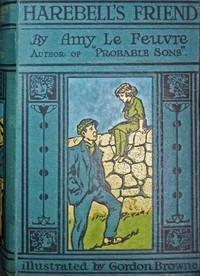
For Harebell's friend — Background and Themes, the stored edition analysis reports 38,149 words, 2 hr 46 min estimated reading time, and 4 detected text sections.
The text analysis averages about 11.9 words per sentence, while the detected sections provide another way to judge how the source is divided.
Project Gutenberg metadata also associates the work with “Christian life -- Juvenile fiction,” connecting these edition facts with the source record’s subject description.
Explore this collection
These alternatives are selected using recorded categories and estimated reading time.
About 137 minutes
Historical Psychological Social Fiction
31,347 recorded words. 29 minutes difference from this book's estimate.
View Gutenberg source #73444About 200 minutes
Historical Psychological Social Fiction
45,865 recorded words. 34 minutes difference from this book's estimate.
View Gutenberg source #72958About 130 minutes
Historical Psychological Social Fiction
29,755 recorded words. 36 minutes difference from this book's estimate.
View Gutenberg source #73011Search stored excerpts and compare books → Choose by your preferences →
Choices use stored catalog measurements. Estimates vary with reading speed. A shared category is a catalog label, not a claim that two books have the same argument or literary quality.
Search reads excerpt text stored with this catalog and links to its associated Gutenberg record. The connection is stored in the site database; this tool does not recheck that every excerpt is word-for-word identical to that external record. Excerpt search does not cover every chapter and does not verify historical publication dates.
Catalog snapshot checked: 2026-09-25. Coverage: 97 public books, 97 available source excerpts.
Read the complete public-domain text at its original source.
Read on Project GutenbergThe novel opens with Harebell standing on a pier, a 'slim upright little figure' in shabby clothes, overhearing strangers predict a lonely future for her. The ship's doctor calls her 'a type that is bound to suffer—too much feeling,' while a woman speculates about orphanages. Yet when the Commissioner takes her hand, her face becomes 'glowing and radiant with delight.' This contrast between adult pity and the child's own hopefulness sets the emotional pattern. The excerpts show Harebell repeatedly misjudged by adults who see only her vulnerability, while she demonstrates practical sense and a capacity for joy—hoping for ice pudding, laughing at the thought of Scotland, and later navigating a lost adventure with a friend.
The excerpts are rich with spoken assessments of Harebell. Early on, the ship's doctor and a woman discuss her as if she cannot hear, labeling her 'lonely unattached' and destined for 'a school or orphanage.' Their words reach her ears, and 'big tears rose to her eyes.' Yet the Commissioner speaks to her directly, with 'laughing eyes' and a 'big pity at the bottom of his heart.' His tone is warm, offering a 'beautiful evening' and ice pudding. Later, when Harebell and Nan are lost, the Vicar calls them 'Garland's little girls' and acts to help. The novel thus sets up a pattern: adults who talk about Harebell versus those who talk to her, the latter offering genuine care.
A key episode shows Harebell and her friend Nan lost after their pony, Chris, runs off. The girls disagree on which road to take—'I'm sure I remember that gate,' says Nan; 'I'm sure I remember that tree,' says Harebell. Harebell yields, noting 'Trees are commoner than gates.' They walk until they reach a village they are 'perfectly certain' they did not pass. Rather than panic, Harebell reframes the situation: 'This is a kind of adventure.' When they ring the Vicar's bell, Nan takes charge, but Harebell giggles nervously. The scene reveals her adaptability and her tendency to find pleasure in the unfamiliar—'I do love seeing strange rooms and people'—even as she remains aware of the trouble they are in.
The first chapter is titled 'Not Wanted,' and the opening scene establishes that Harebell has no one to meet her on the pier. She herself hopes 'there's nobody here who wants me,' a wish that goes unnoticed by the Commissioner. The excerpts do not reveal whether relatives appear, but the title and the early dialogue create a persistent tension: Harebell is both unwanted and fiercely independent. Her response to being overlooked is not passivity but active engagement—she slips her hand into the Commissioner's, she plans for ice pudding, she later takes charge of getting home. The novel appears to explore how a child perceived as 'too much feeling' navigates a world that often fails to see her strength.
Readers should attend to the small gestures and offhand remarks that accumulate around Harebell. The novel does not announce its themes; it embeds them in the way adults talk over a child, the way a child chooses which road to take, and the way a giggle can mask nervousness. The excerpts offer a portrait of resilience that is neither sentimental nor dramatic, but grounded in the particulars of a late-Victorian or Edwardian childhood.
Harebell’s way of watching adult faces for clues reminded me of sitting very still as a child, trying to guess my mother’s mood from the tilt of her head. The same stillness lives in Memoirs of a London Doll, where small things—a curtain’s sway, a footstep’s rhythm—carry whole worlds of feeling. That quiet attention feels like a hand held out across years. Memoirs of a London doll — A Closer Reading caught that thread for me once, too.
Answer a few questions and save a private reflection on this device.