About 200 minutes
Hunting for hidden gold — Reading Notes
Historical Psychological Social Fiction
45,865 recorded words. 9 minutes difference from this book's estimate.
View Gutenberg source #72958
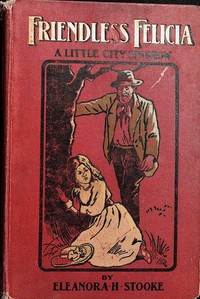
This digital edition of Friendless Felicia — Key Ideas to Explore is described by source-level measurements including 47,866 words, 3 hr 29 min estimated reading time, and 5 detected text sections.
The text analysis averages about 17.1 words per sentence, while the detected sections provide another way to judge how the source is divided.
Project Gutenberg metadata also associates the work with “Orphans -- Juvenile fiction,” connecting these edition facts with the source record’s subject description.
Explore this collection
These alternatives are selected using recorded categories and estimated reading time.
About 200 minutes
Historical Psychological Social Fiction
45,865 recorded words. 9 minutes difference from this book's estimate.
View Gutenberg source #72958About 166 minutes
Historical Psychological Social Fiction
38,149 recorded words. 43 minutes difference from this book's estimate.
View Gutenberg source #72970About 254 minutes
Historical Psychological Social Fiction
58,363 recorded words. 45 minutes difference from this book's estimate.
View Gutenberg source #76530Search stored excerpts and compare books → Choose by your preferences →
Choices use stored catalog measurements. Estimates vary with reading speed. A shared category is a catalog label, not a claim that two books have the same argument or literary quality.
Search reads excerpt text stored with this catalog and links to its associated Gutenberg record. The connection is stored in the site database; this tool does not recheck that every excerpt is word-for-word identical to that external record. Excerpt search does not cover every chapter and does not verify historical publication dates.
Catalog snapshot checked: 2026-09-25. Coverage: 97 public books, 97 available source excerpts.
Read the complete public-domain text at its original source.
Read on Project GutenbergThe novel opens in a stifling Bristol attic where twelve-year-old Felicia works a sewing machine while her mother lies ill. Stooke renders the room's oppressive heat and the mother's complaint that the machine's 'whirr-whirr-whirr' haunts her sleep. The prose is tightly focused on physical strain—Felicia's weary hands, the mother's pallor—and the economic pressure that forces a child to labor from daybreak to dusk. This cramped domestic scene establishes a rhythm of repetitive toil and anxious waiting.
Later, the setting shifts to the Priory, a country house where Felicia's uncle Guy, a hunchback, isolates himself. The contrast is stark: open rooms, gardens, and a library replace the attic's confines. Stooke uses this spatial change to signal a new phase in Felicia's life, but the emotional weight of the opening lingers.
Felicia's early speech is marked by practical concern and suppressed grief. When she tells her mother, 'I've not done such a bad day's work after all,' the line carries both pride and exhaustion. Stooke avoids sentimentalizing the child; Felicia's voice is matter-of-fact, even as she scans her mother's 'pallid countenance.' The sewing machine becomes a character—its noise 'gets on my nerves,' the mother says, and Felicia hears it even in sleep. This auditory detail ties the reader to the family's precarious livelihood.
Later, at the Priory, Felicia's directness contrasts with her uncle's bitter self-deprecation. When he calls himself 'a hunchback,' she responds not with pity but with reproach: 'I think it's very unkind of you not to try to make them all happier.' Her voice remains steady, unafraid of his anger. Stooke uses these exchanges to show a child who has learned to speak plainly because survival left no room for pretense.
The narrative moves in alternating currents: slow, detailed descriptions of sewing and illness give way to brisk dialogue and sudden shifts in setting. Chapter I lingers on the attic's heat and the mother's decline, then jumps to Felicia's arrival at the Priory. Stooke uses chapter breaks to mark changes in pace—'One Saturday' begins a holiday scene, with Felicia free from lessons and able to visit the Vicarage. The prose relaxes into descriptions of walks and tea, but tension returns when Doris and Molly are 'rather in awe of Uncle Guy.'
Stooke also varies pace within scenes. During the photograph album episode, uncle and niece sit 'side by side' in a quiet moment, but Felicia's sudden memory of her mother—'never as long as she lived would she share a pleasure again'—introduces a sharp emotional pause. The uncle's silence and his turn to search for the album allow the grief to settle before the conversation resumes.
Stooke uses interiors to reflect emotional states. The attic is defined by scarcity: one bed, a sewing machine, a window that lets in summer heat but not winter coal. The mother's illness confines her to bed, and Felicia's work keeps her at the table—both trapped in a room that 'gets on my nerves.' In contrast, the Priory's rooms are large enough for Uncle Guy to 'move about' and search for an album. Yet his deformity makes him shrink from strangers, and he stays 'shut up' in his own space. The house does not free him; it only enlarges his isolation.
Felicia's memories of Bristol—the Cathedral, St. Mary Redcliffe, Clifton's Suspension Bridge—introduce a world beyond the attic. These are not described in detail but as shared pleasures now lost. Stooke lets the city's landmarks stand for a life that ended with her mother's death, making setting a repository of grief rather than mere backdrop.
Readers attentive to shifts in register will notice how Stooke modulates between Felicia's clipped, work-weary sentences and the more elaborate speech of the Priory household. The novel rewards attention to small physical details—the noise of a machine, the weight of a photograph album—that carry emotional significance. Because the excerpts end before the story concludes, the trajectory of Felicia's relationship with her uncle remains unresolved, inviting speculation about whether her frankness will soften his bitterness or deepen his retreat.
Sometimes I catch myself thinking of Felicia's cramped Bristol attic, and my mind wanders to the quieter, girlhood world in Four girls of forty years ago — Key Ideas to Explore. Both feel like rooms where small voices echo against larger silences, though the latter's warmth is gentler, less sharpened by grief. It's a curious kinship—one of shadows and steady patience, rather than any shared plot. Just a feeling I noticed.
Use these questions to collect your thoughts before moving on.