About 130 minutes
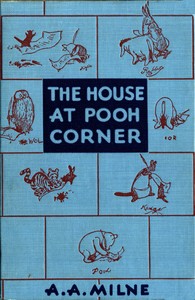
The house at Pooh Corner — A Closer Reading
Historical Psychological Social Fiction
29,755 recorded words. 7 minutes difference from this book's estimate.
View Gutenberg source #73011
The catalog record for Memoirs of a London doll — A Closer Reading provides practical reading context through 31,347 words, 2 hr 17 min estimated reading time, and 25 detected text sections.
The text analysis averages about 26.0 words per sentence, while the detected sections provide another way to judge how the source is divided.
Project Gutenberg metadata also associates the work with “Conduct of life -- Juvenile fiction,” connecting these edition facts with the source record’s subject description.
Explore this collection
These alternatives are selected using recorded categories and estimated reading time.
About 130 minutes
Historical Psychological Social Fiction
29,755 recorded words. 7 minutes difference from this book's estimate.
View Gutenberg source #73011About 166 minutes
Historical Psychological Social Fiction
38,149 recorded words. 29 minutes difference from this book's estimate.
View Gutenberg source #72970About 200 minutes
Historical Psychological Social Fiction
45,865 recorded words. 63 minutes difference from this book's estimate.
View Gutenberg source #72958Search stored excerpts and compare books → Choose by your preferences →
Choices use stored catalog measurements. Estimates vary with reading speed. A shared category is a catalog label, not a claim that two books have the same argument or literary quality.
Search reads excerpt text stored with this catalog and links to its associated Gutenberg record. The connection is stored in the site database; this tool does not recheck that every excerpt is word-for-word identical to that external record. Excerpt search does not cover every chapter and does not verify historical publication dates.
Catalog snapshot checked: 2026-09-25. Coverage: 97 public books, 97 available source excerpts.
Read the complete public-domain text at its original source.
Read on Project GutenbergThis edition of Memoirs of a London Doll presents the story as told by the doll herself, a narrative choice that immediately sets the reader inside a small, vulnerable consciousness. The opening chapters establish a world where the doll is passed between owners, each encounter marked by specific details of dress and domestic space. The doll's voice is matter-of-fact about her own fragility, noting how her "beautiful dress was all black tinder" after a fire, and how she is thrown out a window wrapped in singed clothes. The text's attention to material texture—gauze frocks, thick rugs, the smell of burned cloth—grounds the fantastical premise in tangible, often harsh, reality.
The excerpt from Chapter X offers a sustained sequence of peril, all observed from the doll's stationary perspective. Lady Flora's dance near the fire, the maid's futile dash for fire-guards, the dress catching flame—each step is recorded with the doll's helpless precision. The doll's own fate is entangled with the burning clothes: "my beautiful dress was all black tinder; but I was not really much burned." The narrative then follows the doll through a chain of accidents—thrown from a window, carried by a Newfoundland dog who mistakes her for "a broiled bone." The doll's survival is attributed to being "wrapped all round in singed clothes," a detail that ties her preservation to the very disaster that damaged her. The sequence is notable for its accumulation of small failures: the maid's delay, the page's collapse, the footman's retreat. Only the countess acts effectively, rolling the rug around her child. The doll, meanwhile, is discarded with the burned rags, underscoring her status as object even in crisis.
In Chapter XI, the dog carries the doll to the door of "J. C. Johnson, Portrait Painter." The setting shifts from the aristocratic nursery to a working artist's premises, signaled by the open area gate and the climb up three flights of stairs. The doll's arrival is accidental, but the painter's studio represents a new kind of space—one where the doll might be seen differently. The text does not yet reveal what happens inside, but the contrast is clear: the doll has moved from a world of careless wealth to one of craft and observation. The painter's name is given plainly, without elaboration, and the dog's action is presented as routine: "he was used to fetch and carry." This matter-of-fact tone continues the doll's voice, which reports events without interpreting their significance. The reader is left to wonder whether the painter will recognize the doll as more than a burned plaything.
Throughout the excerpts, clothing is not mere description but a driver of plot and a signifier of status. Lady Flora's "full, gauze frock" catches fire because of its fabric and her playful whisking near the hearth. The doll's own dress is destroyed, leaving her "quite black" and stripped of the paint that gave her face. Later, the singed clothes cushion her fall and identify her to the dog as a potential meal. The catalog subjects list "Costume -- Great Britain -- Juvenile fiction," and the text bears this out: every incident is mediated by what characters wear. The doll's memoir is, in part, a record of fabric and adornment—their beauty, their danger, their ability to mark a creature as cherished or disposable. The 1922 edition's illustrations by Emma L. Brock likely amplify this attention to period dress, though the text itself supplies vivid verbal detail.
Readers may find it useful to track the doll's changing owners and locations, as each new setting alters her circumstances and the kinds of attention she receives. The narrative's episodic structure, typical of picaresque tales, means that the doll's voice remains constant even as her world shifts. Pay particular attention to how the doll describes her own material condition—she is both narrator and object, and her observations often reveal more about the humans around her than about herself.
I’ve often thought that the little wooden doll, with her anxious dignity among London’s soot and silk, would find a kindred spirit in the Bear of Very Little Brain. Both move through their worlds with such earnest, hopeful patience, noticing small wonders and quiet comforts. Their stories share a gentle pulse; a tender faith in friendship and the steady goodness of an ordinary day. The house at Pooh Corner — A Closer Reading holds that same warmth, like old paper held to lamplight. A lovely, hushed kinship indeed.
Save your reaction, strongest insight, and memorable passage.