About 1,089 minutes
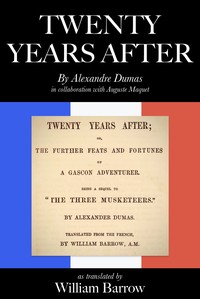
Twenty years after — Themes and Context
Historical Psychological Social Fiction
250,385 recorded words. 310 minutes difference from this book's estimate.
View Gutenberg source #1259
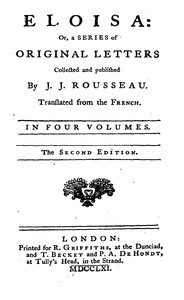
For Eloisa — Reading Companion, the stored edition analysis reports 321,725 words, 23 hr 19 min estimated reading time, and 24 detected text sections.
The text analysis averages about 25.5 words per sentence, while the detected sections provide another way to judge how the source is divided.
Project Gutenberg metadata also associates the work with “Psychological fiction,” connecting these edition facts with the source record’s subject description.
Explore this collection
These alternatives are selected using recorded categories and estimated reading time.
About 1,089 minutes
Historical Psychological Social Fiction
250,385 recorded words. 310 minutes difference from this book's estimate.
View Gutenberg source #1259About 856 minutes
Historical Psychological Social Fiction
196,753 recorded words. 543 minutes difference from this book's estimate.
View Gutenberg source #58988About 370 minutes
Historical Psychological Social Fiction
84,955 recorded words. 1029 minutes difference from this book's estimate.
View Gutenberg source #75979Search stored excerpts and compare books → Choose by your preferences →
Choices use stored catalog measurements. Estimates vary with reading speed. A shared category is a catalog label, not a claim that two books have the same argument or literary quality.
Search reads excerpt text stored with this catalog and links to its associated Gutenberg record. The connection is stored in the site database; this tool does not recheck that every excerpt is word-for-word identical to that external record. Excerpt search does not cover every chapter and does not verify historical publication dates.
Catalog snapshot checked: 2026-09-25. Coverage: 97 public books, 97 available source excerpts.
Read the complete public-domain text at its original source.
Read on Project GutenbergRousseau's preface to Eloisa immediately unsettles the reader: he declares that 'romances are necessary to a corrupt people' and warns that the letters will 'offend people of taste' and 'shock all the ladies of gallantry.' This combative framing is not mere posturing—it signals a work that deliberately courts controversy through its stylistic and moral choices. The translator, W. Kenrick, preserves Rousseau's rhetorical intensity, as seen in a letter where a speaker rebukes a despairing friend with a cascade of questions: 'are not you afraid to add fresh torments to a heart of such sensibility?' The prose is built on antithesis and emotional pressure, not narrative ease.
Rousseau's preface is a manifesto of defiance. He admits to 'some share in the composition' yet insists the letters may be 'all a fiction'—a deliberate ambiguity that forces readers to confront the work on its own terms. He lists those who will be displeased: 'the devotee, the libertine, the philosopher,' and even 'every modest woman.' This is not a bid for universal appeal but a challenge to specific audiences. The translator's note adds another layer: Kenrick calls the style 'gothic' and warns of 'faults of language, rusticity of stile, and pedantry of expression.' Together, these paratexts frame the letters as an intentionally rough, morally unsettling artifact, not a polished romance.
One excerpt shows a speaker arguing against suicide with relentless rhetorical force. The passage is structured as a series of pointed questions: 'What would you desire more?' and 'are not you afraid to rouse up remorse in her bosom?' The speaker invokes friendship, love, and civic duty—'do you owe nothing to your native country?'—in a cumulative assault on the listener's isolation. The diction is legalistic ('obligations,' 'right to revolt') and the tone oscillates between cold logic and emotional accusation. This is not a gentle consolation but a verbal siege, revealing how the characters use language as a weapon of moral persuasion.
The catalog subjects place the story in the 'Alps Region' during the 18th century, and the preface mentions 'the country of the two lovers' as a remote village. Rousseau deliberately sets his characters apart from Parisian sophistication: they are 'young and unexperienced inhabitants of a remote village,' not 'wits, academicians, nor philosophers.' This geographical distance mirrors their moral isolation. The letters' 'gothic air'—a term Kenrick uses—suggests a landscape of emotional extremes, where passion and virtue clash without the moderating influence of urban society. The Alps are not just a backdrop but a condition of the narrative's intensity.
W. Kenrick's translation choices shape the English text's texture. He preserves Rousseau's long, periodic sentences and his habit of piling up rhetorical questions. For instance, the suicide argument contains a string of clauses linked by semicolons and dashes, mimicking the speaker's mounting urgency. Kenrick also retains the preface's bluntness, translating Rousseau's claim that the book 'ought to displease' without softening it. Yet he adds his own preface, where he calls the style 'gothic'—a term absent from Rousseau's original. This intervention colors how English readers encounter the work, framing it as deliberately archaic and rough-hewn.
Readers should approach Eloisa as a work that resists easy consumption. The letters demand patience with their 'rusticity of stile' and willingness to engage with moral arguments that unfold through emotional pressure rather than plot. Pay attention to how characters use questions, repetitions, and appeals to duty—these are the engines of the drama. The Alps setting is not decorative but functional, isolating the characters and intensifying their conflicts. Kenrick's translation, with its 18th-century cadences, is itself a historical artifact worth observing.
There’s something about Rousseau’s letters that lingers—those voices wrestling with duty and desire in the Alpine quiet. It reminds me of reading Eloisa one long winter, and how the solitude felt familiar. Later, I came across A loyal lass — Reading Notes, and it carried that same wistful weight, as if old longing never fully leaves us. I still think about both sometimes.
Use these questions to collect your thoughts before moving on.