About 320 minutes
A loyal lass — Reading Notes
Historical Psychological Social Fiction
73,470 recorded words. 50 minutes difference from this book's estimate.
View Gutenberg source #76074
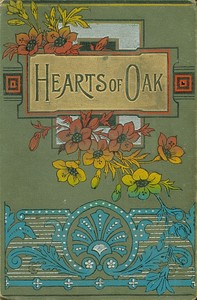
Hearts of Oak — Themes and Context can be approached with a clearer sense of reading commitment from its source measurements: 84,955 words, 6 hr 10 min estimated reading time, and 9 detected text sections.
The text analysis averages about 18.0 words per sentence, while the detected sections provide another way to judge how the source is divided.
Project Gutenberg metadata also associates the work with “Historical fiction,” connecting these edition facts with the source record’s subject description.
Explore this collection
These alternatives are selected using recorded categories and estimated reading time.
About 320 minutes
Historical Psychological Social Fiction
73,470 recorded words. 50 minutes difference from this book's estimate.
View Gutenberg source #76074About 317 minutes
Historical Psychological Social Fiction
72,870 recorded words. 53 minutes difference from this book's estimate.
View Gutenberg source #69791About 301 minutes
Historical Psychological Social Fiction
69,091 recorded words. 69 minutes difference from this book's estimate.
View Gutenberg source #73169Search stored excerpts and compare books → Choose by your preferences →
Choices use stored catalog measurements. Estimates vary with reading speed. A shared category is a catalog label, not a claim that two books have the same argument or literary quality.
Search reads excerpt text stored with this catalog and links to its associated Gutenberg record. The connection is stored in the site database; this tool does not recheck that every excerpt is word-for-word identical to that external record. Excerpt search does not cover every chapter and does not verify historical publication dates.
Catalog snapshot checked: 2026-09-25. Coverage: 97 public books, 97 available source excerpts.
Read the complete public-domain text at its original source.
Read on Project GutenbergGordon Stables, a former Royal Navy surgeon, opens Hearts of Oak with a preface that carefully distinguishes his book from a biography: it is 'a tale of the sea, and not intended as a life of Nelson.' The narrative voice is immediately present, addressing 'dear reader' directly and weaving verse from Campbell into the prose. The story follows Tom Bure, Nelson's coxswain, through battles and shipboard life, with Nelson himself appearing in vivid, self-contained scenes—what Stables calls 'tableaux vivants.'
The language shifts between brisk action and reflective interludes. In one passage, after a wounded sailor says 'I've done my duty,' the narrative pauses on a lantern-lit hammock scene before plunging back into the dawn renewal of battle. This alternation between intimacy and spectacle is a recurring structural pattern.
Stables frequently breaks the fourth wall, using phrases like 'Such is war at sea, dear reader' to guide emotional response. This technique creates a sense of shared experience between narrator and audience, but also imposes a moral framework: after describing the burning of the L'Alcide, the narrator warns that future naval warfare will be 'ten times more terrible.' The voice is that of an experienced sailor, not a detached historian, and it shapes how battle scenes are received.
The conversational tone extends to the portrayal of Nelson. When Hotham refuses to chase the French fleet, Nelson's frustration is conveyed through a single remark to Tom: 'You heard what our bold admiral said, Mr. Bure?' The narrator does not editorialize; the reader is left to infer Nelson's disappointment from the clipped dialogue and the description of him returning 'silent and crestfallen.'
The excerpts reveal a deliberate rhythm. Battle sequences are compressed into short, declarative sentences: 'At earliest dawn the battle was renewed.' Then the pace slows for a hospital scene, where a wounded sailor smiles 'feebly' in the 'lantern's dim light.' The contrast is sharp—from cannon fire to whispered conversation. Stables uses these quiet moments to develop character through gesture and understated dialogue, as when Tom says, 'Sleep if the pain will let you.'
This alternation is not merely stylistic; it mirrors the actual tempo of naval warfare, where hours of waiting precede minutes of chaos. The narrative does not linger on gore but on the aftermath: a deck made 'blood-slippery,' a friend carried below. The emotional weight falls on the spaces between battles.
Stables presents Nelson not through grand pronouncements but through small, telling actions. He visits a wounded sailor, speaks 'so kindly,' and later proposes a bold tactical plan only to be dismissed by Hotham. The admiral's 'Bah!' is the only explicit expression of frustration. The narrative trusts the reader to recognize the contrast between Nelson's vision and Hotham's caution.
The preface's promise of 'tableaux vivants' is fulfilled in scenes like Nelson's crestfallen return to the ship. The reader sees him through Tom's eyes, not through omniscient narration. This indirect portrayal keeps the focus on the crew's perspective, reinforcing the book's identity as a story of the navy rather than a single hero's biography.
Readers should attend to the shifts in narrative distance: when Stables steps back to address the reader directly, he is often preparing for a moral or historical reflection. The battle scenes gain force from the quiet moments that precede them, and Nelson's character emerges more from what he does—and what others say about him—than from authorial description. The book rewards attention to its pacing and to the way Stables uses dialogue to imply emotion rather than state it.
Sometimes a book stays with you not for its battles, but for the quiet spaces between them—the way Stables lets Nelson just be human for a moment. I felt that same gentle lingering with "Us, and our donkey" — Edition Insights, where the small, everyday bond feels just as lasting as any grand adventure. It’s a softer echo, a familiar warmth.
A brief reflection can help important ideas stay with you longer.