About 60 minutes
A thoughtless seven — Key Ideas to Explore
Fantasy Juvenile Worlds
13,740 recorded words. 21 minutes difference from this book's estimate.
View Gutenberg source #75734
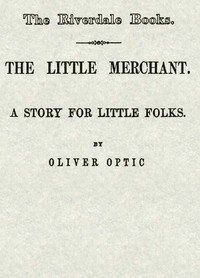
For The little merchant — Reading Companion, the stored edition analysis reports 8,766 words, 39 min estimated reading time, and 9 detected text sections.
The text analysis averages about 17.3 words per sentence, while the detected sections provide another way to judge how the source is divided.
Project Gutenberg metadata also associates the work with “Conduct of life -- Juvenile fiction,” connecting these edition facts with the source record’s subject description.
Explore this collection
These alternatives are selected using recorded categories and estimated reading time.
About 60 minutes
Fantasy Juvenile Worlds
13,740 recorded words. 21 minutes difference from this book's estimate.
View Gutenberg source #75734About 63 minutes
Fantasy Juvenile Worlds
14,398 recorded words. 24 minutes difference from this book's estimate.
View Gutenberg source #72968About 64 minutes
Fantasy Juvenile Worlds
14,559 recorded words. 25 minutes difference from this book's estimate.
View Gutenberg source #71949Search stored excerpts and compare books → Choose by your preferences →
Choices use stored catalog measurements. Estimates vary with reading speed. A shared category is a catalog label, not a claim that two books have the same argument or literary quality.
Search reads excerpt text stored with this catalog and links to its associated Gutenberg record. The connection is stored in the site database; this tool does not recheck that every excerpt is word-for-word identical to that external record. Excerpt search does not cover every chapter and does not verify historical publication dates.
Catalog snapshot checked: 2026-09-25. Coverage: 97 public books, 97 available source excerpts.
Read the complete public-domain text at its original source.
Read on Project GutenbergOliver Optic's The Little Merchant opens with a direct address to “my young readers,” establishing a conversational, instructional voice that persists throughout. The narrator immediately situates the story in Riverdale, a village whose name derives from its river, and contrasts the pretty cottages of the rich with the “dingy old house” of the poor widow Jane White. This initial setting is described in plain, moral terms: the house “had never been painted” and “seemed hardly fit to live in.” The pace is deliberate, pausing to explain the geography and social hierarchy before introducing nine-year-old David White, the eldest of four children, who “used to take care of the baby, bring in the wood and water, see to the fire.”
The narrator repeatedly breaks the fourth wall with phrases like “I must tell them” and “you may be sure,” creating a tone of friendly instruction. This device slows the narrative, as the author pauses to explain David’s chores or to comment on his mother’s kindness in sending him to school. The moral is explicit: David “wished he was a great man, so that he could take care of his mother.” The voice is consistent with Optic’s known didactic style, but here it also serves to pace the story, alternating between action and reflection.
The encounter with Joe Birch marks a clear change in pace. The earlier domestic scenes move slowly, with descriptive passages about poverty and David’s efforts. But when Joe trips David and his money scatters, the prose becomes terse: “David did not care for the fall, but all the money in his pocket came out, and was scattered about in the grass.” Dialogue speeds up, with short lines: “Hallo, David!” / “What do you want?” The confrontation with John Gray introduces a third character and a resolution—Joe’s pockets are turned out, and eight cents are recovered. The scene ends with a return to moral commentary: “She said he must not mind it.”
Throughout the excerpts, specific material details anchor the story in economic hardship. Mrs. White earns money by “closing” shoes—sewing up seams—and David tries but fails to do the same. The lost money is precisely ten cents, later reduced to eight cents recovered. The paper-selling route is described as a regular job: “David kept on selling papers for several years.” These details are not embellished; they are stated plainly, reinforcing the theme of modest labor. The narrator’s voice remains consistent, using the same direct address even in tense moments, which keeps the moral framework intact.
Readers should note how Optic balances instruction with incident. The bullying scene, though brief, is the most dramatic passage in the excerpts, and its resolution—through an older boy’s intervention—reinforces the lesson that honesty and courage are rewarded. The story’s short length (under 9,000 words) means each scene carries weight; pay attention to how the narrator’s asides shape the pacing and moral emphasis.
I still recall David White counting his pennies in the gaslight, all that weight on a nine-year-old heart. It makes me think of another quiet soul, Elsie, carrying a different but equally heavy load in Elsie's scholarship — Text and Context. Both stories whisper of private courage, of small sums and large dignities, side by side on my shelf like old friends who understood each other without ever saying much aloud.
Save your reaction, strongest insight, and memorable passage.