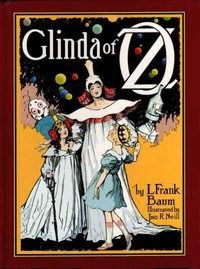
The final Oz novel by L. Frank Baum opens not in the Emerald City but in Glinda's palace, where the Sorceress sits surrounded by maids of honor embroidering and singing. The scene establishes a pattern of movement that governs the entire narrative: characters travel from one settled location to another, encounter a problem, and then convene a council to decide the next step. The Sawhorse, a wooden animal that pulls a red wagon, appears early as a mode of transport that creates its own wind, and this mechanical creature recurs as a symbol of the brisk, purposeful travel that drives the plot forward.
A Journey in Three Movements
The novel's structure can be divided into three clear movements. The first movement takes place in Glinda's palace and the Emerald City, where Ozma and Dorothy receive their call to duty. The second movement follows their hazardous journey to the Flatheads and the Skeezers, using magical aids like the tent and the stairway. The third movement shifts to the sunken island and the underwater dome, where the crisis reaches its peak. Each movement ends with a council or a gathering of characters who debate what to do next. This pattern of travel, crisis, and deliberation gives the book a rhythmic, almost procedural feel, as if the characters are following a protocol for adventure.
The Sawhorse and the Speed of Travel
Baum uses the Sawhorse as a recurring image of swift, mechanical movement. When Dorothy and Ozma first arrive at Glinda's palace, they comment that the Sawhorse makes a wind of his own, blowing their hair fuzzy. Later, when Glinda must summon the counsellors, she uses a chariot, but the Sawhorse remains a symbol of the ordinary, everyday travel that contrasts with the magical emergencies. The wooden horse is not magical in the sense of being enchanted; it is a crafted object that moves by clockwork or will, much like Tik-Tok. This emphasis on constructed, reliable transport underscores the novel's interest in practical solutions to fantastical problems.
Councils as Structural Anchors
Each major turning point in the novel is marked by a council of Ozma's advisers. The first council occurs in chapter fourteen, where the Scarecrow, Tin Woodman, Patchwork Girl, Shaggy Man, Tik-Tok, and Jack Pumpkinhead gather to discuss how to rescue Ozma and Dorothy. Baum takes time to describe each counsellor's peculiarities, from the Tin Woodman's polished joints to Jack Pumpkinhead's need to carve a new head each year. These descriptions serve as a reminder of the diverse, mechanical, and organic nature of Oz's inhabitants. The councils function as structural anchors, giving the reader a pause to assess the situation before the next phase of action begins.
Underwater Scenes and the Dome
The climax of the novel takes place under water, inside a great dome that encloses the sunken island of the Skeezers. This setting shifts the narrative from open landscapes to a confined, pressurized space. The dome becomes a recurring image of isolation and entrapment, as the characters must find a way to raise the island or escape. Baum's description of the underwater world relies on visual details—the enchanted fishes, the diamond swan—that create a sense of wonder while also emphasizing the characters' vulnerability. The dome is both a marvel of magic and a prison, and the resolution depends on the cleverness of Ervic and the intervention of Glinda.
Readers approaching Glinda of Oz will find a story that moves deliberately from council to journey to crisis, with each step carefully prepared by the characters' discussions. Pay attention to the way Baum uses objects—the Sawhorse, the tent, the stairway, the dome—as both practical tools and symbolic markers of the characters' progress. The novel rewards those who notice how the structure mirrors the methodical, problem-solving spirit of its heroine, Glinda.
I remember lying on my grandmother’s porch with Glinda of Oz, feeling that underwater island’s strange quiet hum, the Sawhorse’s patient wooden feet echoing my own lazy afternoons. It reminded me of how The strange house — Context and Discussion captures that same suspended breath between rooms, where every doorway feels like a held memory, not a path forward.