About 222 minutes
The Bobbsey twins at Cloverbank — Themes and Context
Fantasy Juvenile Worlds
50,997 recorded words. 4 minutes difference from this book's estimate.
View Gutenberg source #71239
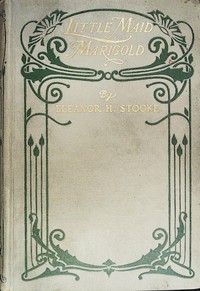
The source record for Little maid Marigold — Themes and Context measures this digital text at 49,939 words, 3 hr 38 min estimated reading time, and 5 detected text sections.
The text analysis averages about 16.0 words per sentence, while the detected sections provide another way to judge how the source is divided.
Project Gutenberg metadata also associates the work with “Christian life -- Juvenile fiction,” connecting these edition facts with the source record’s subject description.
Explore this collection
These alternatives are selected using recorded categories and estimated reading time.
About 222 minutes
Fantasy Juvenile Worlds
50,997 recorded words. 4 minutes difference from this book's estimate.
View Gutenberg source #71239About 214 minutes
Fantasy Juvenile Worlds
49,027 recorded words. 4 minutes difference from this book's estimate.
View Gutenberg source #73317About 223 minutes
Fantasy Juvenile Worlds
51,073 recorded words. 5 minutes difference from this book's estimate.
View Gutenberg source #76759Search stored excerpts and compare books → Choose by your preferences →
Choices use stored catalog measurements. Estimates vary with reading speed. A shared category is a catalog label, not a claim that two books have the same argument or literary quality.
Search reads excerpt text stored with this catalog and links to its associated Gutenberg record. The connection is stored in the site database; this tool does not recheck that every excerpt is word-for-word identical to that external record. Excerpt search does not cover every chapter and does not verify historical publication dates.
Catalog snapshot checked: 2026-09-25. Coverage: 97 public books, 97 available source excerpts.
Read the complete public-domain text at its original source.
Read on Project GutenbergThe first chapter of Little Maid Marigold opens not with a dramatic event but with a quiet, telling request: Marigold is asked to give her younger brothers their supper so her mother can finish embroidery for a West-End shop. The scene establishes a household where every moment counts—the mother’s “snowy cap” and “hair streaked with white” at thirty-five, the shabby sitting-room, the quarter’s rent due next week. Stooke builds the story on such concrete, unglamorous details rather than on grand gestures.
The narrative voice is direct and unhurried, allowing small actions—Marigold marking her place with a slip of paper, kissing her mother’s pale face—to carry emotional weight. The tension between material scarcity and affectionate bonds is established immediately, and it recurs throughout the excerpts in scenes of schoolwork, friendship, and moral choice.
Stooke repeatedly sets material want against emotional plenty. Mrs. Holcroft’s art-needlework is not merely mentioned but tied to specific pressures: “the quarter’s rent will be due next week, and we are badly in want of many things.” Marigold’s response is to put away her book and kiss her mother. The same pattern appears later when Marigold, though poor, is described as coming from a home “rich in affection.”
This contrast is not stated abstractly; it is dramatized through Muriel Wake, a wealthier girl who confesses, “He gives me plenty of money, and when he comes home he brings me presents; but—well, I often think I should be better pleased if he loved me a little more.” The parallel is explicit: Marigold lacks money but has love; Muriel has money but feels unloved. Stooke does not resolve this tension with a simple moral—instead, she lets the two girls’ interactions explore what each lacks and what each might offer.
The excerpts show forgiveness not as a lofty ideal but as a concrete, difficult practice. When Marigold helps Muriel with a sum after Muriel had betrayed her confidence, the act is motivated by seeing Muriel cry. But the real hinge comes in their conversation afterward. Marigold explains that she could not pray while hating Muriel because she could not honestly say, “Forgive us our trespasses as we forgive them that trespass against us.”
This is not a sermon; it is a specific, child-sized theological problem. Muriel’s response—“How odd!”—underscores how foreign such reasoning is to her. Stooke lets the scene unfold without authorial commentary, allowing the reader to see Marigold’s struggle and Muriel’s slow, puzzled recognition. The language is plain: “I tried to forgive you instead.” The moral weight comes from the particularity of the situation—a schoolroom, a sum, a whispered confession—not from general piety.
Stooke’s dialogue reveals character through what is left unsaid as much as through what is spoken. When Muriel asks, “What made you help me to-day? I wouldn’t have done it, if you’d been in my place,” Marigold “made no answer. She blushed rosy red and turned her head aside.” The blush and the silence carry more force than any speech could.
Similarly, Muriel’s confession that she was jealous because Miss Smith praised Marigold is delivered in a rush, without self-pity. The exchange is naturalistic: Muriel admits, “I disliked you, because I saw Miss Smith thought a lot of you.” Stooke avoids melodrama; the girls speak in short, broken sentences, with interruptions and hesitations. The effect is of overheard conversation, not staged moral instruction. Even the chapter titles—such as “Marigold’s Untidiness, a Meeting with Farmer Jo and His Mother, and a Visit to the Lace-Maker”—promise a cumulative, episodic structure rather than a tightly plotted arc.
Readers coming to Little Maid Marigold should expect a story that moves at the pace of daily life, with attention to small gestures—a blush, a slip of paper, a shared sum. The moral framework is Christian, but it is worked out in practical, relational terms rather than in abstract lessons. The excerpts suggest that Stooke is more interested in how characters change through specific encounters than in delivering a fixed message. Pay attention to the silences and the unfinished sentences; they often carry the real weight.
Little Marigold’s quiet triumph — finding treasure in plain rooms — has always reminded me of another book, No royal road — Background and Themes, where the journey matters more than the destination. Both feel like old friends who never raise their voices, yet leave you changed, the way a long summer afternoon does. I think of them together often, in the hush between shelves.
Capture what you thought, learned, and would like to remember.