About 223 minutes
The strange house — Context and Discussion
Fantasy Juvenile Worlds
51,073 recorded words. 1 minutes difference from this book's estimate.
View Gutenberg source #76759
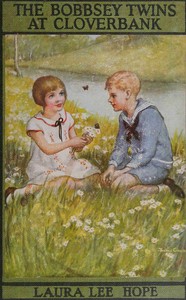
The catalog record for The Bobbsey twins at Cloverbank — Themes and Context provides practical reading context through 50,997 words, 3 hr 42 min estimated reading time, and 33 detected text sections.
The text analysis averages about 13.0 words per sentence, while the detected sections provide another way to judge how the source is divided.
Project Gutenberg metadata also associates the work with “Twins -- Juvenile fiction,” connecting these edition facts with the source record’s subject description.
Explore this collection
These alternatives are selected using recorded categories and estimated reading time.
About 223 minutes
Fantasy Juvenile Worlds
51,073 recorded words. 1 minutes difference from this book's estimate.
View Gutenberg source #76759About 218 minutes
Fantasy Juvenile Worlds
49,939 recorded words. 4 minutes difference from this book's estimate.
View Gutenberg source #71079About 214 minutes
Fantasy Juvenile Worlds
49,027 recorded words. 8 minutes difference from this book's estimate.
View Gutenberg source #73317Search stored excerpts and compare books → Choose by your preferences →
Choices use stored catalog measurements. Estimates vary with reading speed. A shared category is a catalog label, not a claim that two books have the same argument or literary quality.
Search reads excerpt text stored with this catalog and links to its associated Gutenberg record. The connection is stored in the site database; this tool does not recheck that every excerpt is word-for-word identical to that external record. Excerpt search does not cover every chapter and does not verify historical publication dates.
Catalog snapshot checked: 2026-09-25. Coverage: 97 public books, 97 available source excerpts.
Read the complete public-domain text at its original source.
Read on Project GutenbergThe Bobbsey Twins at Cloverbank opens with a mysterious knocking at the kitchen door, immediately establishing a pattern of interruptions that propel the narrative. The story moves rapidly from domestic settings to outdoor adventures, with each chapter introducing a new incident—a box, a noise, an invitation—that shifts the scene. This structure relies on a series of small crises, such as Bert’s cart upset in Chapter XII, which are resolved quickly but leave traces in the characters’ actions. The frequent transitions between the farm, the orchard, and the barn create a rhythm of departure and return, emphasizing the twins’ exploratory energy.
Accidents are not mere mishaps in this story; they function as structural pivots. Bert’s cart overturns not because of recklessness but to avoid a mud turtle, a detail that reveals the twins’ impulsive kindness. The accident is described with precise physicality—the cart going over, peaches spilling, Tramper standing still—and then immediately becomes a lesson in driving. Mr. Watson’s patient response, “You might as well learn now as any time not to turn a wagon too suddenly,” turns the event into instruction. This pattern recurs: each accident teaches a skill or reinforces a value, such as responsibility or caution. The narrative uses these moments to advance the twins’ competence without dwelling on danger.
Animals appear repeatedly as stable points in a shifting landscape. Tramper the horse is described as calm after the upset, “eating grass … as much as to say that it wasn’t his fault.” This anthropomorphic touch gives the animal a personality that contrasts with the twins’ excitement. In the opening chapter, the mysterious box and queer noises suggest unseen creatures, while later chapters mention a bear (Chapter XII) and bees (Chapter XX). Animals are not just props; they trigger events or provide comic relief. The horse’s steadiness allows Bert to practice driving, and the bear episode (though only glimpsed in the excerpt) promises a similar blend of alarm and resolution. These creatures ground the story in a rural world where nature is both a resource and a source of mild peril.
The story’s structure depends on rapid shifts between enclosed spaces and open landscapes. The kitchen, barn, and cabin (Chapter VI) serve as bases from which the twins venture into orchards, lanes, and fields. Each chapter heading signals a new location: “The Lonely Cabin,” “The Night Camp,” “The Storm,” “In the Apple Orchard.” This movement is not random; it follows a seasonal logic of summer farm work. The excerpts show characters moving from the barn to the orchard and back, with the cart journey acting as a transitional device. The narrative lingers on the journey itself—the ride, the view, the conversation—rather than jumping straight to the destination. This technique gives readers a sense of continuous travel through a connected rural environment.
The text is rich with sensory details that recur across scenes. The opening “Tap! Tap! Tap!” is a sound that signals mystery, and later chapters include “queer noises” and the crash of Bert’s cart. Touch is emphasized through physical actions: holding a pie, turning a cart, picking up peaches. These details create a tactile world where objects are handled and mishandled. The spilled peaches are described as “soft fruit,” and the sorting process involves wooden bins and boards. Such concrete imagery grounds the fantasy in everyday farm life. Even the horse’s reaction—standing still—is a physical response that readers can visualize. This consistency of sensory language helps unify the episodic plot, making each new scene feel connected to the previous one.
Readers may find it useful to track how each chapter’s opening incident—a knock, a noise, an invitation—sets the twins in motion. The story rewards attention to small details: the mud turtle that causes Bert’s upset, the calm horse, the repeated phrase “try again.” These elements build a world where mistakes are forgiven and learning is gradual. The structure, with its quick scene changes and recurring animal encounters, reflects a summer of small adventures rather than a single grand plot.
There’s a comfort in how Cloverbank lets accidents unhurriedly reshape a day, much like rereading old friends. That same gentle drift lives in Little Miss Weezy — Reading Notes, where small moments linger longer than the plot ever asks, and the animals seem to hold the quiet between the lines.
Create a short personal record of your experience with this book.