About 275 minutes
Mabel Wynn — Text and Context
Fantasy Juvenile Worlds
63,049 recorded words. 1 minutes difference from this book's estimate.
View Gutenberg source #73786
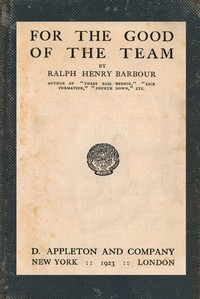
For For the good of the team — Key Ideas to Explore, the stored edition analysis reports 63,276 words, 4 hr 36 min estimated reading time, and 24 detected text sections.
The text analysis averages about 15.0 words per sentence, while the detected sections provide another way to judge how the source is divided.
Project Gutenberg metadata also associates the work with “Football -- Juvenile fiction,” connecting these edition facts with the source record’s subject description.
Explore this collection
These alternatives are selected using recorded categories and estimated reading time.
About 275 minutes
Fantasy Juvenile Worlds
63,049 recorded words. 1 minutes difference from this book's estimate.
View Gutenberg source #73786About 275 minutes
Fantasy Juvenile Worlds
63,130 recorded words. 1 minutes difference from this book's estimate.
View Gutenberg source #75385About 271 minutes
Fantasy Juvenile Worlds
62,249 recorded words. 5 minutes difference from this book's estimate.
View Gutenberg source #72775Search stored excerpts and compare books → Choose by your preferences →
Choices use stored catalog measurements. Estimates vary with reading speed. A shared category is a catalog label, not a claim that two books have the same argument or literary quality.
Search reads excerpt text stored with this catalog and links to its associated Gutenberg record. The connection is stored in the site database; this tool does not recheck that every excerpt is word-for-word identical to that external record. Excerpt search does not cover every chapter and does not verify historical publication dates.
Catalog snapshot checked: 2026-09-25. Coverage: 97 public books, 97 available source excerpts.
Read the complete public-domain text at its original source.
Read on Project GutenbergRalph Henry Barbour's For the Good of the Team opens with two friends meeting at Grand Central Station, a setting that immediately establishes the story's boarding-school world and its reliance on train travel between home and school. The narrative quickly moves to a mile race, where the prose concentrates on the runner's physical experience: the feel of muscles, the sound of shoes, the sight of the sun-dyed grandstand. Barbour devotes unusual attention to pacing strategy and the internal calculations of a runner, suggesting that the book's interest lies less in plot than in the granular details of athletic effort.
The mile race in the excerpts is not merely a contest of speed but a sustained exercise in point of view. Stuart Harven's thoughts dominate: he notes his own stride, his breathing, the position of rivals, and the advice of a teammate. Barbour renders the race as a series of tactical decisions—whether to take pace from another runner, when to conserve energy, how to respond to a rival's sprint. The physical details are precise: Stuart's feet grow heavy, his breathing shortens, and he feels the frosty evening air. The prose avoids melodrama; instead, it builds tension through small, concrete observations.
Barbour uses running style to delineate character. Lantwood, described as pasty-faced, sprints spectacularly to draw applause, a move Stuart interprets as playing to the gallery. Tully, raw-boned and earnest, sets an unvarying pace from start to finish, indifferent to whether he wins or places. Stuart himself is analytical, weighing his own amateur efforts against Lantwood's ability. These contrasts are not explained but shown through the race's action. The catalog subject "Football stories" might lead a reader to expect a football-centered plot, yet the excerpts reveal a more nuanced interest in individual athletic psychology.
The setting is evoked through sensory fragments: the warm afternoon in Grand Central, the frosty evening air on the track, the orange-red stand dyed by the sinking sun. Barbour anchors the race in a specific time and place—late September, a quarter-mile path, a crowd clustered near the straightaway. These details ground the internal drama in a physical world. The catalog lists Connecticut as a setting, but the excerpts do not name the state; instead, they build a sense of place through weather, light, and the sounds of applause and footfalls.
Readers approaching For the Good of the Team should expect a narrative that prioritizes internal experience over external action. The excerpts suggest that Barbour's interest lies in how his protagonist thinks, feels, and makes decisions under physical pressure. The catalog subjects—football, boarding schools, teenage boys—are present, but the book's texture comes from the quiet, moment-by-moment rendering of effort and rivalry.
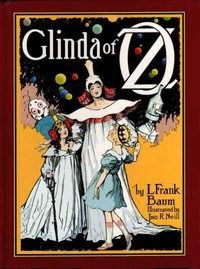
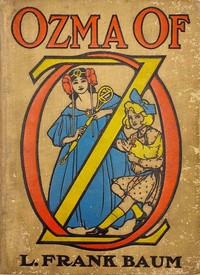
That rainy afternoon, Stuart’s labored breath in the mile run stayed with me—the strange intimacy of a body pushed past comfort. Later, I drifted to a different kind of journey, no less hazardous: Ozma and Dorothy venturing toward the Flatheads, where courage wears a quieter, more bewildered face. Glinda of Oz In Which Are Related the Exciting Experiences of Princess Ozma of Oz, and Dorothy, in Their Hazardous Journey to the Home of the Flatheads, and to the — Background and Themes felt like the same weathered path, just under different skies.
Use these questions to collect your thoughts before moving on.