About 214 minutes
Little Miss Moth — Edition Insights
Fantasy Juvenile Worlds
49,027 recorded words. 3 minutes difference from this book's estimate.
View Gutenberg source #73317
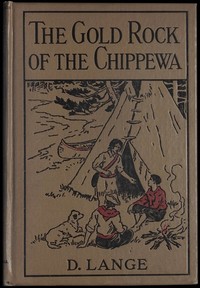
For The gold rock of the Chippewa — Text and Context, the stored edition analysis reports 48,430 words, 3 hr 31 min estimated reading time, and 36 detected text sections.
The text analysis averages about 21.9 words per sentence, while the detected sections provide another way to judge how the source is divided.
Project Gutenberg metadata also associates the work with “Animals -- Juvenile fiction,” connecting these edition facts with the source record’s subject description.
Explore this collection
These alternatives are selected using recorded categories and estimated reading time.
About 214 minutes
Fantasy Juvenile Worlds
49,027 recorded words. 3 minutes difference from this book's estimate.
View Gutenberg source #73317About 218 minutes
Fantasy Juvenile Worlds
49,939 recorded words. 7 minutes difference from this book's estimate.
View Gutenberg source #71079About 222 minutes
Fantasy Juvenile Worlds
50,997 recorded words. 11 minutes difference from this book's estimate.
View Gutenberg source #71239Search stored excerpts and compare books → Choose by your preferences →
Choices use stored catalog measurements. Estimates vary with reading speed. A shared category is a catalog label, not a claim that two books have the same argument or literary quality.
Search reads excerpt text stored with this catalog and links to its associated Gutenberg record. The connection is stored in the site database; this tool does not recheck that every excerpt is word-for-word identical to that external record. Excerpt search does not cover every chapter and does not verify historical publication dates.
Catalog snapshot checked: 2026-09-25. Coverage: 97 public books, 97 available source excerpts.
Read the complete public-domain text at its original source.
Read on Project GutenbergD. Lange's The Gold Rock of the Chippewa (1925) opens with a foreword that explicitly aligns its method with Robert Louis Stevenson's advice to "choose a background and then build in harmony with the landscape selected." The narrative, set in 1775 a dozen years after the French cession of the Great Lakes region, anchors itself in the rocky hills, cold streams, and deep blue waters of Lake Superior. The author calls it "The Robinson Crusoe of Lake Superior," signaling a survival-adventure framework. The story's structure moves through a series of geographic waypoints—from council to wild lakes to Caribou Island—each chapter title naming a new location or obstacle. This note traces how the work's recurring images of gold, rock, and water, and its movement between intimate campsites and vast landscapes, shape the reading experience.
The foreword frames the landscape as the story's primary architect. Lange writes that events take place "among the rocky wooded hills, on the cold streams, the clear lakes, the wild islands, and on the deep blue waters of 'Gitche Gumee.'" This is not mere backdrop; the chapter titles—"Gitche Gumee," "On Wild Lakes," "Caribou Island"—function as coordinates in a journey narrative. The excerpt from Chapter XIX shows the travelers moving from Whitefish Lake to Lake Manitowik, then portaging to Dog Lake and Wabatongushi. The text notes that on the latter two lakes "the lads felt completely lost," a moment where geography directly shapes emotional tone. The landscape is both a physical challenge and a source of disorientation, reinforcing the survival theme.
The title object—the gold rock—is never fully described in the excerpts, but its components recur throughout. "Rock" appears in chapter titles like "The Gold Rock of the Chippewa" and "A Big Bare Rock" (from a caption). Water imagery dominates: "Gitche Gumee" (Lake Superior), "Wild Lakes," "Big Pool," "On a New Tack." The foreword's reference to "the largest and most beautiful of the great inland seas" establishes water as both setting and symbol of vastness. Gold, meanwhile, is linked to quest and mystery: the search for "gold rock on a high cliff on one of the big lakes" drives the plot. These three elements—gold, rock, water—form a triad that structures the narrative's physical and symbolic geography.
The story opens with "The Council" (Chapter I) and quickly moves to "Gitche Gumee" (Chapter III), a shift from human deliberation to natural expanse. The excerpt from Chapter XIX illustrates a typical movement pattern: the travelers stop to dry meat, then Ganawa announces a northward journey based on an old Indian's tip. The narrative alternates between static camps ("The Smoke-House," "The Storm Camp") and transit ("Sailing The Pirate," "Into the Unknown"). This rhythm creates a sense of constant progression, with each new location bringing fresh obstacles. The chapter sequence—"Beginning the Search," "At the Big Pool," "A Puzzle"—shows how movement is tied to problem-solving, each scene advancing the quest incrementally.
A notable structural feature is the extended digression on camping techniques in Chapter XVIII, which interrupts the story with advice on mosquito nets, tent flaps, and candle use. The text states, "It is now fitting that we should again take up the thread of our story," acknowledging the break. This passage, while seemingly instructional, reinforces the survival-adventure genre by grounding the fictional journey in real-world practices. It also slows narrative pace, creating a contrast with the rapid scene changes elsewhere. Such digressions suggest the work's dual audience: young readers seeking adventure and those interested in practical woodcraft. The shift from story to manual and back again is a deliberate structural choice that reflects the author's didactic intent.
Readers attentive to structure will notice how Lange uses chapter titles as signposts, each marking a new phase of the journey. The recurring images of gold, rock, and water are not merely decorative but form a cohesive symbolic system that ties the quest together. The practical digressions, while seemingly out of place, underscore the work's commitment to verisimilitude. Approaching the text with an eye on its landscape-driven movement and its interplay between instruction and adventure will reveal the craft behind this juvenile novel.
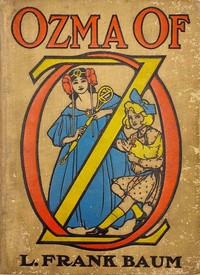
Reading the old Chippewa tale, I kept noticing how the gold and rock seemed almost restless, shifting with the water’s mood. It made me think of my worn copy of Ozma of Oz, where even the ground itself feels alive, and a path is never just a path, but a quiet promise.
Create a short personal record of your experience with this book.