About 275 minutes
Mabel Wynn — Text and Context
Fantasy Juvenile Worlds
63,049 recorded words. 0 minutes difference from this book's estimate.
View Gutenberg source #73786
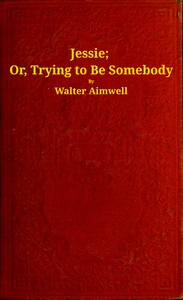
The source record for Jessie — Reading Companion measures this digital text at 63,130 words, 4 hr 35 min estimated reading time, and 22 detected text sections.
The text analysis averages about 19.0 words per sentence, while the detected sections provide another way to judge how the source is divided.
Project Gutenberg metadata also associates the work with “Conduct of life -- Juvenile fiction,” connecting these edition facts with the source record’s subject description.
Explore this collection
These alternatives are selected using recorded categories and estimated reading time.
About 275 minutes
Fantasy Juvenile Worlds
63,049 recorded words. 0 minutes difference from this book's estimate.
View Gutenberg source #73786About 276 minutes
Fantasy Juvenile Worlds
63,276 recorded words. 1 minutes difference from this book's estimate.
View Gutenberg source #70829About 271 minutes
Fantasy Juvenile Worlds
62,249 recorded words. 4 minutes difference from this book's estimate.
View Gutenberg source #72775Search stored excerpts and compare books → Choose by your preferences →
Choices use stored catalog measurements. Estimates vary with reading speed. A shared category is a catalog label, not a claim that two books have the same argument or literary quality.
Search reads excerpt text stored with this catalog and links to its associated Gutenberg record. The connection is stored in the site database; this tool does not recheck that every excerpt is word-for-word identical to that external record. Excerpt search does not cover every chapter and does not verify historical publication dates.
Catalog snapshot checked: 2026-09-25. Coverage: 97 public books, 97 available source excerpts.
Read the complete public-domain text at its original source.
Read on Project GutenbergJessie Hapley arrives at the Page farm with a heavy trunk—heavy because it holds a small store of gold coins, her mother's parting gift. The novel opens not with her arrival, but with a detailed account of the trunk's contents, immediately establishing that material resources are scarce and precious. The preface states the book's aim: to kindle 'a pure and noble ambition' in children of poverty. Yet the early chapters show that ambition is tested not by grand obstacles but by everyday frictions: a flagpole dispute, a snow-house quarrel, and the challenge of keeping a diary. The story's texture comes from these small, concrete struggles.
The preface declares the book's purpose: to encourage children to strive for 'that good name whose price is far above rubies.' But the narrative does not dramatize ambition through dramatic triumphs. Instead, it shows Jessie resolving to keep a journal after a cutting remark from Abby Leonard, and later conquering Abby by kindness. The diary itself becomes a tool of self-improvement, not a record of great events. The chapter on diaries offers three whimsical 'specimens'—a diary in dry measure, long measure, and solid measure—suggesting that the habit of reflection matters more than the content. Jessie's first entry records Benny's death, a quiet grief that anchors her resolve.
The Page household is filled with verbal energy. Ronald recites a long alliterative exercise—'Andrew Airpump asked his aunt her ailment'—until Marcus tells him to take it 'back to the barn.' Kate produces 'univocalic verses' using only the vowel e, and Marcus counters with a poem by George Herbert that drops a letter from each line. These interludes are not mere diversions; they show a family that values wit and verbal play. Yet the same chapter includes a rainy-day scene where Kate's piano notes are 'dull and spiritless,' and Otis stares dreamily out the window. The contrast between lively word games and flat domestic moments gives the household a realistic, uneven rhythm.
Two projects illustrate the children's resourcefulness and their conflicts. The first is an American flag for a Washington's birthday celebration. The children debate how to make it, and the repairs are completed only after 'an unexpected difficulty.' The flag is hoisted, but the scene ends with 'crying before breakfast' and 'two sober ones.' The second project is a snow-house, which sparks disagreements and 'obstinacy.' The narrator describes Esquimaux snow-houses and a traveller's testimony, blending instruction with story. Both episodes show that collaboration is hard, and that making something—whether a flag or a shelter—involves frustration as much as pride.
Readers will find that the book's subtitle, 'Trying to Be Somebody,' is taken literally: the story is about the trying, not the arrival. The excerpts show a world where ambition is tested by flagpole disputes, alliteration recitations, and the weight of a trunk. Pay attention to the small moments—the diary entries, the word games, the quarrels over snow—because that is where the book's real work is done.
Jessie’s quiet, persistent striving for a good name stayed with me long after I closed the book—her homemade flag felt like a small, honest prayer. Something in that patient hush carries over to Little King Davie — A Closer Reading, which holds the same tender gravity. I keep thinking about how both stories measure worth not by noise, but by steady care.
Create a short personal record of your experience with this book.