About 96 minutes
Little Miss Weezy — Reading Notes
Fantasy Juvenile Worlds
21,910 recorded words. 6 minutes difference from this book's estimate.
View Gutenberg source #76122
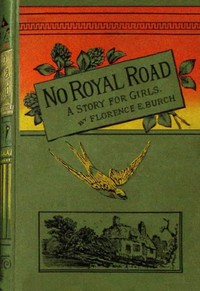
No royal road — Background and Themes can be approached with a clearer sense of reading commitment from its source measurements: 23,363 words, 1 hr 42 min estimated reading time, and 3 detected text sections.
The text analysis averages about 16.8 words per sentence, while the detected sections provide another way to judge how the source is divided.
Project Gutenberg metadata also associates the work with “Christian life -- Juvenile fiction,” connecting these edition facts with the source record’s subject description.
Explore this collection
These alternatives are selected using recorded categories and estimated reading time.
About 96 minutes
Fantasy Juvenile Worlds
21,910 recorded words. 6 minutes difference from this book's estimate.
View Gutenberg source #76122About 95 minutes
Fantasy Juvenile Worlds
21,628 recorded words. 7 minutes difference from this book's estimate.
View Gutenberg source #73812About 92 minutes
Fantasy Juvenile Worlds
20,950 recorded words. 10 minutes difference from this book's estimate.
View Gutenberg source #76454Search stored excerpts and compare books → Choose by your preferences →
Choices use stored catalog measurements. Estimates vary with reading speed. A shared category is a catalog label, not a claim that two books have the same argument or literary quality.
Search reads excerpt text stored with this catalog and links to its associated Gutenberg record. The connection is stored in the site database; this tool does not recheck that every excerpt is word-for-word identical to that external record. Excerpt search does not cover every chapter and does not verify historical publication dates.
Catalog snapshot checked: 2026-09-25. Coverage: 97 public books, 97 available source excerpts.
Read the complete public-domain text at its original source.
Read on Project GutenbergThe opening chapter of No Royal Road lingers over a cottage garden with 'sweet peas and lupins, wallflowers—or warriors, as the children call them' and 'cabbage roses—worthy of a prettier name.' This detailed setting establishes a nostalgic, domestic world that the catalog subjects—Christian life, orphans, friendship, grandmothers, household employees, loneliness, self-culture—only partially capture. The excerpts show Lilla, an orphan living with her grandmother, and Margie, a servant, each striving for 'greatness' in different spheres: Lilla through French and dumb-bells, Margie through scrubbing. Their parallel ambitions, revealed in private reflections, form the story's central tension, though the excerpts do not resolve whether either finds a 'royal road.'
The catalog lists 'Household employees' and 'Self-culture' as subjects, but the excerpts show these categories are not separate. Lilla, the educated orphan, and Margie, the servant, both desire to 'be something greater and worthier,' yet their paths are divided by class. Lilla thinks 'greatness' comes from 'head-work' and French; Margie assumes 'scrubbing and cleaning never made anyone great yet.' Burch uses parallel interior monologues—Lilla at her window, Margie at her work—to show each character measuring herself against the other. Lilla even reflects that 'I cannot be so great in that respect' regarding housework, a concession that challenges her hierarchy of achievement. The story does not collapse these divisions but lets them coexist, suggesting that the 'road' to worth is not uniform.
The garden is not merely backdrop but a space where the characters test their ambitions. Lilla 'took to watering her flowers more vigorously' and 'running upstairs two steps at a time' after deciding to grow strong. Margie waters flowers with Lilla 'until the stars came out,' and they exchange confidences there. The catalog subject 'Loneliness' is undercut by these shared moments, yet the garden also isolates: Lilla studies in 'the little arbour' while Margie bustles inside. Burch uses the garden's seasonal cycle—'silent and peaceful in summer,' 'gurgling and rushing' in spring—to mirror the characters' inner rhythms. The physical details (dumb-bells, French books, scrubbing brushes) are not symbols but concrete tools through which the girls attempt to shape themselves.
The excerpts repeatedly circle the question 'what true greatness really was,' but never answer it. Lilla's grandmother, Mrs. Eden, offers a Sabbath-keeping piety that frames rest as obedience, yet Lilla's ambition persists. Margie, told that greatness is not for servants, still 'longed to be something.' The catalog subject 'Children and death' appears only in the title page's mention of 'The Way, the Truth, and the Life'—a chapter heading that may promise resolution but is not excerpted. Burch leaves the girls 'trying to reach the same end' without revealing that end. Readers must watch whether Lilla's 'unflagging assiduity' and Margie's quiet hope converge, or whether the story maintains their separate spheres.
The excerpts offer no evidence of a conversion or a clear moral conclusion. Readers should attend to how Burch balances the girls' parallel narratives—whether Margie's domestic labor is granted the same dignity as Lilla's studies, or whether the story ultimately reinforces the class hierarchy it describes. The title's promise that there is 'no royal road' may apply equally to both characters, but the text leaves that judgment to the reader.
Reading about Lilla and Margie’s separate paths reminds me of afternoons at my grandmother’s house, where I’d set aside my own studies to help her fold laundry, feeling that quiet rightness. It’s the same warmth I found in The Bobbsey twins at Cloverbank — Themes and Context, where small chores and shared laughter felt more like home than any grand ambition ever could.
Capture what you thought, learned, and would like to remember.