About 250 minutes
Sir Richard's grandson — A Closer Reading
Fantasy Juvenile Worlds
57,403 recorded words. 8 minutes difference from this book's estimate.
View Gutenberg source #70554
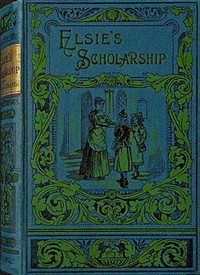
For Elsie's scholarship — Text and Context, the stored edition analysis reports 59,263 words, 4 hr 18 min estimated reading time, and 6 detected text sections.
The text analysis averages about 21.6 words per sentence, while the detected sections provide another way to judge how the source is divided.
Project Gutenberg metadata also associates the work with “Friendship -- Juvenile fiction,” connecting these edition facts with the source record’s subject description.
Explore this collection
These alternatives are selected using recorded categories and estimated reading time.
About 250 minutes
Fantasy Juvenile Worlds
57,403 recorded words. 8 minutes difference from this book's estimate.
View Gutenberg source #70554About 270 minutes
Fantasy Juvenile Worlds
62,083 recorded words. 12 minutes difference from this book's estimate.
View Gutenberg source #72769About 270 minutes
Fantasy Juvenile Worlds
61,943 recorded words. 12 minutes difference from this book's estimate.
View Gutenberg source #74428Search stored excerpts and compare books → Choose by your preferences →
Choices use stored catalog measurements. Estimates vary with reading speed. A shared category is a catalog label, not a claim that two books have the same argument or literary quality.
Search reads excerpt text stored with this catalog and links to its associated Gutenberg record. The connection is stored in the site database; this tool does not recheck that every excerpt is word-for-word identical to that external record. Excerpt search does not cover every chapter and does not verify historical publication dates.
Catalog snapshot checked: 2026-09-25. Coverage: 97 public books, 97 available source excerpts.
Read the complete public-domain text at its original source.
Read on Project GutenbergThe novel opens with a classroom scene of quiet tension: three girls—Elsie Winn, Mary Nicholls, and Jane Holmes—are called out of their lesson and seated apart to work on last year's examination papers. The governess's brisk, business-like manner and the girls' whispered excitement establish a world where educational opportunity is both a prize and a test of character. The scholarship offers twenty pounds a year for higher schooling, a sum that carries tangible weight in this village setting.
Emma Leslie immediately signals that this is not a simple story of academic triumph. The title itself—Elsie's Scholarship and Why She Surrendered It—promises a reversal, and the early chapters introduce a family dynamic where duty, ambition, and practical necessity pull in different directions. Elsie's brother Tom, who prefers gardening to desk work, will later voice a regret that echoes through the narrative: he never knew a scholarship could help him become a gardener.
The preliminary examination is presented not merely as a test of knowledge but as a moral proving ground. The three candidates are described as “friends, and, like all girl friends, sometimes found a good deal to talk about,” yet they have been “very earnestly engaged with their lesson” because they are anxious to do well. Leslie emphasizes their self-discipline: they do not speak when called out, and they obey the governess's instruction to work in silence. The reward—honour for their school and themselves, plus the scholarship—is framed as something earned through conduct as much as intellect.
This pattern recurs throughout the excerpts. When Tom later confesses he neglected his chance at a scholarship, his mother’s response is not about lost income but about a failure of duty: “you did not do your duty for duty's sake.” The scholarship becomes a symbol of moral order, where opportunity is tied to conscientious effort. The narrative suggests that the real examination is ongoing, and that character is tested long after the papers are marked.
Leslie uses dialogue to reveal the tensions between aspiration and practicality. Mrs. Winn, the mother, speaks in measured, instructive tones: “I should be a foolish mother if I gave way to you, my boy.” She counters Tom’s desire to leave school with a vision of modern horticulture, urging him to learn at an agricultural college. Tom’s response—“I never thought a scholarship would help me to be a gardener”—exposes a gap between his understanding of opportunity and the paths available to him.
Elsie, described as “always ready to take up the cudgels on Tom's behalf,” interjects with sympathy, but her mother redirects the conversation to present duty. The governess, too, speaks with brisk encouragement: “Yes, you may go on.” These adult voices are consistent in their emphasis on perseverance and making the best of circumstances. The children’s voices, by contrast, register surprise, frustration, and a longing for a different future—Tom’s tears, quickly brushed away, are a rare moment of visible emotion.
The village school where Tom ends up is described as “noisy” and inferior to the one the family left behind. Elsie calls it “this nasty, noisy school,” and Tom complains he “could not do any good” there. The contrast between the orderly examination room of the opening and this chaotic classroom is implicit but sharp. The scholarship, had Tom won it, would have opened a path to a better school and, eventually, to the horticultural college he now desires.
Leslie uses setting to underscore the consequences of missed chances. The garden, where Tom spends his time with old Betsy Gunn learning grafting and budding, is a place of informal knowledge—but it is not enough. Mrs. Winn insists that “the sort of gardening that would do when her father and grandfather were young, would not do now.” The village itself becomes a limiting space, where opportunities are scarce and the scholarship represents a rare bridge to a wider world. The physical movement from one school to another mirrors the characters’ moral and social trajectories.
Readers attentive to the novel’s title will watch for the moment Elsie surrenders her scholarship—a decision that, based on the excerpts, likely involves family sacrifice rather than academic failure. Leslie’s method is to build suspense through small, concrete details: the whispered speculation of the candidates, the mother’s firm counsel, Tom’s belated tears. The story rewards close attention to how characters weigh duty against desire, and how a single opportunity can reshape a family’s fortunes. The village setting, with its limited horizons, makes every choice consequential.
The rain blurred the window while Elsie’s quiet sacrifice lingered with me, that ache of choosing duty over her brother’s garden dreams. Later, drying the dishes, I thought how childhood ambition bends differently in other houses, and reached for The Bobbsey twins at Cloverbank — Themes and Context instead, a lighter afternoon altogether. Funny how one story hands you the next.
Use these questions to collect your thoughts before moving on.