About 270 minutes
Half a dozen boys — Edition Insights
Fantasy Juvenile Worlds
62,083 recorded words. 0 minutes difference from this book's estimate.
View Gutenberg source #72769
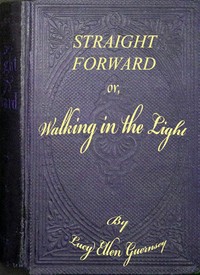
Before opening Straight forward; or, walking in the light — Key Ideas to Explore, the edition data offers a quick orientation: 61,943 words, 4 hr 30 min estimated reading time, and 6 detected text sections.
The text analysis averages about 17.6 words per sentence, while the detected sections provide another way to judge how the source is divided.
Project Gutenberg metadata also associates the work with “Conduct of life -- Juvenile fiction,” connecting these edition facts with the source record’s subject description.
Explore this collection
These alternatives are selected using recorded categories and estimated reading time.
About 270 minutes
Fantasy Juvenile Worlds
62,083 recorded words. 0 minutes difference from this book's estimate.
View Gutenberg source #72769About 270 minutes
Fantasy Juvenile Worlds
61,924 recorded words. 0 minutes difference from this book's estimate.
View Gutenberg source #76628About 271 minutes
Fantasy Juvenile Worlds
62,249 recorded words. 1 minutes difference from this book's estimate.
View Gutenberg source #72775Search stored excerpts and compare books → Choose by your preferences →
Choices use stored catalog measurements. Estimates vary with reading speed. A shared category is a catalog label, not a claim that two books have the same argument or literary quality.
Search reads excerpt text stored with this catalog and links to its associated Gutenberg record. The connection is stored in the site database; this tool does not recheck that every excerpt is word-for-word identical to that external record. Excerpt search does not cover every chapter and does not verify historical publication dates.
Catalog snapshot checked: 2026-09-25. Coverage: 97 public books, 97 available source excerpts.
Read the complete public-domain text at its original source.
Read on Project GutenbergThe novel opens in a shop, where a dispute over a dollar sets up a central tension: Lucy refuses to buy tablets she cannot afford, while Emily yields to pressure and takes them on credit. This small transaction—a pretty set of tablets, a polite shopman offering to add it to the bill—becomes a hinge for the story’s moral architecture. Guernsey builds her scenes around such everyday choices, letting purchases, letters, and whispered conversations carry the weight of larger conflicts. The boarding school setting is less a backdrop than a pressure chamber, where debts and secrets accumulate until they force confrontations. The title’s promise of walking in the light is tested repeatedly against the lure of easy credit and hidden correspondence.
The first chapter establishes a pattern: moral decisions are made in public, commercial spaces. Lucy’s refusal to buy on credit is met with accusations of stinginess; Emily’s acquiescence is enabled by the shopman’s casual offer to “add it to the bill.” This transaction recurs as a motif—debts are incurred not in desperation but through social pressure and the ease of deferred payment. Guernsey uses the shop not merely as a setting but as a test of character, where the difference between Lucy and Emily is visible in their handling of money. Later, the same dynamic reappears with embroideries and laces, linking material desire to moral compromise. The shop becomes a stage where the girls perform their values, and the reader is invited to watch the consequences unfold.
A letter—misidentified as a French exercise—becomes the story’s central object of suspense. When Emily discovers Delia’s correspondence with Mr. Hugo, the narrative shifts from open transactions to hidden ones. The letter is described as “clearly a letter, addressed to his beloved Delia,” and its discovery triggers a confrontation in the dormitory. Guernsey handles the scene with careful pacing: Emily’s hesitation, her glance at the paper, Delia’s sudden waking with “eyes that flashed fire.” The letter is not just a plot device; it is a physical token of secrecy, passed between hands, read in stolen moments. The author uses it to explore how private knowledge creates moral obligations—Emily must decide whether to expose Delia, and the letter’s existence forces her to reckon with her own complicity in earlier debts.
The dormitory argument between Emily and Delia is the novel’s most intense passage in the excerpts. Delia’s coolness—“Another fit of conscience, I suppose”—contrasts with Emily’s agitation. Their exchange is structured as a series of accusations and defenses, each girl trying to gain the upper hand. Delia threatens to reveal Emily’s own secret: the missing ten-dollar bill that paid for Kitty’s shawl. This moment of mutual vulnerability is typical of Guernsey’s method: she pits characters against each other not in physical conflict but in verbal sparring that exposes their weaknesses. The language is direct, almost legalistic—“I think if you persist, it will be my duty to do so”—and the scene ends not with resolution but with Delia turning to arrange her hair, a gesture of composure that underscores her control.
Guernsey structures the narrative through a series of spatial shifts: from the shop to the dry-goods store, from the classroom to the dormitory. Each location carries its own rules and possibilities. The shop allows for public display of character; the dormitory enables private revelation. The letter is discovered in a bedroom, a space of supposed safety that becomes a site of exposure. This movement between spaces is not merely scenic but thematic: the girls are constantly moving between the light of public scrutiny and the darkness of hidden acts. The title’s “walking in the light” is literalized in these transitions—characters are seen or unseen, their actions visible or concealed. Guernsey uses these shifts to build tension, as secrets carried from one space to another eventually collide.
Readers attentive to the novel’s structure will notice how Guernsey uses small objects—tablets, a letter, a shawl—to anchor moral choices. The story rewards careful attention to these details, as they recur and accumulate meaning. The excerpts suggest a work less concerned with plot twists than with the slow revelation of character under pressure. Approach the text as a series of linked scenes, each testing a girl’s commitment to honesty, and watch how the light shifts.
I’ve often thought Straight Forward teaches how truth weighs on a young heart, and that same quiet heaviness lingers in Clinton — Background and Themes, though its shadows fall differently. Both books share a reverence for honest stumbling. It’s a gentle kinship—one I’ve mulled over during many a dim evening, light from a lamp touching old pages.
Capture what you thought, learned, and would like to remember.