About 63 minutes
Friend and foe — Text and Context
Fantasy Juvenile Worlds
14,398 recorded words. 1 minutes difference from this book's estimate.
View Gutenberg source #72968
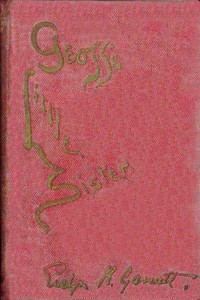
Geoff's little sister — Reading Companion can be approached with a clearer sense of reading commitment from its source measurements: 14,559 words, 1 hr 4 min estimated reading time, and 2 detected text sections.
The text analysis averages about 21.1 words per sentence, while the detected sections provide another way to judge how the source is divided.
Project Gutenberg metadata also associates the work with “Christian life -- Juvenile fiction,” connecting these edition facts with the source record’s subject description.
Explore this collection
These alternatives are selected using recorded categories and estimated reading time.
About 63 minutes
Fantasy Juvenile Worlds
14,398 recorded words. 1 minutes difference from this book's estimate.
View Gutenberg source #72968About 60 minutes
Fantasy Juvenile Worlds
13,740 recorded words. 4 minutes difference from this book's estimate.
View Gutenberg source #75734About 72 minutes
Fantasy Juvenile Worlds
16,459 recorded words. 8 minutes difference from this book's estimate.
View Gutenberg source #76977Search stored excerpts and compare books → Choose by your preferences →
Choices use stored catalog measurements. Estimates vary with reading speed. A shared category is a catalog label, not a claim that two books have the same argument or literary quality.
Search reads excerpt text stored with this catalog and links to its associated Gutenberg record. The connection is stored in the site database; this tool does not recheck that every excerpt is word-for-word identical to that external record. Excerpt search does not cover every chapter and does not verify historical publication dates.
Catalog snapshot checked: 2026-09-25. Coverage: 97 public books, 97 available source excerpts.
Read the complete public-domain text at its original source.
Read on Project GutenbergThe novel opens with Geoffrey crouched before a fire, his mother dead in the next room, while his younger brothers Forbes and Jack distract themselves with oranges. The scene immediately establishes a household in mourning, but also introduces a key tension: the boys' brief chuckle over a bursting orange shocks Geoffrey, who cannot imagine laughing again. This moment of childish relief amid grief sets up the book's central concern with small moral choices and emotional discipline.
The catalog subjects list 'Children and death' and 'Motherless families,' and the excerpts bear this out directly. The opening chapter places the mother's death in the recent past—'Only the other side of the nursery wall their dear dead mother lay'—and the boys' grief is palpable. Yet the narrative quickly pivots to lessons in self-control. Mr. Hodson quotes Proverbs 16:32 to Forbes: 'He that ruleth his spirit is greater than he that taketh a city.' This verse becomes a structural anchor, as Chapter IV is titled 'Taking a City.' The moral framework is explicit: emotional mastery is a form of conquest.
In Chapter IV, Geoffrey faces a small but significant temptation. He saves an apple puff from dinner to give to old Rachel, a neglected mother. The narrator dwells on the puff's appearance—'three cornered, and a little burnt at the edges'—and Geoffrey's hunger. He nearly eats it himself, but knocks on Rachel's door. The narrator then generalizes: 'life is made up of little things, and the great battle of life... consists often of little victories and little losses.' This passage is the most explicit statement of the book's didactic method: moral growth is built from minor sacrifices. The puff is not a symbol; it is a concrete object that tests Geoffrey's resolve.
The narrator frequently addresses the reader directly, a common device in juvenile fiction of the period. Phrases like 'as I fancy it is of most boys' and 'perhaps some of my little readers may think' create a conversational, instructive tone. The narrator also editorializes about Geoffrey's future: 'this small victory... helped him in after years to gain a far greater one.' This forward-looking comment is the only hint of Geoffrey's later life in the excerpts; the text does not reveal what that greater victory is. The voice is consistently moralizing but not heavy-handed, mixing sentiment with practical advice.
Readers should note that the excerpts cover only the first four chapters and part of the fifth. The catalog subject 'Christian life' is implied by the biblical quotation and the emphasis on self-denial, but the excerpts do not show explicit religious practice beyond that. The illustrator, Ernest Smythe, is credited but no illustrations appear in the provided text. The book's short length—around 14,500 words—suggests a quick read, but the moral lessons are carefully paced.
I have always treasured the way Geoff's little sister taught a child that anger is a guest, not a master. That quiet lesson of self-command, learned over apple puff and proverb, found its echo in a later, lonelier story—a grown man’s struggle for gentleness. One can hear the same whisper of grace in John Tincroft, bachelor and benedict — Text and Context, as if they shared a secret.
Use these questions to collect your thoughts before moving on.