About 76 minutes
On the face of the flood — A Reader’s Guide
Fantasy Juvenile Worlds
17,323 recorded words. 4 minutes difference from this book's estimate.
View Gutenberg source #76666
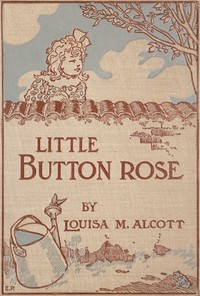
This digital edition of Little Button Rose — Story, Setting & Ideas is described by source-level measurements including 16,459 words, 1 hr 12 min estimated reading time, and 2 detected text sections.
The text analysis averages about 23.7 words per sentence, while the detected sections provide another way to judge how the source is divided.
Project Gutenberg metadata also associates the work with “Orphans -- Juvenile fiction,” connecting these edition facts with the source record’s subject description.
Explore this collection
These alternatives are selected using recorded categories and estimated reading time.
About 76 minutes
Fantasy Juvenile Worlds
17,323 recorded words. 4 minutes difference from this book's estimate.
View Gutenberg source #76666About 78 minutes
Fantasy Juvenile Worlds
17,746 recorded words. 6 minutes difference from this book's estimate.
View Gutenberg source #73027About 64 minutes
Fantasy Juvenile Worlds
14,559 recorded words. 8 minutes difference from this book's estimate.
View Gutenberg source #71949Search stored excerpts and compare books → Choose by your preferences →
Choices use stored catalog measurements. Estimates vary with reading speed. A shared category is a catalog label, not a claim that two books have the same argument or literary quality.
Search reads excerpt text stored with this catalog and links to its associated Gutenberg record. The connection is stored in the site database; this tool does not recheck that every excerpt is word-for-word identical to that external record. Excerpt search does not cover every chapter and does not verify historical publication dates.
Catalog snapshot checked: 2026-09-25. Coverage: 97 public books, 97 available source excerpts.
Read the complete public-domain text at its original source.
Read on Project GutenbergRosamond's first words in the story—'If you please, I've come'—establish her as a child who navigates adult spaces with composure. She immediately identifies her three cousins by their physical traits, a bluntness that earns her the label 'enfant terrible' from the pretty cousin Cicely. This opening scene sets up a pattern: Rosy's innocent honesty disrupts the household's decorum, yet her charm often wins over the offended.
The excerpts also introduce a neighborhood quarrel involving a cat thrown over a wall and 'bad names,' which Rosy later resolves by declaring that 'being friends is a great deal nicer than fighting.' Her peacemaking is not sentimental but practical, rooted in her enjoyment of tea and attention. The story's tensions revolve around pride, dignity, and the small rituals that mend broken relationships.
Rosamond's directness is her defining trait, and the excerpts show how it alternately charms and offends. Upon arrival, she announces that her father described Cousin Penny as 'old,' Cousin Henny as 'fat,' and Cousin Cicely as 'rather pretty.' The reactions are immediate: Miss Penelope retreats behind a letter, Miss Henrietta's glasses fly off, and Cicely laughs. This moment reveals the household's sensitivity to plain speech, a theme that recurs when Rosy later repeats Mr. Dover's remark about 'young ladies,' causing Cicely to suppress her desire to accompany her.
The narrative does not punish Rosy's bluntness but instead uses it to expose adult pretensions. Her 'sweet composure' and 'innocent satisfaction' suggest that her honesty is not malicious but naive. The tension lies between the cousins' expectations of polite behavior and Rosy's unvarnished observations, which often hit their mark.
The central conflict in the excerpts is a feud between the Carey household and Mr. Dover, a neighbor. The quarrel began between Miss Henny and Mr. Dover, involving 'plain words spoken in the heat of battle' and an incident with a cat. Miss Penny takes the first step toward reconciliation by visiting Mr. Dover, saying 'Let us be friends again for the sake of your mother.' Rosy accompanies her and becomes an unwitting peacemaker.
During the visit, Rosy ignores the adults' conversation and instead explores Mr. Dover's treasures: a tiger-skin, a Feejee crown of feathers, a collar of shark's teeth, and a Japanese war-fan. Her delight in these objects—and her absorption in pouring tea from a silver melon pot—defuses tension. After the meal, she declares that being friends is 'nicer than fighting,' and the adults laugh, passing her around for kisses. The reconciliation, however, is incomplete: Cicely's pride and Miss Henny's sense of dignity threaten to prolong the feud, as Miss Henny refuses to 'humble herself' by accepting an apology not directed at her.
Alcott uses material details to mark shifts in social dynamics. The quarrel is symbolized by a cat thrown over a wall; reconciliation begins with a card, a visit, and a shared tea. Rosy's fascination with Mr. Dover's exotic collection—the tiger-skin, the shark-tooth collar, the war-fan—serves as a bridge between the hostile adults. Her immersion in these objects allows the elders to converse without awkwardness.
The tea ritual is described with particular care: 'the rapture of pouring real tea out of a pot shaped like a silver melon, into cups as thin as egg-shells.' Rosy's absorption in this domestic ceremony—'she never minded what the elders talked about'—highlights how small, pleasant routines can ease conflict. The story suggests that pride and dignity often yield to shared pleasures, though the excerpts leave unresolved whether Miss Henny will follow Miss Penny's example.
Readers may note how Alcott balances Rosy's childish perspective with the adults' more complex motivations. The excerpts offer only a partial view of the feud's resolution; the full text likely explores whether Miss Henny's pride gives way. Pay attention to how objects—a cat, a tea set, a tiger-skin—carry emotional weight and signal changes in relationships. Rosy's role as a 'little peacemaker' is not heavy-handed but emerges naturally from her curiosity and honesty.
Leafing through Little Button Rose, I paused on Rosamond’s stubborn pride, that quiet ache before she bends toward apology. It reminded me of a passage in A golden thread — Inside the Classic, where the same tension between holding firm and reaching out lingers unspoken, just beneath the surface. Both feel less like lessons than familiar, gentle echoes of ourselves.
A brief reflection can help important ideas stay with you longer.