About 76 minutes
On the face of the flood — A Reader’s Guide
Fantasy Juvenile Worlds
17,323 recorded words. 2 minutes difference from this book's estimate.
View Gutenberg source #76666
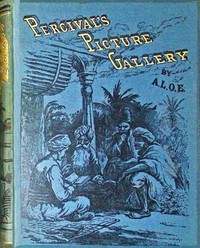
Before opening Percival's picture gallery — Edition Insights, the edition data offers a quick orientation: 17,746 words, 1 hr 18 min estimated reading time, and 3 detected text sections.
The text analysis averages about 20.1 words per sentence, while the detected sections provide another way to judge how the source is divided.
Project Gutenberg metadata also associates the work with “Christian life -- Juvenile fiction,” connecting these edition facts with the source record’s subject description.
Explore this collection
These alternatives are selected using recorded categories and estimated reading time.
About 76 minutes
Fantasy Juvenile Worlds
17,323 recorded words. 2 minutes difference from this book's estimate.
View Gutenberg source #76666About 83 minutes
Fantasy Juvenile Worlds
19,026 recorded words. 5 minutes difference from this book's estimate.
View Gutenberg source #76385About 72 minutes
Fantasy Juvenile Worlds
16,459 recorded words. 6 minutes difference from this book's estimate.
View Gutenberg source #76977Search stored excerpts and compare books → Choose by your preferences →
Choices use stored catalog measurements. Estimates vary with reading speed. A shared category is a catalog label, not a claim that two books have the same argument or literary quality.
Search reads excerpt text stored with this catalog and links to its associated Gutenberg record. The connection is stored in the site database; this tool does not recheck that every excerpt is word-for-word identical to that external record. Excerpt search does not cover every chapter and does not verify historical publication dates.
Catalog snapshot checked: 2026-09-25. Coverage: 97 public books, 97 available source excerpts.
Read the complete public-domain text at its original source.
Read on Project GutenbergThe narrative is framed by a visit to a dying art connoisseur: Percival, a young man confined to his attic room in London, awaits death from a knee malady. His friend, the narrator, finds him “unable to rise from the couch” and surrounded by pictures that become springboards for stories. The book’s preface reveals that A. L. O. E. wrote from a “chamber of sickness” herself, lending the work a personal, meditative urgency. The tales are not mere diversions; they are devotional exercises, each linked to a specific image in Percival’s collection.
The author’s vocabulary oscillates between homely piety and exotic detail. In the preface, she hopes her thoughts “may, by God’s blessing, be so also to some of my fellow-pilgrims,” using the familiar pilgrim metaphor. Yet the stories are set in Persia, Afghanistan, and India, with terms like mushak (water-skin), bihisti (water-carrier), and zenana (women’s quarters) woven into the English. This lexical choice creates a deliberate distance: the moral lessons are universal, but the settings are deliberately foreign, perhaps to make the allegory more striking. The narrator even pauses to explain that bihisti means “one of Paradise,” a poetic etymology that underscores the spiritual weight given to humble labor.
Conversations among the frame-story characters—Percival, the narrator, and Lady Mar—serve to interpret and apply the tales. When the narrator finishes the miser’s story, Percival remarks, “Many a man has sold his life for gold,” and Lady Mar adds a couplet about possessing one’s portion here. This back-and-forth turns each tale into a shared sermon. The dialogue also reveals character: Percival’s comments are gentle and reflective, while Lady Mar’s are more pointed. The effect is that the reader is guided, not left to infer the moral alone. The author uses these exchanges to reinforce the devotional purpose stated in the preface.
The book is built as a series of stories within a story, each introduced by a picture in Percival’s gallery. The first chapter sets up the frame; subsequent chapters are titled like a gallery catalogue: “The Passage through the Red Sea,” “King David’s Vision,” “The Carpenter’s Death,” and so on. The tales are not all original—some are labeled “Legend of…”—and they vary in length and tone. The frame itself is minimal: the narrator visits, a tale is told, and then the group discusses it. This structure allows A. L. O. E. to range across biblical, historical, and folkloric material while maintaining a unified devotional voice. The recurring motif of death (the carpenter’s death, the self-made grave, the Roman soldier’s legend) ties back to Percival’s own mortality.
Two motifs recur across the excerpts: water and graves. In the legend of the self-made grave, the miser is “parched with thirst” but refuses to stop digging for water; he falls into his own pit. In the tale of the three bihistis, water-carriers are praised for relieving “thirst of others in a dry and weary land.” The grave appears both literally (the miser’s self-made grave) and figuratively (Percival’s expected death). These images are not merely decorative; they echo biblical language about the “water of life” and the “grave” as a pit. The author uses them to create a consistent symbolic landscape, even across different story settings.
Readers approaching Percival’s Picture Gallery should expect a quiet, contemplative work that prioritizes moral instruction over plot. The frame narrative is slight, and the tales are best read as devotional meditations rather than realistic fiction. The Orientalist details—Persian listeners, Afghan attention, Sikh reverence—are part of a Victorian evangelical imagination that saw the East as a setting for spiritual lessons. The book rewards attention to its recurring imagery and the way dialogue shapes interpretation.
Years shelving tales of dying gentlemen and their painted allegories, I often recall how that old book’s solemn farewells echo in Glinda of Oz In Which Are Related the Exciting Experiences of Princess Ozma of Oz, and Dorothy, in Their Hazardous Journey to the Home of the Flatheads, and to the — Background and Themes—two very different quests, yet both whisper that friendship softens even the strangest journey homeward, perhaps beyond it.
Save your reaction, strongest insight, and memorable passage.