About 86 minutes
Footprints — A Reader’s Guide
Fantasy Juvenile Worlds
19,651 recorded words. 1 minutes difference from this book's estimate.
View Gutenberg source #76173
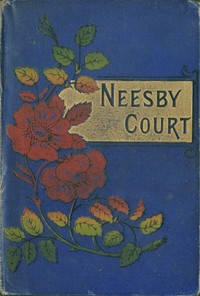
For Neesby Court — Context and Discussion, the stored edition analysis reports 19,368 words, 1 hr 25 min estimated reading time, and 2 detected text sections.
The text analysis averages about 15.8 words per sentence, while the detected sections provide another way to judge how the source is divided.
Project Gutenberg metadata also associates the work with “Christian life -- Juvenile fiction,” connecting these edition facts with the source record’s subject description.
Explore this collection
These alternatives are selected using recorded categories and estimated reading time.
About 86 minutes
Fantasy Juvenile Worlds
19,651 recorded words. 1 minutes difference from this book's estimate.
View Gutenberg source #76173About 83 minutes
Fantasy Juvenile Worlds
19,026 recorded words. 2 minutes difference from this book's estimate.
View Gutenberg source #76385About 89 minutes
Fantasy Juvenile Worlds
20,276 recorded words. 4 minutes difference from this book's estimate.
View Gutenberg source #76232Search stored excerpts and compare books → Choose by your preferences →
Choices use stored catalog measurements. Estimates vary with reading speed. A shared category is a catalog label, not a claim that two books have the same argument or literary quality.
Search reads excerpt text stored with this catalog and links to its associated Gutenberg record. The connection is stored in the site database; this tool does not recheck that every excerpt is word-for-word identical to that external record. Excerpt search does not cover every chapter and does not verify historical publication dates.
Catalog snapshot checked: 2026-09-25. Coverage: 97 public books, 97 available source excerpts.
Read the complete public-domain text at its original source.
Read on Project GutenbergThe narrator, Addie Dixon, introduces herself and her family with the directness of a child speaking to a listener: 'My name is Addie Dixon. I have one brother and two sisters.' The opening chapter establishes a world built on specific, tangible details—the house with windows opening outwards, the dog Tuts described as 'browny, blacky-grey, with a white spot on his tail,' and the servants Masters and Martha, whose speech is rendered with dialectal touches. Cann's authorial choice to filter the story through Addie's perspective gives the prose a conversational, sometimes breathless quality, as when Addie recounts the family's history of Neesby Court through Martha's gossip about the squire's gambling and the deserted estate.
Cann establishes Addie's narrative voice through specific lexical choices that signal a juvenile speaker. Addie uses colloquial phrases like 'the dearest little dog you ever saw' and reports dialogue with minimal editorializing. When Martha says the girl who helps 'only helps backwards,' Addie adds, 'but then Martha does not always mean what she says,' showing an awareness of adult irony without fully comprehending it. The description of Tuts—'browny, blacky-grey, with a white spot on his tail, and one on one ear'—demonstrates a child's attention to precise, quirky details. This voice is consistent throughout the excerpts, lending authenticity to the domestic scenes.
The physical setting is rendered with a child's eye for sensory specifics. The Dixon house is 'funny old-fashioned,' with ivy and roses in front and Virginia creeper at the back. Neesby Court is described through its gates, carriage drive, and park—a contrast to the family's modest home. Cann uses these spaces to reflect social and emotional boundaries: the Court is initially empty and locked, then becomes a site of mystery. The interior of the house is evoked through objects like the book on the chest of drawers and the 'great wet sheet' flapping outside Milly's door during her illness. These details ground the story in a tangible, lived-in world.
Cann differentiates characters through their speech patterns. Martha's dialect is marked by contractions and colloquialisms: 'I'm mortal feared 'tis fever' and 'Bother her! she never is where she's wanted to be.' Mother speaks in a 'sweet voice,' using gentle imperatives. Father's speech is clipped and practical: 'Take this note down to the Hospital, Addie.' Addie's own dialogue is urgent and emotional, as when she screams 'Mother! mother!' upon finding Milly delirious. The contrast between Martha's superstitious worry and the parents' controlled responses creates tension. The delirious Milly's disjointed phrases—'Addie jumped out of the apple tree and rode up to heaven on my bubble'—are rendered with a disturbing precision that conveys the fever's effect without melodrama.
The scarlet fever episode occupies a significant portion of the excerpts, and Cann builds suspense through a series of errands and delays. Addie runs to fetch Dr. Lang, then to the hospital for a nurse, while the wet sheet flaps 'all day and night long.' The narrative withholds the outcome: 'Milly did not have the fever so very, very badly, though for several days sh...' (the excerpt cuts off). Cann uses the child's limited understanding to create tension—Addie does not know the diagnosis, only that Martha fears fever. The pacing, with its repeated commands and dashes, mirrors the urgency of a household in crisis. This section shows Cann's ability to handle a serious subject without losing the juvenile perspective.
Readers approaching Neesby Court should attend to the way Cann balances the cosy domestic frame with moments of genuine anxiety. The child narrator's voice is the book's central achievement, and its consistency rewards close reading. The excerpts suggest a story that moves between everyday life and crisis, using the specificities of the Dixon household to create a believable world. The incomplete text leaves the resolution of Milly's illness and the promised arrival of the 'pretty cousin' unknown, but the authorial choices visible here—in diction, dialogue, and description—offer a firm foundation for understanding the work.
The rain drummed on the window while Addie’s voice filled the room, that quiet child’s honesty about fever and waiting. I kept thinking how courage looks different, depending on who’s telling. Later, thumbing the shelf, my hand landed on Baseball Joe, champion of the league — Key Ideas to Explore. Not for the plot, but for that same plain, determined way of facing what comes—just another kind of season to sit through.
A brief reflection can help important ideas stay with you longer.