About 85 minutes
Neesby Court — Context and Discussion
Fantasy Juvenile Worlds
19,368 recorded words. 1 minutes difference from this book's estimate.
View Gutenberg source #76994
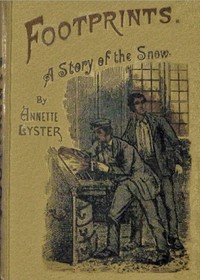
Footprints — A Reader’s Guide can be approached with a clearer sense of reading commitment from its source measurements: 19,651 words, 1 hr 26 min estimated reading time, and 2 detected text sections.
The text analysis averages about 16.8 words per sentence, while the detected sections provide another way to judge how the source is divided.
Project Gutenberg metadata also associates the work with “Christian life -- Juvenile fiction,” connecting these edition facts with the source record’s subject description.
Explore this collection
These alternatives are selected using recorded categories and estimated reading time.
About 85 minutes
Fantasy Juvenile Worlds
19,368 recorded words. 1 minutes difference from this book's estimate.
View Gutenberg source #76994About 89 minutes
Fantasy Juvenile Worlds
20,276 recorded words. 3 minutes difference from this book's estimate.
View Gutenberg source #76232About 83 minutes
Fantasy Juvenile Worlds
19,026 recorded words. 3 minutes difference from this book's estimate.
View Gutenberg source #76385Search stored excerpts and compare books → Choose by your preferences →
Choices use stored catalog measurements. Estimates vary with reading speed. A shared category is a catalog label, not a claim that two books have the same argument or literary quality.
Search reads excerpt text stored with this catalog and links to its associated Gutenberg record. The connection is stored in the site database; this tool does not recheck that every excerpt is word-for-word identical to that external record. Excerpt search does not cover every chapter and does not verify historical publication dates.
Catalog snapshot checked: 2026-09-25. Coverage: 97 public books, 97 available source excerpts.
Read the complete public-domain text at its original source.
Read on Project GutenbergAnnette Lyster's Footprints opens with a rare Devonshire snowstorm that delights Farmer Marlowe's five sons and one daughter, who have never before built snow-men or slid on ice. The initial chapters contrast the children's gleeful play with the ominous promise of Uncle Jasper's story, which he warns is "burnt in" and will bring a "thaw" of truth. The narrative voice shifts between the boys' schoolyard banter—Hugh's habitual contradicting, Harry's dismissive confidence—and Jasper's halting, guilt-laden first-person account of a theft from the farmer's bureau. This dual structure sets up a tension between the snowy idyll and a secret that has festered for years.
The snow is not merely a backdrop but an active force in the story's structure. Lyster emphasizes its rarity in Devon: "a heavy fall of snow is a most unusual thing" and "generally melts in the act of falling." This exceptional weather isolates the farm, making the boys' snow-man building and the subsequent thaw both literal and metaphorical. The snow's purity contrasts with the hidden guilt Jasper carries, and his repeated insistence that "the light is coming" with the thaw aligns the melting snow with the revelation of truth. The children's delight in the snow—building a house in the rick-yard, watching sparkles in the sun—is undercut by the knowledge that the same cold preserves footprints and secrets alike.
Jasper's narrative is marked by a deliberate, almost legalistic precision. He instructs his listeners to "attend carefully to all I say, or you won't see how this was all brought about," and he distinguishes between what he had partly forgotten and what he "never been able to leave off thinking of." His account of the theft—seeing the gold in the bureau, the farmer's remark about not keeping money in the house—is given in a flat, circumstantial tone that contrasts with the boys' emotional reactions. Hugh, who "was somewhat famous for contradicting," is the one most unsettled, whispering that he "almost wish[es] Uncle Jasper 'would' forget the rest of the story." This interplay between Jasper's controlled confession and the boys' unease creates a layered reading experience.
Catalog subjects list "missing children" and "theft" as key themes, and the excerpts confirm that a child's disappearance is central to Jasper's story. He mentions a spring snow, not as deep as the current one, and a payment for a pony that led to the gold being left in the bureau. The theft is admitted, but the missing child—likely connected to Jasper's guilt—is only hinted at. The boys' reactions suggest the revelation will be disturbing: Hugh feels "things will not be the same again," while Harry insists it's "nothing so dreadful." Lyster withholds the full account, building suspense through the framing device of a delayed confession. Readers must infer the link between the stolen gold and the lost child from the metadata and the tense atmosphere.
Readers should attend to the way Lyster uses the snow both as a physical obstacle and as a metaphor for concealment and exposure. The contrast between the children's innocent play and Jasper's burdened memory is the engine of the plot. Pay particular attention to the shifts in narrative voice—from the omniscient third-person describing the snowstorm to Jasper's first-person confession—and to the small details, like Hugh's habit of contradicting, that hint at deeper family dynamics. The story rewards careful reading of its silences and gaps.
There’s a certain hush in a Devonshire snowstorm, the way buried secrets wait beneath a family’s quiet winter. I find myself thinking of that weight—hidden guilt, slow reckonings—whenever I recall the sunnier mischief at Cloverbank, where childhood’s innocent frolics mask their own gentle shadow. Both speak of surfaces and what lies beneath, a soft echo across the years. The Bobbsey twins at Cloverbank — Themes and Context stays with me, a kinder companion to that old grief.
Capture what you thought, learned, and would like to remember.