About 86 minutes
Footprints — A Reader’s Guide
Fantasy Juvenile Worlds
19,651 recorded words. 3 minutes difference from this book's estimate.
View Gutenberg source #76173
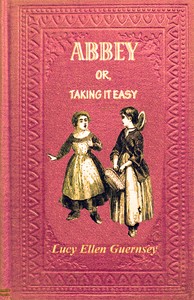
The catalog record for Abbey — Background and Themes provides practical reading context through 20,276 words, 1 hr 29 min estimated reading time, and 3 detected text sections.
The text analysis averages about 15.7 words per sentence, while the detected sections provide another way to judge how the source is divided.
Project Gutenberg metadata also associates the work with “Christian life -- Juvenile fiction,” connecting these edition facts with the source record’s subject description.
Explore this collection
These alternatives are selected using recorded categories and estimated reading time.
About 86 minutes
Fantasy Juvenile Worlds
19,651 recorded words. 3 minutes difference from this book's estimate.
View Gutenberg source #76173About 92 minutes
Fantasy Juvenile Worlds
20,950 recorded words. 3 minutes difference from this book's estimate.
View Gutenberg source #76454About 85 minutes
Fantasy Juvenile Worlds
19,368 recorded words. 4 minutes difference from this book's estimate.
View Gutenberg source #76994Search stored excerpts and compare books → Choose by your preferences →
Choices use stored catalog measurements. Estimates vary with reading speed. A shared category is a catalog label, not a claim that two books have the same argument or literary quality.
Search reads excerpt text stored with this catalog and links to its associated Gutenberg record. The connection is stored in the site database; this tool does not recheck that every excerpt is word-for-word identical to that external record. Excerpt search does not cover every chapter and does not verify historical publication dates.
Catalog snapshot checked: 2026-09-25. Coverage: 97 public books, 97 available source excerpts.
Read the complete public-domain text at its original source.
Read on Project GutenbergAbbey Jenkins, a stout fourteen-year-old servant, has already been let go from two or three places when Mrs. Ward hires her. The opening chapter, “The Green Pail,” introduces Abbey through a simple instruction: take a green pail upstairs and set a smaller one on the stove. Abbey answers confidently, “Oh, yes, I know,” but the ensuing narrative makes clear that knowing and doing are separate things. Mrs. Ward, exhausted from a day that began at five o’clock, is the wife of a hard-working printer who never misses a day’s work. The household runs on precise labor, and Abbey’s calm observation—rather than participation—becomes a recurring friction point.
The excerpts foreground physical work as a constant, measurable reality. Mrs. Ward’s day is enumerated: up at five, husband’s breakfast by seven, sweeping, dusting, bread, cakes, a meat-pie for Sunday. Her body registers the cost: “How hot your hands are!” exclaims Mrs. Powell. The narrative does not moralize about industry; it simply records the sequence of tasks and the toll they take. When Mrs. Powell proposes swapping servants, she frames it as a matter of health: “You must stop working.” The language is concrete—scrubbing tins, carrying water, kindling fires—and the plot turns on who will do them.
Abbey is described as “calm as a summer’s morning” and given to “an air of calm observation.” Her misdeeds are not dramatic; they are omissions and missteps that fray Mrs. Ward’s “tolerable temper.” Mrs. Powell, who proposes to take Abbey for three or four months, diagnoses the problem bluntly: “it won’t be by letting her stand and look on while I scour tins.” The catalog subjects list “Laziness” and “Youth — Conduct of life,” but the excerpts show a more specific dynamic: Abbey is not defiant but passively unresponsive, and the adults around her treat the problem as a practical puzzle rather than a moral failing.
The central plot mechanism is a servant swap: Mrs. Powell will take Abbey and send her own capable Rebecca to Mrs. Ward. The negotiation is conducted with economic precision—Abbey is offered two shillings more per week—and with awareness of the risk. Mrs. Ward warns, “you don’t know what an incapable creature Abbey is.” Mrs. Powell replies, “Yes, I do: I can see it all over her.” The exchange is framed as a sisterly favor, but also as a test of Mrs. Powell’s teaching ability. The excerpts leave the outcome uncertain, focusing instead on the practical terms of the arrangement and the characters’ differing assessments of Abbey’s potential.
The catalog subjects emphasize Christian life and conduct, but the excerpts themselves are notably secular in their attention to household mechanics and physical stamina. Readers will find a story driven by the logistics of work, not by explicit piety. The narrative voice is precise about objects—green pails, tin basins, meat-pies—and about the body’s limits. Abbey’s trajectory is left unresolved in the provided text, making the novel an interesting case study in how a Sunday-school Union publication handles the gap between moral intention and narrative detail.
Reading about Abbey Jenkins’ weary, silent hours made me recall an old edition of The children of Old Park's Tavern—how both books carry that particular weight of rooms that hold more work than love. I found myself thinking of dust on window sills, and the quiet patience of girls who just keep going. The children of Old Park's Tavern — Edition Insights felt like opening a familiar, worn door.
Create a short personal record of your experience with this book.