About 250 minutes
Sir Richard's grandson — A Closer Reading
Fantasy Juvenile Worlds
57,403 recorded words. 5 minutes difference from this book's estimate.
View Gutenberg source #70554
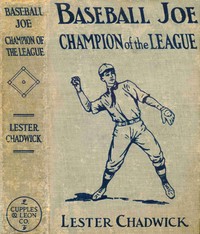
The catalog record for Baseball Joe, champion of the league — Key Ideas to Explore provides practical reading context through 56,342 words, 4 hr 5 min estimated reading time, and 36 detected text sections.
The text analysis averages about 15.4 words per sentence, while the detected sections provide another way to judge how the source is divided.
Project Gutenberg metadata also associates the work with “Conduct of life -- Juvenile fiction,” connecting these edition facts with the source record’s subject description.
Explore this collection
These alternatives are selected using recorded categories and estimated reading time.
About 250 minutes
Fantasy Juvenile Worlds
57,403 recorded words. 5 minutes difference from this book's estimate.
View Gutenberg source #70554About 233 minutes
Fantasy Juvenile Worlds
53,475 recorded words. 12 minutes difference from this book's estimate.
View Gutenberg source #75332About 233 minutes
Fantasy Juvenile Worlds
53,478 recorded words. 12 minutes difference from this book's estimate.
View Gutenberg source #76523Search stored excerpts and compare books → Choose by your preferences →
Choices use stored catalog measurements. Estimates vary with reading speed. A shared category is a catalog label, not a claim that two books have the same argument or literary quality.
Search reads excerpt text stored with this catalog and links to its associated Gutenberg record. The connection is stored in the site database; this tool does not recheck that every excerpt is word-for-word identical to that external record. Excerpt search does not cover every chapter and does not verify historical publication dates.
Catalog snapshot checked: 2026-09-25. Coverage: 97 public books, 97 available source excerpts.
Read the complete public-domain text at its original source.
Read on Project GutenbergFrom its opening line, Baseball Joe, Champion of the League establishes a pattern of physical intensity and verbal sparring. Joe Matson's fastball is described as "smoking" and "hot as all that," while teammate Jim Barclay complains of near-injury. This blend of athletic prowess and playful banter recurs throughout the excerpts, setting a tone where competition is both serious and laced with camaraderie. The narrative structure alternates between detailed game sequences—like the scoreless seventeen-inning tie against Brooklyn—and off-field episodes involving bribery and scientific threats, creating a rhythm of action and intrigue.
The excerpts reveal a deliberate movement from one series to the next, each with a distinct character. The Giants' early tour is summarized in a brisk paragraph: eight victories, two defeats, one tie. The language is statistical yet vivid, with phrases like "four additional scalps at their belt" and "swept into the Giants' bat bags." This tour structure allows the narrative to cover multiple contests efficiently while building momentum toward the western teams' invasion. The Chicago Cubs game receives fuller treatment, with pre-game banter between managers McRae and Evans, then a detailed first inning where Joe strikes out three batters. The pacing shifts between compressed summary and expansive play-by-play, a technique that keeps the reader oriented across the season's arc.
Joe's pitching is consistently rendered through metaphors of heat and force. Jim Barclay calls the ball "fairly smoking," and Joe himself speaks of "tabasco" and a "soup bone" that feels too good to hold back. The Chicago game amplifies this: Joe "shot the ball across the plate like a catapult," and batters take "three whiffs at the circumambient." These images tie physical sensation to competitive dominance. The word "whizzers" appears early, and later the narrative describes Joe's delivery as putting batters "buffaloed"—a colloquialism that reinforces the idea of overwhelming speed. Such recurring sensory details anchor the reader in the pitcher's physicality, even when the plot moves to off-field mysteries.
The chapter titles in the contents page hint at a parallel plot involving threats beyond baseball. Headings like "The Jaws of Death," "A Bewildering Mystery," "The Spider and the Fly," and "The Deadly Ray" suggest a scientific or criminal subplot that interleaves with the games. The excerpts do not reveal the nature of this threat, but the structure implies a pattern: a game sequence (e.g., "A No-Hit Game," "Stealing Bases") followed by a mystery chapter ("A Singular Occurrence," "Knocked Out of the Box"). This alternation creates a dual rhythm—athletic triumph and off-field peril—that distinguishes the novel from a pure sports story. The reader moves between the diamond and the unknown, with Joe as both pitcher and investigator.
Conversations in the excerpts serve multiple functions: they convey rivalry, build tension, and reveal character. The pre-game exchange between McRae and Evans is a verbal sparring match full of good-natured insults. McRae says he has "already chalked the game up," while Evans retorts, "Turn over, turn over, you're on your back." This banter establishes the managers' relationship and the stakes of the game. Similarly, Joe and Jim's opening dialogue mixes complaint with affection, showing their bond. The dialogue is snappy and idiomatic, using period slang like "pep and ginger" and "for blood." It propels the narrative forward without lengthy exposition, fitting the fast-paced structure of a juvenile sports novel.
Readers approaching Baseball Joe, Champion of the League should attend to how the narrative weaves game action with off-field suspense. The chapter headings offer a reliable guide to this dual structure, while the recurring imagery of heat and velocity reinforces Joe's dominance on the mound. The excerpts suggest a story that values both athletic achievement and resourcefulness in the face of external threats—a combination that rewards attention to the rhythm of the plot as much as the play-by-play.
There’s a particular comfort in watching Baseball Joe split his attention between the mound and whatever trouble follows him off it — that old sense that problems come in waves, and you just keep throwing. It reminds me of the quiet persistence in The boy who never lost a chance — Reading Companion, where chance itself feels less like luck and more like a habit of paying attention. Both feel like afternoons I’ve already lived.
Answer a few questions and save a private reflection on this device.