About 233 minutes
Rich and humble — Themes and Context
Fantasy Juvenile Worlds
53,478 recorded words. 0 minutes difference from this book's estimate.
View Gutenberg source #76523
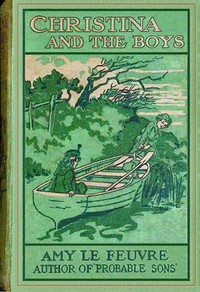
The catalog record for Christina and the boys — Key Ideas to Explore provides practical reading context through 53,475 words, 3 hr 53 min estimated reading time, and 5 detected text sections.
The text analysis averages about 13.3 words per sentence, while the detected sections provide another way to judge how the source is divided.
Project Gutenberg metadata also associates the work with “Christian life -- Juvenile fiction,” connecting these edition facts with the source record’s subject description.
Explore this collection
These alternatives are selected using recorded categories and estimated reading time.
About 233 minutes
Fantasy Juvenile Worlds
53,478 recorded words. 0 minutes difference from this book's estimate.
View Gutenberg source #76523About 223 minutes
Fantasy Juvenile Worlds
51,073 recorded words. 10 minutes difference from this book's estimate.
View Gutenberg source #76759About 222 minutes
Fantasy Juvenile Worlds
50,997 recorded words. 11 minutes difference from this book's estimate.
View Gutenberg source #71239Search stored excerpts and compare books → Choose by your preferences →
Choices use stored catalog measurements. Estimates vary with reading speed. A shared category is a catalog label, not a claim that two books have the same argument or literary quality.
Search reads excerpt text stored with this catalog and links to its associated Gutenberg record. The connection is stored in the site database; this tool does not recheck that every excerpt is word-for-word identical to that external record. Excerpt search does not cover every chapter and does not verify historical publication dates.
Catalog snapshot checked: 2026-09-25. Coverage: 97 public books, 97 available source excerpts.
Read the complete public-domain text at its original source.
Read on Project GutenbergThe story opens with Christina alone in her father's library, a room she has only recently discovered. The setting is carefully drawn: a dimly lit space with books from floor to ceiling, a stained glass window casting colored patches on the desk, and a fire burning. The child's isolation is emphasized—she has been raised by her nurse, confined to the nursery, and the housekeeper Mrs. Hallam dislikes children. Yet Christina feels at home among the books, and this room becomes her refuge. The narrative voice is precise about physical details: the 'short frock and white frilled pinafore,' the 'last rays of the setting sun,' the 'dingy writing-table.' These details root the story in a specific, tangible world.
The excerpts show Christina repeatedly confronting fear. In the opening chapter, she is 'aghast' at a thought that 'might have been me.' Later, she tells Susy that when her 'inside is bumping and my head buzzing,' prayer calms her. The narrative does not simply label her as timid; it shows her grappling with fear in concrete terms. The chapter titles themselves signal this theme: 'Fear dwells not here,' 'It is only the selfish who are cowards.' Christina's courage is not innate but learned, and the story traces her small victories—speaking to adults, befriending the boys, venturing beyond the nursery. The reader sees her progress through actions rather than declarations.
The story shifts between enclosed rooms—the library, the nursery, Miss Bertha's sitting-room—and open landscapes. The library is described as 'silent, unused,' a space of solitude. In contrast, the chapter titles promise outdoor adventures: 'Two Highwaymen,' 'Defying the Hunt,' 'A Winter Picnic.' This alternation creates a rhythm of retreat and venture. Christina's world expands as she moves from the library to the garden, then to the village and beyond. The physical movement mirrors her emotional growth. The excerpts include a winter picnic and a foggy London episode, suggesting that the setting is not static but a character in itself, shaping the action.
The prose is attentive to visual effects. The opening scene uses 'red and blue patches' from the stained glass window. Later, the holly cutting for Miss Bertha introduces green and red. These small color notes recur, often associated with comfort or revelation. The fire in the library is a constant source of warmth and light. When Christina explains faith to Susy, the scene is set in a room with tea and conversation—domestic light. The illustrations by Gordon Browne likely reinforced these visual motifs. The text itself, however, does not overuse color; it deploys it sparingly, making each instance stand out.
Conversations carry much of the story's weight. Christina's exchange with Susy about God and prayer is a key example: Susy's dialect ('I hain't never learnt') contrasts with Christina's more formal speech. The dialogue reveals their different backgrounds and unites them through shared curiosity. Miss Bertha's role as a wise adult is shown through her listening and brief interventions. The boys, though not quoted in these excerpts, are anticipated through Christina's mention of 'Puggy.' The talk is natural, with interruptions and hesitations—'I don't see!' says Susy. This realism makes the moral and spiritual discussions feel organic, not preachy.
The excerpts suggest a story that balances domestic detail with outward adventure. Readers may find interest in how the setting—a large house, a village, the countryside—shapes the characters' choices. The narrative does not rush; it lingers on moments of quiet conversation and small discoveries. Pay attention to the way objects and places recur: the library fire, the holly, the fog. These are not mere decoration but part of the story's fabric. The book rewards a patient reading that notices how the physical world mirrors the inner lives of its characters.
Christina’s quiet bravery in that vast house lingered with me, especially how the library became a gateway to her adventures. It reminded me of another kind of pluck, that steady, unshowy confidence Frank Merriwell’s brother carries. Both feel like tracing the shape of courage through small, daily choices, the kind you notice only in hindsight. Odd, how one book gently echoes another. Frank Merriwell's brother — A Closer Reading brought that feeling back.
A brief reflection can help important ideas stay with you longer.