About 300 minutes
The children of Old Park's Tavern — Edition Insights
Fantasy Juvenile Worlds
68,844 recorded words. 2 minutes difference from this book's estimate.
View Gutenberg source #76562
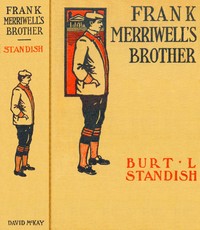
Before opening Frank Merriwell's brother — A Closer Reading, the edition data offers a quick orientation: 68,379 words, 4 hr 58 min estimated reading time, and 40 detected text sections.
The text analysis averages about 12.7 words per sentence, while the detected sections provide another way to judge how the source is divided.
Project Gutenberg metadata also associates the work with “Brothers -- Juvenile fiction,” connecting these edition facts with the source record’s subject description.
Explore this collection
These alternatives are selected using recorded categories and estimated reading time.
About 300 minutes
Fantasy Juvenile Worlds
68,844 recorded words. 2 minutes difference from this book's estimate.
View Gutenberg source #76562About 295 minutes
Fantasy Juvenile Worlds
67,838 recorded words. 3 minutes difference from this book's estimate.
View Gutenberg source #76126About 289 minutes
Fantasy Juvenile Worlds
66,374 recorded words. 9 minutes difference from this book's estimate.
View Gutenberg source #71411Search stored excerpts and compare books → Choose by your preferences →
Choices use stored catalog measurements. Estimates vary with reading speed. A shared category is a catalog label, not a claim that two books have the same argument or literary quality.
Search reads excerpt text stored with this catalog and links to its associated Gutenberg record. The connection is stored in the site database; this tool does not recheck that every excerpt is word-for-word identical to that external record. Excerpt search does not cover every chapter and does not verify historical publication dates.
Catalog snapshot checked: 2026-09-25. Coverage: 97 public books, 97 available source excerpts.
Read the complete public-domain text at its original source.
Read on Project GutenbergThe novel begins not with a quiet introduction but with Frank Merriwell ambushed in his own room by thirteen friends who pile on him in a boisterous welcome. The scene establishes the series' characteristic blend of physical comedy and athletic camaraderie. Within the first pages, a rifle muzzle is turned directly toward Frank, and a redskin is on the point of pressing the trigger—a cliffhanger that signals danger from the outset.
These contrasting openings—rowdy affection and mortal threat—frame the story's central tension: Frank's effort to bring his younger brother Dick, a spirited boy raised in Colorado by an old Indian named Joe, into the Eastern world of Yale and organized sports. The excerpts show Frank using a vivid, improvised account of a football game between whites and Native Americans to spark Dick's interest, while Dick's loyalty to Felicia and Old Joe resists Frank's plans.
The first chapter, “A Warm Reception,” plunges readers into a physical melee. Thirteen men leap upon Frank, and he surrenders at once. The description emphasizes numbers and chaos: “From all sides they leaped upon him, clutched him, surrounded him, hemmed him in.” The attackers include a wild-eyed fellow with a German accent, a lank chap, and one with a brogue—a multi-ethnic gang of chums typical of the Merriwell series. This opening is not a fight but a ritual of affection, complete with howls of joy and thumping on the back. It immediately communicates that Frank is beloved and that his world is one of boisterous male bonding.
Early in the text, a separate scene presents a life-or-death moment: “The muzzle of the rifle was turned directly toward Frank, and the redskin was on the point of pressing the trigger.” This excerpt, placed on page 98, suggests a dramatic confrontation in the Colorado setting. The use of “redskin” reflects the period's language, and the scene likely involves the old Indian Joe or another Native character. The contrast with the playful Yale opening is stark: the Western frontier holds genuine peril. Readers should note how the novel shifts between these two registers—comradely roughhousing and actual violence—as Frank moves between his college life and his brother's world.
In a key passage, Frank tells Dick a fictionalized account of a football game between whites and Native Americans. He deliberately lets the Indians score first, making Dick “dance with joy,” then has the whites win through superior generalship. The episode reveals Frank's pedagogical strategy: he uses narrative to engage Dick's emotions and challenge his prejudices. Dick's reactions—breathless excitement, indignation at the outcome—show his fierce pride in his frontier identity. Frank's comment that “Old Joe has found you an apt pupil” hints at the ideological struggle between the old Indian's influence and Frank's Eastern values. The scene also demonstrates the novel's interest in the power of storytelling itself.
Dick flatly declares he will not attend school, valuing health and freedom over classroom learning. Frank counters by describing his own transformation from a weak, sickly boy to an athlete through training at a military school. The exchange is a classic Merriwell moment: the hero's personal history becomes a tool for persuasion. Dick's skepticism—“I do not believe it!”—and Frank's patient response illustrate the brotherly dynamic. The excerpts do not reveal whether Dick eventually yields, but the pattern is set: Frank must prove his way through action and example, not authority. Readers can watch for how later chapters test Frank's claims against the realities of Colorado life.
Because the excerpts cover only the early chapters and a few later scenes, the full arc of Dick's transformation—or Frank's triumph—remains unknown. Pay attention to how the novel balances the Yale baseball plot (hinted at in chapter titles like “The Nine at Practise”) with the Colorado adventure involving Anton Mescal and a kidnapped girl. The title promises that Dick's story is the “greatest triumph of all,” but whether that triumph is athletic, familial, or moral is for the reader to discover.
Sometimes a story lingers less for its plot than for how it makes you feel about growing up torn between worlds. That Colorado boy wrestling with Eastern expectations reminded me of another young Richard learning courage through duty. There’s a quiet ache in both, a sense of becoming oneself against others’ hopes. The Little Duke: Richard the Fearless — Context and Discussion stayed with me the same gentle way.
Use these questions to collect your thoughts before moving on.