About 286 minutes
The Donovan chance — Key Ideas to Explore
Fantasy Juvenile Worlds
65,744 recorded words. 3 minutes difference from this book's estimate.
View Gutenberg source #74848
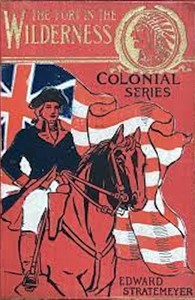
The catalog record for The fort in the wilderness — Context and Discussion provides practical reading context through 66,374 words, 4 hr 49 min estimated reading time, and 33 detected text sections.
The text analysis averages about 14.8 words per sentence, while the detected sections provide another way to judge how the source is divided.
Project Gutenberg metadata also associates the work with “Boys -- Juvenile fiction,” connecting these edition facts with the source record’s subject description.
Explore this collection
These alternatives are selected using recorded categories and estimated reading time.
About 286 minutes
Fantasy Juvenile Worlds
65,744 recorded words. 3 minutes difference from this book's estimate.
View Gutenberg source #74848About 295 minutes
Fantasy Juvenile Worlds
67,838 recorded words. 6 minutes difference from this book's estimate.
View Gutenberg source #76126About 298 minutes
Fantasy Juvenile Worlds
68,379 recorded words. 9 minutes difference from this book's estimate.
View Gutenberg source #71945Search stored excerpts and compare books → Choose by your preferences →
Choices use stored catalog measurements. Estimates vary with reading speed. A shared category is a catalog label, not a claim that two books have the same argument or literary quality.
Search reads excerpt text stored with this catalog and links to its associated Gutenberg record. The connection is stored in the site database; this tool does not recheck that every excerpt is word-for-word identical to that external record. Excerpt search does not cover every chapter and does not verify historical publication dates.
Catalog snapshot checked: 2026-09-25. Coverage: 97 public books, 97 available source excerpts.
Read the complete public-domain text at its original source.
Read on Project GutenbergFrom its opening pages, The Fort in the Wilderness establishes a rhythm of sudden violence and hurried retreat. The ice-boat escape on the Ohio River—where the craft 'fairly leaped forward' past whooping Indians—sets a pattern: characters are constantly in motion, reacting to threats with improvised tactics. Stratemeyer favors short, punchy sentences during action ('We must fight for it,' 'Make every shot tell'), then relaxes into longer, descriptive passages when the danger passes, as when Henry and his uncle wait through a 'lonely' night broken only by a wolf's howl.
The novel's dialogue does more than advance plot; it signals shifts in danger. When James Morris says 'If they do that we'll all be killed, sure!' the exclamation and repetition of 'sure' convey panic. In calmer moments, speech becomes clipped and practical: 'Are you hurt, Henry?' 'It's only a scratch.' Stratemeyer also uses dialogue to compress exposition—characters summarize plans in a few lines ('I've got an idea!') rather than narrating them. This keeps the pace urgent even during lulls.
Notably, the narrator rarely editorializes. Emotions are shown through action: Henry reloads his uncle's rifle 'while the latter managed the ice-boat,' a detail that implies trust and teamwork without stating it. The voice remains neutral, letting the characters' words and movements carry the mood.
Stratemeyer controls tempo by alternating modes of travel and rest. The ice-boat sequence is a blur of wind, speed, and gunfire—events unfold in seconds. Then the narrative slows to a crawl: 'They removed all the stores,' 'buried the dead hunter among the rocks,' 'remained for the rest of the day and all of the night.' These quiet intervals allow readers to catch breath before the next crisis.
The author also uses waiting as a structural device. Henry's six-hour watch while his uncle scouts is described in a single paragraph, compressing time. The stillness is broken only by 'the howl of a lonely wolf,' a detail that heightens isolation. When James Morris returns with Jadwin and another hunter, the pace quickens again—new characters mean new complications.
Small, practical details recur throughout the excerpt, grounding the adventure in credible survival concerns. Characters reload rifles 'while the latter managed the ice-boat,' showing multitasking under fire. They scan the shore 'with anxious eyes,' a phrase that appears twice, reinforcing constant vigilance. Provisions are a persistent worry: 'the worst of it is—for them—that we have all the provisions.'
Stratemeyer also notes environmental cues: the wind 'still increasing, still favored the whites'; the ice-boat turns into a cove where 'overhanging trees afforded not a little protection.' These observations do more than set the scene—they function as tactical information, teaching young readers to read the landscape for advantage. The dummy decoy idea ('set the ice-boat a-going with dummies on board') is another such detail, showing resourcefulness born of necessity.
Readers should pay attention to how Stratemeyer uses the wilderness itself as an active force—wind, river, and forest are never mere backdrops but allies or obstacles that shape every decision. The novel's episodic structure, built around chases and sieges, rewards those who note how each new setting alters the characters' options. The language is plain but purposeful; every line of dialogue and description serves the forward momentum.
I think of the Morris boys in that old fort, reading by lamplight amid powder and tension—and then I recall Elsie's scholarship — Text and Context. Both hold a quiet hunger for steadiness, a young person building a self from what the wilderness or a library offers. Each page feels like a hand finding a railing in the dark. Elsie's scholarship — Text and Context keeps that same patient flame.
A brief reflection can help important ideas stay with you longer.