About 131 minutes
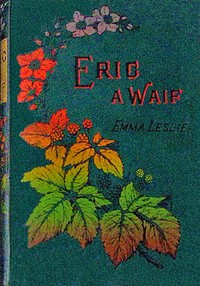
Eric, a waif — Reading Notes
Technology Airships Imagined Futures
29,937 recorded words. 19 minutes difference from this book's estimate.
View Gutenberg source #73792
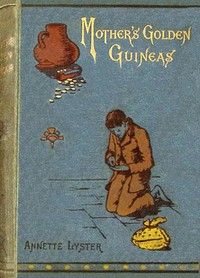
The source record for Mother's golden guineas — Key Ideas to Explore measures this digital text at 34,430 words, 2 hr 30 min estimated reading time, and 5 detected text sections.
The text analysis averages about 15.2 words per sentence, while the detected sections provide another way to judge how the source is divided.
Project Gutenberg metadata also associates the work with “Christian life -- Juvenile fiction,” connecting these edition facts with the source record’s subject description.
Explore this collection
These alternatives are selected using recorded categories and estimated reading time.
About 131 minutes
Technology Airships Imagined Futures
29,937 recorded words. 19 minutes difference from this book's estimate.
View Gutenberg source #73792About 131 minutes
Technology Airships Imagined Futures
30,024 recorded words. 19 minutes difference from this book's estimate.
View Gutenberg source #77023About 111 minutes
Technology Airships Imagined Futures
25,389 recorded words. 39 minutes difference from this book's estimate.
View Gutenberg source #74108Search stored excerpts and compare books → Choose by your preferences →
Choices use stored catalog measurements. Estimates vary with reading speed. A shared category is a catalog label, not a claim that two books have the same argument or literary quality.
Search reads excerpt text stored with this catalog and links to its associated Gutenberg record. The connection is stored in the site database; this tool does not recheck that every excerpt is word-for-word identical to that external record. Excerpt search does not cover every chapter and does not verify historical publication dates.
Catalog snapshot checked: 2026-09-25. Coverage: 97 public books, 97 available source excerpts.
Read the complete public-domain text at its original source.
Read on Project GutenbergThe opening chapter of Mother's Golden Guineas establishes Burdeck as a village so isolated that "had it been swallowed up by an earthquake, some time might have elapsed before it was missed." This deliberate exaggeration sets the tone for a narrative that will repeatedly contrast the fixed, insular world of the village with the unpredictable, hierarchical world of the Royal Navy. The author, Annette Lyster, uses the village's resistance to change—"it was held to be not quite commendable to do anything but what one's parents had done"—as a baseline against which the protagonist Tom Adderley's later transformation can be measured. The golden guineas of the title first appear as bright coins on the frontispiece, and the narrative will track their literal and symbolic accumulation across the chapters that follow.
The structure of the novel moves decisively from the static, self-contained world of Burdeck to the mobile, dangerous world of the sea. Chapter I lingers on the village's unchanging rhythms—the grumbling about the blacksmith's prices, the cobbler's delays—before Tom's departure in Chapter III. This shift is not merely geographical but structural: the narrative itself accelerates once Tom is pressed into service, with shorter chapters and more dialogue-driven scenes. The contrast is reinforced by the way characters speak: in Burdeck, conversation is circular and communal; at sea, it is direct and command-oriented. The reader is made to feel the jarring transition from a place where "things were as they had always been" to a ship where orders and emergencies dictate every moment.
Three images recur with notable frequency. The first is the golden guinea itself, which appears not only in the title but as a tangible object that Tom handles, counts, and ultimately revalues. The frontispiece caption—"'One might do,' thought Tom, looking at the bright coins"—establishes the coin as a token of possibility. The second recurring image is the act of looking or gazing: Tom "looking at the bright coins," the junior lieutenants who "do gaze at Mr. Yeo," and Tom's own eyes that "followed the captain's movements." These glances map the characters' desires and hierarchies. The third image is the sea itself, which appears not as a romantic expanse but as a surface of constant vigilance—the look-out man's cry of "a sail" triggers immediate, structured excitement. Together, these images create a visual and symbolic pattern that ties the domestic to the maritime.
The novel's moral framework is built around a system of exchange that mirrors the gold coin motif. Tom's initial disobedience leads to a threatened flogging, from which he is saved by the intercession of old Gideon. Captain Egerton's conditional forgiveness—"will you for the future do your best, and work willingly and well?"—establishes a contract: obedience in return for mercy. Tom's response—"If ever I can die for you, or for Gideon, I'll do it, willing and free"—converts shame into a debt of gratitude. The narrative then tracks how this debt is repaid through diligence, which in turn yields happiness: "He was busy, and every one was pleased with him. This was pleasanter than sulking and idling." The golden guineas, when they finally appear as a literal sum, are thus the material counterpart to a moral economy already in motion.
The excerpts show two key scene transitions that reveal Lyster's method. The first is the arrival of the brig Warspite and the news of war with America. The scene moves from the quiet of Gideon cleaning a fowling-piece to the sudden excitement of cheering and the report of the attack on the Corinna. This transition is handled through a chain of messengers—the look-out man, Tom, Greg Collier—each adding a layer of information. The second transition is the "cutting-out" expedition mentioned in the chapter list, which likely shifts the action from shipboard routine to a raid on an enemy vessel. These movements are not merely scenic but structural: they break the pattern of daily discipline with moments of violent action, and they test the moral lessons learned in quieter passages. The reader is thus carried between reflection and action, between the interior of the ship and the open sea.
Readers attentive to the novel's structure will notice how Lyster uses the golden guineas as both a plot device and a moral measure: the coins that Tom earns or receives are never merely money, but tokens of the relationships—with his mother, with Gideon, with Captain Egerton—that define his growth. The movement between Burdeck and the sea is not a simple escape but a testing ground where the village values of obedience and diligence are renegotiated under harsher conditions. Pay particular attention to the moments when characters exchange looks or coins; these small transactions carry the weight of the novel's argument about what is truly valuable.
Reading about those guineas, I remembered counting out my own small hoard of silver as a child, the weight of each coin a promise of safety. It felt like the quiet ache in Stick to the raft — A Reader’s Guide, where home is a thing you carry in your pocket, not a place you can see. Stick to the raft — A Reader’s Guide held that same distant, watery loneliness.
Capture what you thought, learned, and would like to remember.