About 131 minutes
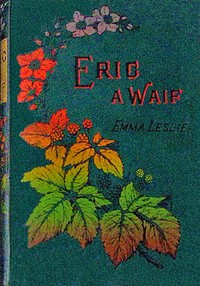
Eric, a waif — Reading Notes
Technology Airships Imagined Futures
29,937 recorded words. 0 minutes difference from this book's estimate.
View Gutenberg source #73792
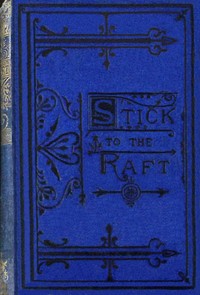
For Stick to the raft — A Reader’s Guide, the stored edition analysis reports 30,024 words, 2 hr 11 min estimated reading time, and 3 detected text sections.
The text analysis averages about 19.0 words per sentence, while the detected sections provide another way to judge how the source is divided.
Project Gutenberg metadata also associates the work with “Christian life -- Juvenile fiction,” connecting these edition facts with the source record’s subject description.
Explore this collection
These alternatives are selected using recorded categories and estimated reading time.
About 131 minutes
Technology Airships Imagined Futures
29,937 recorded words. 0 minutes difference from this book's estimate.
View Gutenberg source #73792About 150 minutes
Technology Airships Imagined Futures
34,430 recorded words. 19 minutes difference from this book's estimate.
View Gutenberg source #76620About 111 minutes
Technology Airships Imagined Futures
25,389 recorded words. 20 minutes difference from this book's estimate.
View Gutenberg source #74108Search stored excerpts and compare books → Choose by your preferences →
Choices use stored catalog measurements. Estimates vary with reading speed. A shared category is a catalog label, not a claim that two books have the same argument or literary quality.
Search reads excerpt text stored with this catalog and links to its associated Gutenberg record. The connection is stored in the site database; this tool does not recheck that every excerpt is word-for-word identical to that external record. Excerpt search does not cover every chapter and does not verify historical publication dates.
Catalog snapshot checked: 2026-09-25. Coverage: 97 public books, 97 available source excerpts.
Read the complete public-domain text at its original source.
Read on Project GutenbergThe novel opens with a geographical and moral contrast: the Fichtel-Gebirge, or Fir Mountains, are compared to the garden of Eden, yet the people are poor, felling trees and burning charcoal. Hans Richter, a woodcutter, is introduced as a man who 'scarcely knew what care meant' because of his trust in God. His son, young Hans, is a 'tolerable scholar' who studies eagerly in winter. The narrative voice is direct and homiletic, often glossing characters' inner states with scriptural references. The opening establishes a world where physical labour and spiritual reflection are intertwined, and where the landscape itself—the raft of the title—will become a central symbol.
The author's word choices consistently align physical states with spiritual conditions. When Hans Richter suffers from a severe cold and poverty, the text notes he 'did not lose his faith in God.' The phrase 'rich towards God' is used literally for the father, while the son later speaks of being 'jealous' and then overcoming it to 'stick to the Raft.' The vocabulary of treasure—gold, precious stones, luxury—is introduced in the first paragraph only to be dismissed as 'dreams' of a few peasants. Instead, the real treasure is faith. This lexical pattern sets up a moral economy where material lack is offset by spiritual wealth, a theme reinforced by the repeated use of 'rich' and 'poor' in both literal and figurative senses.
Conversations in the excerpts serve as vehicles for ethical debate. When Hans reads the commandment 'love one another' to Robert, he immediately applies it to his own jealousy over the shooting prize. His speech is measured and self-reflective: 'I had rather stick to the Raft than win the prize.' Robert's responses reveal his internal conflict—'I wish Paul hadn't interfered'—and his admiration for Hans's 'manly and noble' character. The dialogue is stylized, with characters often explaining their motives at length. Paul, by contrast, speaks in short, angry bursts: 'I've had enough of this sort of thing.' The contrast in speech patterns underscores the moral divide between the two boys.
The narrative is built around a central event: the Schützen Fest, a shooting competition. The excerpts show the plot hinging on a secret—Robert's unfair advantage due to Hans's injury. The structure alternates between Hans's patient suffering and Robert's guilty conscience. Chapter titles like 'The Secret' and 'Wrong Set Right' indicate a clear moral arc. The festival itself is described as a public spectacle where 'many boys usually entered their names on the list' but had 'no chance of success.' This detail emphasizes the competitive hierarchy that Hans's injury disrupts. The author uses the festival as a crucible for character, forcing Robert to choose between honesty and pride.
The phrase 'stick to the Raft' appears in the title and in Hans's climactic statement. In the excerpts, the raft is not described physically; it is a metaphor for steadfast faith. The opening chapter is titled 'The Raft,' but the text focuses on the Fichtel-Gebirge and the Richter family. The raft may be introduced later as a literal object, but in the provided passages it functions purely as a moral anchor. Other recurring details include the 'steady hand and correct eye' needed for archery, which parallels the steadiness of faith. The doctor's pronouncement that Hans cannot use his hand for three weeks is a plot device that triggers the moral crisis. These details are woven tightly into the didactic fabric of the story.
Readers should attend to how Gladstone uses the Bavarian setting not as mere backdrop but as a stage for moral choices. The wood-cutting and charcoal-burning occupations ground the story in a specific economic reality, while the Schützen Fest provides a public arena for private conscience. The author's technique of pairing each temptation with a scriptural counterweight rewards close reading of the dialogue. The incomplete excerpts leave the raft's physical role unclear, but its symbolic weight is established early.
There’s something about a boy holding steady when everything shifts beneath him—Hans on that raft, and the quiet loneliness of it. I thought of him again while reading The mystery of Cabin Island — Edition Insights. Not the plot, really, just that same feeling of waiting, of trusting something unseen. It stayed with me longer than I expected, like a hand on my shoulder.
Use these questions to collect your thoughts before moving on.