About 255 minutes
Nora's twin sister — Themes and Context
Technology Airships Imagined Futures
58,636 recorded words. 22 minutes difference from this book's estimate.
View Gutenberg source #76955
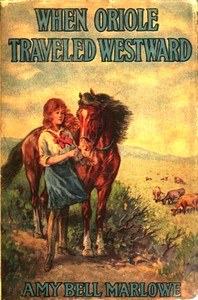
Before opening When Oriole traveled westward — A Reader’s Guide, the edition data offers a quick orientation: 63,531 words, 4 hr 37 min estimated reading time, and 31 detected text sections.
The text analysis averages about 12.8 words per sentence, while the detected sections provide another way to judge how the source is divided.
Project Gutenberg metadata also associates the work with “Western stories,” connecting these edition facts with the source record’s subject description.
Explore this collection
These alternatives are selected using recorded categories and estimated reading time.
About 255 minutes
Technology Airships Imagined Futures
58,636 recorded words. 22 minutes difference from this book's estimate.
View Gutenberg source #76955About 219 minutes
Technology Airships Imagined Futures
50,187 recorded words. 58 minutes difference from this book's estimate.
View Gutenberg source #76172About 206 minutes
Technology Airships Imagined Futures
47,272 recorded words. 71 minutes difference from this book's estimate.
View Gutenberg source #76493Search stored excerpts and compare books → Choose by your preferences →
Choices use stored catalog measurements. Estimates vary with reading speed. A shared category is a catalog label, not a claim that two books have the same argument or literary quality.
Search reads excerpt text stored with this catalog and links to its associated Gutenberg record. The connection is stored in the site database; this tool does not recheck that every excerpt is word-for-word identical to that external record. Excerpt search does not cover every chapter and does not verify historical publication dates.
Catalog snapshot checked: 2026-09-25. Coverage: 97 public books, 97 available source excerpts.
Read the complete public-domain text at its original source.
Read on Project GutenbergThe narrative voice in When Oriole Traveled Westward shifts markedly between its two main settings, a change that is signaled not only by geography but by sentence rhythm and vocabulary. In the opening chapters, set in Littleport, the prose moves with the deliberate weight of winter: the harbor is “chained by the Frost King,” and Oriole’s worry about Uncle Nat’s rheumatism and Ma Stafford’s felon is rendered in careful, domestic detail. The language is measured, full of compound sentences that mirror the constrained, ice-bound environment.
Once Oriole reaches the Western range, the pace accelerates. Sentences become shorter, more action-driven. The narrator describes the round-up with a brisk, almost breathless accumulation of tasks: “gather and brand as many steers as possible within a short time.” The vocabulary shifts from “felon” and “rheumatism” to “cutting-out horse,” “doggy,” and “blatting yearling.” This is not merely a change of subject; it is a change of narrative gear.
The early chapters are built around obstacles. The ice “chained” the harbor; the Government ice-breaker opens only a narrow channel. Oriole’s desire to reach Harbor Island Light is blocked by physical forces, and the prose lingers on the effort required to overcome them. The narrator uses words like “debarred,” “trial,” and “neglected” to describe Oriole’s frustration. Even the description of learning to skate is framed as a conquest: “It was not a difficult matter for the girl to become proficient upon ice skates.” The voice is patient, almost pedagogical, as if instructing a reader unfamiliar with Northern winters.
On the range, the language of restriction gives way to one of expansion. The cattle are “on the open ranges,” and the punchers “ride continually around the herds at night, alert for trouble.” The word “open” recurs. Oriole practices with the lariat, and the narrator notes that she “really improved in this delicate art from hour to hour.” The pace of the prose quickens to match the action: the yearling “bawled loudly and dolorously,” and Oriole’s exclamation—“Oh, dear me!”—is followed by a rapid series of physical movements. The voice becomes less reflective, more immediate.
Marlowe distinguishes characters partly through speech patterns. Oriole’s dialogue in the early chapters is polite and slightly formal: “I just must find some way of getting over to the island.” She addresses Lyddy Ann as a confidante, and the conversations are filled with concern for others. The narrator’s own voice in these sections is similarly decorous, using phrases like “the tale of that local celebrity” and “the fun and frolic to be had.”
On the range, the dialogue shifts. The trail-foreman George Belden jokes, “You keep on, Oriole … and you’ll be able to rope the hind leg of a spider. You’re going to make some cowgirl, I’ll tell the world!” The vernacular is colloquial, marked by contractions and regional idioms. Oriole’s own speech adapts: she tries to soothe the yearling with “Soo, boss! Soo, boss!”—a phrase borrowed from Ma Stafford. The narrator’s voice, however, remains consistent in its third-person omniscience, even as it adopts Western terms like “punchers” and “cutting-out horse.” This creates a subtle tension between the Eastern narrator’s perspective and the Western setting.
The novel alternates between passages of brisk action and slower, more reflective moments. The ice-skating episode in Chapter I is described with a measured, almost documentary tone: “Christmas had been so fair … that Oriole scarcely expected the black frost.” The narrative then moves into a series of obstacles—the frozen harbor, the need to reach the island—before the action of skating itself is introduced. The pacing is deliberate, building anticipation.
In contrast, the round-up sequence is compressed and energetic. The narrator lists the participants (“Sadie Brown and the twins, as well as Mr. Langdon and Oriole”) in a single sentence, then immediately shifts to Oriole’s internal puzzle about the “abandoned mine-shaft.” The action of roping the yearling is described in rapid, physical detail: “Molly lay back on the rope in a most matter-of-fact way, keeping it taut no matter how the yearling jumped.” The paragraph ends with Oriole’s comic predicament, but the narrator does not linger. The pace is driven by the demands of ranch work, and the prose reflects that urgency.
Readers attentive to narrative tempo will notice how Marlowe uses the physical environment to control the story’s rhythm. The ice-bound harbor forces a slow, problem-solving pace; the open range allows for sudden bursts of action. Oriole’s own voice evolves as she moves between these worlds, and the narrator’s language follows suit. This is not a book that rushes, but one that knows when to quicken its step.
The rain tapped against the window while I reread the passages about Oriole's stiff Eastern vowels thawing against Wyoming drawls. That tension between voices stayed with me, an ache for how speech shapes belonging. Later, half-dreaming, I found myself reaching for Eric, a waif — Reading Notes, wondering if another orphaned soul might find his own grammar of home. The afternoon slipped away, gently.
A brief reflection can help important ideas stay with you longer.