About 198 minutes
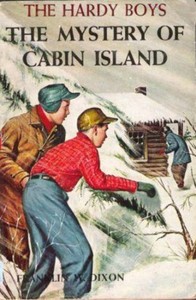
The mystery of Cabin Island — Edition Insights
Technology Airships Imagined Futures
45,363 recorded words. 0 minutes difference from this book's estimate.
View Gutenberg source #75012
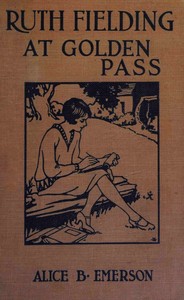
Before opening Ruth Fielding at Golden Pass — Reading Companion, the edition data offers a quick orientation: 45,385 words, 3 hr 18 min estimated reading time, and 5 detected text sections.
The text analysis averages about 15.0 words per sentence, while the detected sections provide another way to judge how the source is divided.
Project Gutenberg metadata also associates the work with “Motion picture industry -- Juvenile fiction,” connecting these edition facts with the source record’s subject description.
Explore this collection
These alternatives are selected using recorded categories and estimated reading time.
About 198 minutes
Technology Airships Imagined Futures
45,363 recorded words. 0 minutes difference from this book's estimate.
View Gutenberg source #75012About 206 minutes
Technology Airships Imagined Futures
47,272 recorded words. 8 minutes difference from this book's estimate.
View Gutenberg source #76493About 219 minutes
Technology Airships Imagined Futures
50,187 recorded words. 21 minutes difference from this book's estimate.
View Gutenberg source #76172Search stored excerpts and compare books → Choose by your preferences →
Choices use stored catalog measurements. Estimates vary with reading speed. A shared category is a catalog label, not a claim that two books have the same argument or literary quality.
Search reads excerpt text stored with this catalog and links to its associated Gutenberg record. The connection is stored in the site database; this tool does not recheck that every excerpt is word-for-word identical to that external record. Excerpt search does not cover every chapter and does not verify historical publication dates.
Catalog snapshot checked: 2026-09-25. Coverage: 97 public books, 97 available source excerpts.
Read the complete public-domain text at its original source.
Read on Project GutenbergThe story opens with a fire—not in the Montana mountains where most of the action takes place, but on Main Street in Cheslow, where a crowd gathers for the premiere of Ruth Fielding’s new picture, “Snowblind.” The contrast between the flamboyant poster and Ruth’s private nervousness establishes a pattern: the gap between public performance and private anxiety recurs throughout the book. From that opening, the narrative shifts rapidly to a Montana ranch, where Ruth directs a rodeo film. The structure alternates between controlled scenes (the rodeo, the camera setups) and sudden disruptions (a suspicious move, a narrow ledge, an avalanche). The movement is not linear but circular, returning often to the same tensions—distrust, weather, and the risk of catastrophe.
Fire appears early and late. The first chapter is titled “Fire,” and the opening crowd scene is lit by the “flamboyant poster” of Ruth’s film. Later, the rodeo sequence includes cowboys “shooting revolvers into the air,” a flash of fire and noise that provokes both horses and steers. Snow, by contrast, is the title of Ruth’s film within the story—“Snowblind”—and the avalanche that threatens the characters is artificial, a manufactured peril. The pairing of fire and snow suggests a world where danger is both natural and staged. The rodeo itself is a performance of danger, but the avalanche is real enough to bury characters alive. The images do not resolve into a single meaning; they accumulate, each new fire or snowfall echoing the last.
The narrative moves in sharp cuts. Chapter I places Ruth in a crowded street, surrounded by “laughing girls and their escorts.” Within a few paragraphs, she is alone in her room, “excited and nervous.” The rodeo scenes are filled with cowboys, cameramen, and extras, but Ruth often stands apart, “close to the cameramen, ordering, criticizing, directing.” The pattern repeats: a public event (the premiere, the rodeo) gives way to a private moment (Ruth’s room, Boardman’s sickbed). The most extreme shift comes when the avalanche buries characters, isolating them from the group. The book’s structure depends on these abrupt transitions, moving from noise to silence, from company to solitude, without smoothing the edges.
Ruth’s distrust of Viola is described as “inevitable as the drawing of her breath.” It is not based on evidence—Viola’s actions have been “normal enough”—but on a single meeting in Chicago. This suspicion drives the plot forward, even when nothing happens. The narrative returns to it repeatedly, like a refrain. Ruth “thrust uneasy thoughts from her,” but they return. The distrust is not resolved in the excerpts; it remains a tension that shapes Ruth’s decisions and the story’s direction. The structure mirrors this: the plot advances through action (the rodeo, the avalanche) but is held in place by this static, internal conflict. The reader is left to wonder whether Viola will prove dangerous or whether Ruth’s instinct is unfounded.
The subtitle promises “the perils of an artificial avalanche,” and the excerpts show how peril is constructed. The rodeo is a staged event, but the cowboys’ skills are real: “bronco busting, racing, bull-throwing” are “merely a part of their everyday experience.” The line between acting and reality blurs. Ruth’s direction is intense—she “shout[s] herself hoarse”—and the cowboys respond to her enthusiasm. The avalanche, when it comes, is both artificial (made by human hands) and deadly. The book’s interest lies in this ambiguity: what is performance and what is genuine danger? The structure of the narrative, with its careful setups and sudden collapses, mirrors the theme. The reader is never quite sure which threat is real until it arrives.
The excerpts offer a story built on contrasts: fire and snow, crowd and solitude, trust and suspicion. The avalanche is the climax, but the real tension lies in the moments between—the waiting, the watching, the uneasy feeling that something is wrong. Readers should pay attention to the small details: a character’s glance, a change in weather, a hesitation. The book rewards attention to its structure, where every scene is a setup for the next, and every image returns, transformed.
Reading about Ruth’s avalanche risk reminded me of the time I watched snow pile on our barn’s roofline, silent and wrong. That same unease crept through A bad penny — Story, Setting & Ideas, where a familiar face hides a buried collapse. Both feel like ledges I didn’t know I was standing on until the ground gave a small, telling shift.
Create a short personal record of your experience with this book.