About 198 minutes
The mystery of Cabin Island — Edition Insights
Technology Airships Imagined Futures
45,363 recorded words. 8 minutes difference from this book's estimate.
View Gutenberg source #75012
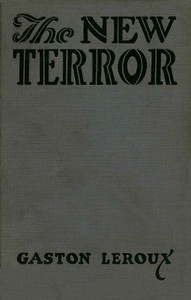
The new terror — Background and Themes can be approached with a clearer sense of reading commitment from its source measurements: 47,272 words, 3 hr 26 min estimated reading time, and 23 detected text sections.
The text analysis averages about 17.5 words per sentence, while the detected sections provide another way to judge how the source is divided.
Project Gutenberg metadata also associates the work with “Suspense fiction,” connecting these edition facts with the source record’s subject description.
Explore this collection
These alternatives are selected using recorded categories and estimated reading time.
About 198 minutes
Technology Airships Imagined Futures
45,363 recorded words. 8 minutes difference from this book's estimate.
View Gutenberg source #75012About 198 minutes
Technology Airships Imagined Futures
45,385 recorded words. 8 minutes difference from this book's estimate.
View Gutenberg source #76206About 219 minutes
Technology Airships Imagined Futures
50,187 recorded words. 13 minutes difference from this book's estimate.
View Gutenberg source #76172Search stored excerpts and compare books → Choose by your preferences →
Choices use stored catalog measurements. Estimates vary with reading speed. A shared category is a catalog label, not a claim that two books have the same argument or literary quality.
Search reads excerpt text stored with this catalog and links to its associated Gutenberg record. The connection is stored in the site database; this tool does not recheck that every excerpt is word-for-word identical to that external record. Excerpt search does not cover every chapter and does not verify historical publication dates.
Catalog snapshot checked: 2026-09-25. Coverage: 97 public books, 97 available source excerpts.
Read the complete public-domain text at its original source.
Read on Project GutenbergGaston Leroux's The New Terror opens with a first-person narrator who describes his betrothal to his cousin Cordélia from childhood, establishing a voice that is at once ardent and possessive. The early chapters contrast his love of outdoor sport with Cordélia's inclination for reading and the arts, a dichotomy that will drive much of the story's tension. The narrator's language—'I loved her all the more for her gifts'—reveals a pattern of admiration tinged with control, as he later burns guidebooks to steer her away from 'the dead.'
The narrator's diction consistently frames Cordélia as an object of ownership and management. He recalls that 'I could not choose but follow her, and she did with me as I pleased,' a reversal that hints at his underlying need for dominance. Later, he boasts of burning guidebooks to prevent her from dwelling on historical figures, calling his act 'my holocaust.' This choice of word—normally reserved for mass destruction—signals an extreme, almost religious fervor in his efforts to shape her thoughts. The voice is intimate yet unsettling, as he equates happiness with 'thinking as little as possible' and boasts of preventing fits of abstraction.
A peculiar term—'polygon'—appears in the narrator's vocabulary to describe moments when Cordélia's mind wanders. He warns that 'during fits of abstraction, when the mind is preoccupied, that the “polygon” is up to its tricks.' The word is never defined, but its repetition suggests a private code for a troubling mental state. The narrator's anxiety about this 'polygon' resurfaces in chapter titles and in his efforts to keep Cordélia's thoughts occupied with amusements. This invented term functions as a linguistic tic, marking the narrator's obsessive monitoring of his wife's inner life and hinting at a supernatural or psychological threat that remains ambiguous in the excerpts.
The settings in the excerpts are not merely backdrops but active reflections of the couple's dynamic. Rome, Naples, and Venice are chosen deliberately: the narrator wants to avoid 'ancient ruins' and 'museums,' preferring the 'wonderful bay' and boatmen's songs. Venice is called 'a disastrous town' in foreshadowing. The Hotel Danieli, with its story of Alfred de Musset and George Sand, becomes a site of contamination—the narrator throws de Musset's book out the window, but Cordélia insists on staying. The contrast between the narrator's desire for a present-focused, thoughtless happiness and Cordélia's pull toward art and history is embodied in these locations.
Dialogue in the excerpts is sparse but charged. When Cordélia says, 'Let us dream,' the narrator 'pretended as I stood beside her to dream, meaning thereby that I kept silent.' Her laughter and flight reveal a playful resistance. Later, when she protests, 'Think, Hector, you have already refused to let me visit the museums,' the narrator deflects with exaggerated deference: 'Heaven forbid, Cordélia, that I should refuse you anything whatever.' This pattern—her direct request, his hyperbolic denial followed by control—shows a struggle over autonomy. The narrator's internal monologue dominates, but Cordélia's few lines puncture his narrative authority, hinting at a perspective the reader never fully accesses.
Readers attentive to the narrator's word choices—'polygon,' 'holocaust,' 'bungler'—will find a portrait of a man trying to script his wife's mind. The excerpts do not reveal the full nature of the 'new terror,' but the tension between Cordélia's artistic curiosity and her husband's need for control suggests that the threat may be as much domestic as supernatural. Pay close attention to what the narrator omits or dismisses; his silences speak as loudly as his confessions.
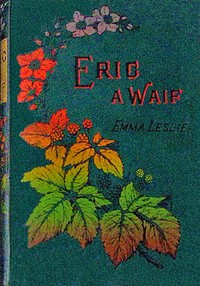
I keep returning to that odd, sunlit unease in Leroux’s newlyweds, the way their indoors minds fray against open air. It reminded me, unexpectedly, of another quiet recording: Eric, a waif — Reading Notes, where the same fragile inwardness hovers, almost homeless. No plot, just a mood—two rooms you’ve sat in alone, years apart, yet somehow the same dusk.
Use these questions to collect your thoughts before moving on.