About 206 minutes
The new terror — Background and Themes
Technology Airships Imagined Futures
47,272 recorded words. 13 minutes difference from this book's estimate.
View Gutenberg source #76493
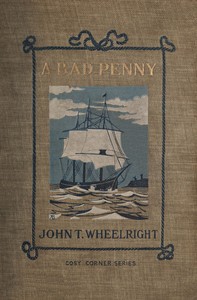
The source record for A bad penny — Story, Setting & Ideas measures this digital text at 50,187 words, 3 hr 39 min estimated reading time, and 19 detected text sections.
The text analysis averages about 19.7 words per sentence, while the detected sections provide another way to judge how the source is divided.
Project Gutenberg metadata also associates the work with “Boys -- Juvenile fiction,” connecting these edition facts with the source record’s subject description.
Explore this collection
These alternatives are selected using recorded categories and estimated reading time.
About 206 minutes
Technology Airships Imagined Futures
47,272 recorded words. 13 minutes difference from this book's estimate.
View Gutenberg source #76493About 198 minutes
Technology Airships Imagined Futures
45,363 recorded words. 21 minutes difference from this book's estimate.
View Gutenberg source #75012About 198 minutes
Technology Airships Imagined Futures
45,385 recorded words. 21 minutes difference from this book's estimate.
View Gutenberg source #76206Search stored excerpts and compare books → Choose by your preferences →
Choices use stored catalog measurements. Estimates vary with reading speed. A shared category is a catalog label, not a claim that two books have the same argument or literary quality.
Search reads excerpt text stored with this catalog and links to its associated Gutenberg record. The connection is stored in the site database; this tool does not recheck that every excerpt is word-for-word identical to that external record. Excerpt search does not cover every chapter and does not verify historical publication dates.
Catalog snapshot checked: 2026-09-25. Coverage: 97 public books, 97 available source excerpts.
Read the complete public-domain text at its original source.
Read on Project GutenbergThe catalog subjects for A Bad Penny list boys, sailors, uncles, families, and New England history. The opening chapter, however, devotes its first paragraph to a detailed description of a brick house in Oldbury, Massachusetts, and to Captain John Woodbury—a short, square-built man in knee-breeches, standing in his garden. The narrator dwells on the house's solidity and the captain's legs, which are 'stout and well developed' from quarter-deck habit. This focus on architecture and posture suggests that the story's interest in family and history may be grounded in physical setting and bodily presence, not just in boyish adventure.
The novel opens not with a boy but with a house: 'a great square brick house, with a broad comfortable lawn stretching down to a high fence.' The narrator contrasts this 'severely simple' mansion with 'gimcrack villas' built by modern successful men, insisting that the old house 'was evidently built to last, and to be lived in by the builder and the children who should come after him.' This architectural description does more than set a scene; it establishes a value system of permanence and inheritance. The house itself becomes a silent character, embodying the stability that the plot may test. The catalog subject 'Families' is thus introduced through bricks and elm trees, not through domestic drama.
Later excerpts introduce Tom Cheever, a man who left Oldbury years ago and now returns to the tavern of Jim Noyes. Cheever is a sailor—or former sailor—and his reappearance stirs talk of a debt for a lamed chestnut mare. The dialogue is sharp and economical: 'Damn it, she’s cost me dear enough,' Cheever says, and Noyes's face lights up at the prospect of a hundred dollars. The catalog subject 'Sailors' is here embodied in a character who is neither heroic nor romantic; he is a debtor, a bargainer, a man with a 'queer laugh.' The excerpt does not reveal his motives, but his return to Oldbury suggests that the sea has not made him wealthy or wise.
In Chapter VII, Cheever is awakened by bells 'jangling exultantly' and learns that Congress has declared war against the British. His immediate thought is not patriotism but opportunity: 'a privateersman with the rich commerce of England to prey upon had a rich preserve to poach.' The catalog subject 'New England — History — 19th century' appears here as a specific event—the War of 1812—but the narrator filters it through Cheever's self-interest. The war is not a backdrop for noble sacrifice; it is a chance for 'the reckless life of a pirate without the yard-arm or gibbet.' This pragmatic, even cynical, treatment of history may color the entire novel, though the excerpts do not show how the war unfolds.
Readers should attend to how Wheelwright uses physical details—a house, a pair of legs, a debt, a bell—to carry thematic weight. The catalog subjects are present, but they are refracted through a narrator who values solidity and irony over sentiment. The excerpts suggest a story that is as much about property and return as about boyhood or the sea.
Reading about Captain Brooks’s weathered house in A Bad Penny reminded me of another return—to Cabin Island’s frozen shore, where familiar rooms hold old secrets. Both stories feel like opening a drawer you haven’t touched in years, smelling salt and cedar and regret. That quiet ache of coming home to something half-forgotten lingered with me, tied to The mystery of Cabin Island — Edition Insights.
Create a short personal record of your experience with this book.