About 131 minutes
Stick to the raft — A Reader’s Guide
Technology Airships Imagined Futures
30,024 recorded words. 0 minutes difference from this book's estimate.
View Gutenberg source #77023
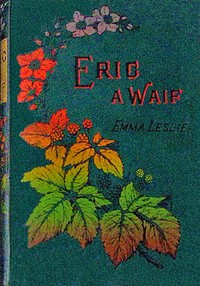
This digital edition of Eric, a waif — Reading Notes is described by source-level measurements including 29,937 words, 2 hr 11 min estimated reading time, and 3 detected text sections.
The text analysis averages about 25.9 words per sentence, while the detected sections provide another way to judge how the source is divided.
Project Gutenberg metadata also associates the work with “Christian life -- Juvenile fiction,” connecting these edition facts with the source record’s subject description.
Explore this collection
These alternatives are selected using recorded categories and estimated reading time.
About 131 minutes
Technology Airships Imagined Futures
30,024 recorded words. 0 minutes difference from this book's estimate.
View Gutenberg source #77023About 150 minutes
Technology Airships Imagined Futures
34,430 recorded words. 19 minutes difference from this book's estimate.
View Gutenberg source #76620About 111 minutes
Technology Airships Imagined Futures
25,389 recorded words. 20 minutes difference from this book's estimate.
View Gutenberg source #74108Search stored excerpts and compare books → Choose by your preferences →
Choices use stored catalog measurements. Estimates vary with reading speed. A shared category is a catalog label, not a claim that two books have the same argument or literary quality.
Search reads excerpt text stored with this catalog and links to its associated Gutenberg record. The connection is stored in the site database; this tool does not recheck that every excerpt is word-for-word identical to that external record. Excerpt search does not cover every chapter and does not verify historical publication dates.
Catalog snapshot checked: 2026-09-25. Coverage: 97 public books, 97 available source excerpts.
Read the complete public-domain text at its original source.
Read on Project GutenbergThe novel opens not with Eric himself but with the village gossip that follows his mother's death. A tattered-hatted speaker announces the death of "the old witch" to the landlord of The Magpie, expecting ale for his news. The landlord's terse reply—"Where's the boy?"—introduces Eric as an afterthought, a waif defined by others' suspicions. The narrative voice in these early pages is thick with local idiom and collective resentment: the villagers resent the strangers who "should ha' bided in their own parish." Leslie builds the setting through reported speech and the slow rhythm of rural life, where a newcomer's simple claim of seeking fresh air is disbelieved. This opening establishes a world where community opinion hardens into unspoken law, and where Eric's fate will be decided not by his actions but by the stories others tell about him.
The novel's first chapter moves at the pace of village life: slow, repetitive, shaped by rumor. Dialogue carries the exposition, with characters like Master Tyler and the landlord revealing their prejudices through casual cruelty. The pace accelerates sharply when the action shifts to the ship carrying convicts to America. Here, the narrative voice becomes more direct, focusing on practical negotiations between Sister Martin and the captain. The captain's language is blunt and transactional: he speaks of "probable value," "disposal of convicts," and the legal barriers to Eric's return. Sister Martin's replies are measured, ethical, but equally pragmatic. The contrast between the two sections is stark: the first is thick with superstition and local color, the second with economic calculation and moral compromise. Leslie uses this shift in pace to mirror Eric's transition from a passive object of village gossip to a commodity whose freedom must be purchased.
Throughout the voyage section, the dialogue is dominated by the vocabulary of trade: "price," "value," "cost of transportation," "dispose of." The captain reminds Sister Martin that he must "give an account of how I have disposed of each of these convicts." Even the convicts themselves adopt this language, pooling their "precious possession"—money—to buy Eric's liberty. Leslie's choice to frame freedom as a transaction is deliberate: it forces the reader to see the moral ambiguity at the heart of the colonial enterprise. Sister Martin's conscience is clear because she works within the system, but her words reveal the tension: "You and I know how vain this hope is." The narrative does not endorse or condemn; it simply records the negotiations with a flat, documentary tone. This restraint makes the convicts' generosity more poignant—they give "earnest sympathy" alongside their coins—and underscores how the system reduces human relationships to ledgers.
Remarkably, Eric himself speaks very little in the excerpts. He is described as a lad who "thought of every one's convenience and comfort before his own," but his voice is absent from the negotiations that determine his fate. Other characters debate his worth, his name, his future, while he remains a silent figure. This narrative choice reinforces his status as a waif—someone acted upon rather than acting. Even the convicts who grumble about him—calling him a "fool" for helping others—define him by his behavior rather than his words. Leslie's decision to keep Eric largely offstage during the pivotal bargaining scene is a deliberate structural choice. It forces the reader to see him through the eyes of others: the suspicious villagers, the calculating captain, the compassionate Sister Martin, and the fellow prisoners who sacrifice their savings. The novel's title, Eric, a Waif, is thus literal: he is a foundling not just of circumstance but of narrative, a character whose identity is constructed by the community around him.
Readers should attend to the way Leslie uses dialogue as the primary engine of plot and character. The novel's moral weight is carried not by authorial commentary but by the clash of voices: the landlord's indifference, the captain's pragmatism, Sister Martin's careful ethics, the convicts' grudging generosity. Eric's silence is itself a statement. The shift from the insular, superstitious village to the transactional world of the ship is the novel's central structural move, and it rewards attention to how language changes with setting. This is a story told through what people say about a boy, not what he says himself.
I think of Eric, a waif often—how that boy carried his solitude across an ocean, learning that freedom wears strange chains. It reminds me of another quiet book, one about golden guineas and a mother’s patient love, where the heart’s true currency is measured not in coin but in the gentle, stubborn hope we pass along. Mother's golden guineas — Key Ideas to Explore holds that same warmth, like a hand remembered in the dark.
Create a short personal record of your experience with this book.