About 122 minutes
Little Metacomet — A Closer Reading
Fantasy Juvenile Worlds
27,899 recorded words. 0 minutes difference from this book's estimate.
View Gutenberg source #75556
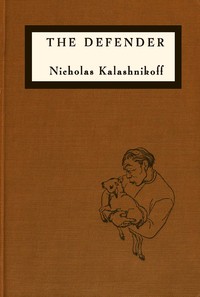
The source record for The defender — Context and Discussion measures this digital text at 27,933 words, 2 hr 2 min estimated reading time, and 34 detected text sections.
The text analysis averages about 14.0 words per sentence, while the detected sections provide another way to judge how the source is divided.
Project Gutenberg metadata also associates the work with “Shepherds -- Juvenile fiction,” connecting these edition facts with the source record’s subject description.
Explore this collection
These alternatives are selected using recorded categories and estimated reading time.
About 122 minutes
Fantasy Juvenile Worlds
27,899 recorded words. 0 minutes difference from this book's estimate.
View Gutenberg source #75556About 124 minutes
Fantasy Juvenile Worlds
28,340 recorded words. 2 minutes difference from this book's estimate.
View Gutenberg source #75785About 117 minutes
Fantasy Juvenile Worlds
26,847 recorded words. 5 minutes difference from this book's estimate.
View Gutenberg source #77024Search stored excerpts and compare books → Choose by your preferences →
Choices use stored catalog measurements. Estimates vary with reading speed. A shared category is a catalog label, not a claim that two books have the same argument or literary quality.
Search reads excerpt text stored with this catalog and links to its associated Gutenberg record. The connection is stored in the site database; this tool does not recheck that every excerpt is word-for-word identical to that external record. Excerpt search does not cover every chapter and does not verify historical publication dates.
Catalog snapshot checked: 2026-09-25. Coverage: 97 public books, 97 available source excerpts.
Read the complete public-domain text at its original source.
Read on Project GutenbergIn The Defender, Nicholas Kalashnikoff builds a story around Turgen, a Lamut healer living alone in the hills of northeastern Siberia, whose closest companions are a herd of wild mountain rams. The narrative, drawn from the author's own encounters in the Far North, centers on a promise Turgen made to his step-father to protect the endangered chubuku. The excerpts reveal a world where human warmth coexists with harsh landscape, and where a man's bond with a ram lamb named Lad becomes a source of both solace and conflict.
The opening chapters establish Turgen as a figure of deliberate isolation. After losing his wife and son to illness, he withdraws from the Yakut neighbors who once sought his healing grasses. Yet the text shows that his solitude is not absolute: Marfa, a woman from the valley, visits regularly, bringing news and later her children Tim and Aksa. The tension between Turgen's self-imposed distance and the persistent pull of community is evident. When Marfa defends him against gossip, she declares, “there isn’t a better man among them than you,” highlighting how his reputation persists despite his reclusiveness. The narrative does not resolve this tension early; instead, it uses the visits to gradually reintroduce human connection into Turgen's life.
Lad, the orphaned mountain ram lamb, is more than a pet. Turgen's care for the injured animal—rescued after a fall from a cliff—transforms his daily routine and reopens his emotional life. The lamb's antics, such as “dancing on his hind legs,” draw both wonder and suspicion. When the drunkard Nikita mistakes Lad for the devil, the incident triggers a chain of rumors that threaten Turgen's peace. Turgen's own reflection—“How strange that a wild animal can understand affection while people, who should be wiser, can not”—underscores the thematic contrast between animal loyalty and human misunderstanding. The decision to return Lad to the wild, though painful, becomes a test of Turgen's commitment to the ram's safety over his own loneliness.
Kalashnikoff uses gossip as a narrative engine. Nikita's drunken tale of Turgen consorting with the devil spreads quickly, and Marfa's fierce rebuttal—“The fools might better wonder at your kindness and your skill”—shows how reputation can be weaponized. Turgen's own response is resigned: “To shoot at a rock is but a waste of arrows.” The excerpts suggest that the community is divided between those who trust Turgen's known character and those who believe the sensational. This dynamic creates a persistent undercurrent of threat, as Turgen worries that someone might “sneak up the hill and shoot Lad.” The story thus examines how truth is negotiated in a close-knit society where words can carry as much weight as actions.
Readers should attend to the way Kalashnikoff layers small, concrete details—the taste of tea, the feel of a lamb's wool, the sound of a drunkard's shout—to build a world that feels both remote and intimate. The excerpts offer only fragments of the plot's resolution, but they establish a clear emotional geography: a man caught between his promise to the dead and the living needs of his community and his animal charge.
Reading the editorial note on Kalashnikoff’s The Defender, with its quiet weight of rumor and loyalty, I found my thoughts drifting to a different, older kind of courage. These two worlds—Siberian snow and Norman hills—share a tenderness for the stubborn, gentle heart that stands alone. It reminded me of home, somehow. So I pulled up The Little Duke: Richard the Fearless — Context and Discussion, and there it was again: the same whispered fear, the same small defiance.
Use these questions to collect your thoughts before moving on.